

3 weeks ago
UPI MDR May Be Passed to Customers as Platform Fees

When you pay with a card or a phone in India, a small fee called MDR is sometimes charged to the shop, not to you.
Right now, there is no fee when people pay using UPI, a very popular Indian phone-payment system.
The government has proposed changing the law so that some big shops can be charged this fee again.
It says the fee would only apply to certain large merchants and not to customers.
Some payment experts worry that shops will quietly add the fee to what customers pay, calling it a 'platform fee' or 'convenience fee'.
The companies that run UPI payments say they have been losing money for a long time and would like to earn more from the system.
Other experts say rules should protect small shops from hidden charges.
UPI is used for billions of transactions every month and works in 11 other countries.
The government is still discussing exactly how the fee would work.

The government clarified that any future Merchant Discount Rate (MDR) on UPI payments would apply only to a limited set of merchants and not to customers.
The proposed amendment to Section 10A of the Payment and Settlement Systems Act, 2007 would remove the blanket ban on charging UPI MDR enforced over six years ago.
Payment experts warned that merchants could pass MDR charges on to customers disguised as 'platform fee' or 'convenience fee', or embed them in product prices.
Sai Krishna Musunuru of Payinstacard said payment aggregators running the UPI infrastructure have borne losses for a long time and would want to monetise UPI.
UPI, the world's largest real-time payment system, processed 2,366 crore transactions worth Rs 29.9 lakh crore in July 2026 and is live in 11 foreign countries.
Experts said guard rails are needed so that small merchants are not indirectly charged hidden fees beyond what the government and RBI intend.
- Who
- The Government of India, payment experts including Sai Krishna Musunuru of Payinstacard, merchants, and payment aggregators running UPI infrastructure.
- What
- A proposed change to allow Merchant Discount Rate (MDR) charges on UPI transactions for a limited set of merchants, ending the six-year-old ban on UPI MDR.
- Where
- India, reported from Mumbai; UPI is also live in 11 foreign countries.
- When
- The clarification was issued on a Saturday, with the change introduced through the Taxation and Other Laws (Amendment) Bill, 2026; UPI data cited is from July 2026.
- Why
- To enable payment aggregators to monetise the UPI ecosystem after years of losses and to sustain the payment infrastructure.
Official Stance
Expert Concerns
Who bears the MDR cost
Official Stance
The government says MDR would apply only to a limited set of merchants and not to customers.
Expert Concerns
Experts say merchants will almost certainly pass the charge on to customers as platform or convenience fees, or embed it in product prices.
Monetising UPI
Official Stance
Payment aggregators running the UPI infrastructure have borne losses for a long time, and MDR would make their books profitable.
Expert Concerns
Experts warn that hidden platform fees could hit consumers, and guard rails are needed to prevent unintended charges.
Protecting small merchants
Official Stance
MDR would be charged only on the merchants and transactions the government and RBI intend.
Expert Concerns
Without safeguards, small merchant transactions could be indirectly charged through hidden platform fees or charges.
Key facts
- MDR
- The commission merchants pay to banks and payment companies for facilitating a transaction
- Current UPI fee
- No MDR on UPI; blanket ban in place for over six years
- Proposed change
- Amendment to Section 10A of the Payment and Settlement Systems Act, 2007 via the Taxation and Other Laws (Amendment) Bill, 2026
- Debit card MDR
- 0.40% for small merchants (turnover up to Rs 20 lakh); 0.90% for other merchants; higher for credit cards
- UPI volume (July 2026)
- 2,366 crore transactions worth Rs 29.9 lakh crore
- UPI reach
- World's largest real-time payment system; live in 11 foreign countries
- Scope
- Limited set of merchants only; not customers, per government clarification
Quotes
Sai Krishna Musunuru
Director & CEO of Payinstacard
“"MDR will be an expense on the business of the merchants. There is a 200 per cent chance that merchants may pass MDR charges to customers in the product/service pricing, and customers may not even notice it. In some cases the merchant could camouflage the MDR charge as a platform fee or give it a different name."”
 deccanchronicle.com
“"Another factor that should be considered is that the payment aggregators who are running the UPI payment infrastructure for the entire ecosystem have been bearing losses for a very long time and would want to monetise UPI. If UPI is monetised, the payment aggregators' books will make decent profits."”
deccanchronicle.com
Sources
Related news
UPI remains free for users, some merchants face nominal charges
UPI Payments Remain Free as New Bill Explains MDR

Lok Sabha passes bill allowing UPI merchant discount rate charges

UPI Users Unlikely to Pay Fees Even If MDR Allowed
UPI fee targets large payments, small ones stay free
India Plans Agentic AI Payments Through Popular UPI Network

India’s Banking Summit Maps AI’s Responsible Financial Frontier

UPI Transactions Hit Record 24.51 Billion in August
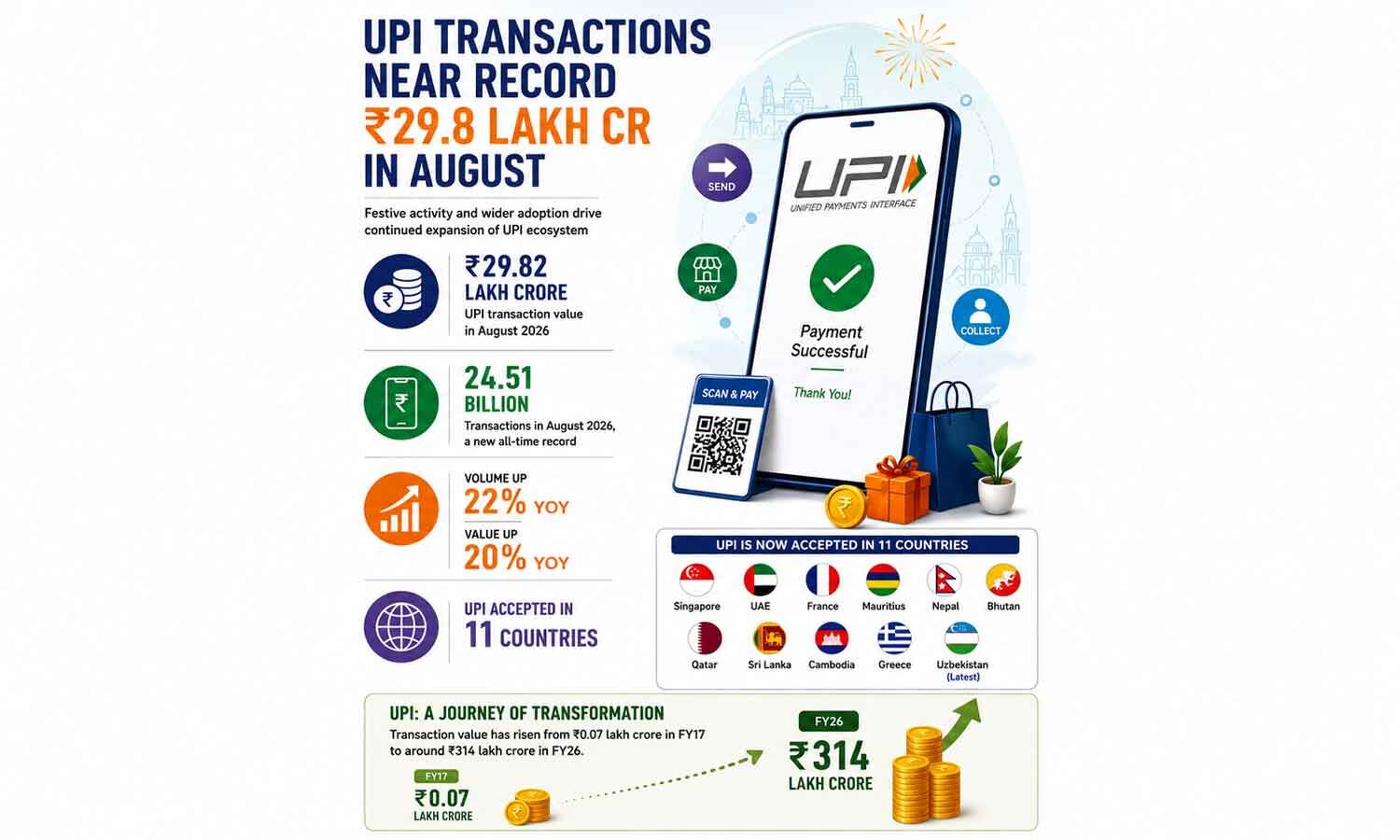
UPI Hits Record August Volume as Festive Demand Fuels Growth

UPI Partnership Lets Indian Travellers Pay Across Uzbekistan
