3 weeks ago
Lok Sabha passes bill allowing UPI merchant discount rate charges

India's government wants to keep UPI, a way to pay with phones, working and growing.
Since 2020, using UPI has been completely free for everyone.
Now India's Parliament has passed a new law that may let banks charge a small fee.
This fee is called a merchant discount rate, or MDR.
It would be paid by shops and businesses, not by customers.
Very small shops, like kirana stores, will not pay it.
Only bigger businesses might have to pay the fee.
The money would help banks and payment companies invest in keeping the system safe and fast.
The final decision on the fee will be made later, after the law is fully approved.

The Lok Sabha on 6 August passed the Taxation and Other Laws (Amendment) Bill, 2026, which amends the Payment and Settlement Systems Act, 2007 and allows the government to bring back merchant discount rate (MDR) charges on UPI transactions.
The bill could lead to the scrapping of the zero MDR provision under Section 10A and let banks and payment systems providers impose charges, likely on high-value UPI transactions.
MDR is a fee merchants pay to banks and payment systems providers for processing online transactions; it has stood at 0% for UPI and RuPay debit card transactions since 2020.
Finance Minister Nirmala Sitharaman said MDR applies to merchants, not customers, and that the NPCI-headed UPI and Services Steering Committee will decide on charges once both houses of Parliament pass the bill.
Estimates for a possible MDR range from 5-7 basis points for UPI (Zeta's Mehul Mistry) to 30-40 basis points (Bloomberg report citing Bernstein), likely applying only to large merchants.
- Who
- Lok Sabha, Finance Minister Nirmala Sitharaman, NPCI, banks and payment systems providers; the NPCI-headed UPI and Services Steering Committee will decide on MDR.
- What
- Passed the Taxation and Other Laws (Amendment) Bill, 2026, enabling the government to bring back merchant discount rate (MDR) charges on UPI transactions.
- Where
- India
- When
- 6 August 2026
- Why
- To fund UPI's next phase of growth and sustain the digital payments infrastructure.
Concern: UPI may become costlier
Stand: MDR only for merchants, funds growth
Will ordinary people pay more for UPI?
Concern: UPI may become costlier
Congress leader Jairam Ramesh remarked that ordinary people may have to pay more for using UPI.
Stand: MDR only for merchants, funds growth
Finance Minister Nirmala Sitharaman said MDR on digital transactions applies to merchants and not customers, so consumers continue to use UPI without charges.
Is MDR needed now?
Concern: UPI may become costlier
UPI has been fee-free since 2020, with zero MDR mandated for UPI and RuPay debit transactions to promote digital payments, and the Payments Council of India stresses UPI remains free for consumers and small merchants.
Stand: MDR only for merchants, funds growth
The government says the bill funds UPI's next phase of growth, giving banks, PSPs and fintechs a sustainable revenue model, while MDR would let players like banks and credit card companies monetise their products and offer incentives.
Key facts
- Bill
- Taxation and Other Laws (Amendment) Bill, 2026
- Passed by
- Lok Sabha on 6 August
- Law amended
- Payment and Settlement Systems Act, 2007
- Current MDR
- 0% for UPI and RuPay debit card transactions since 2020
- Zeta's MDR estimate
- 5-7 basis points for UPI; 15-20 bps for RuPay debit cards
- Bernstein's MDR estimate
- 30-40 basis points merchant-funded MDR (per Bloomberg report)
- Who pays MDR
- Merchants, not customers (per Finance Minister Nirmala Sitharaman)
- Possible scope
- Large merchants with annual turnover above roughly ₹1-1.5 crore
Quotes

Nirmala Sitharaman
Union Finance Minister of India
“While it is unlikely that MDR will be levied on P2P transactions or lower value P2M transactions … once MDR is formally introduced, the move will likely also rejuvenate other players in the payments industry including banks, credit card companies and authorised PPI entities.”
 livemint.com
“The government's approach appears designed to strike a balance, keeping digital payments free for consumers and small businesses, while creating a sustainable revenue model for the banks, PSPs, and payment infrastructure providers that power this ecosystem.”
livemint.com
Sources
Related news
UPI remains free for users, some merchants face nominal charges
Lok Sabha Passes Bill Enabling Future UPI MDR, Sitharaman Clarifies
UPI Remains Free for Users, Nominal Merchant Fee Possible: Govt
UPI fee targets large payments, small ones stay free
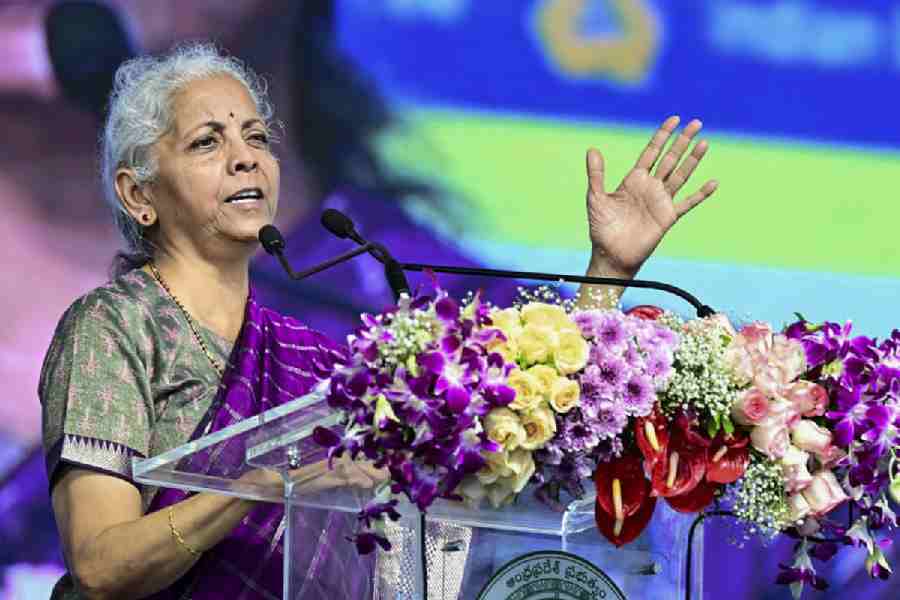
Sitharaman clarifies UPI charges apply to merchants, not customers

New-Age Indian Stocks Rally, But Analysts See Uneven Upside
HDFC Bank Trading Slumps to Six-Month Low as Funds Buy

Apple Watch Series 12 Reportedly Gains New Health Features

iPhone 18 Pro India Launch: Expected Price and Upgrades

Tim Cook’s Pay and Wealth Trail Elon Musk’s