1 hr ago
Why the 2026 US Midterms Matter to India
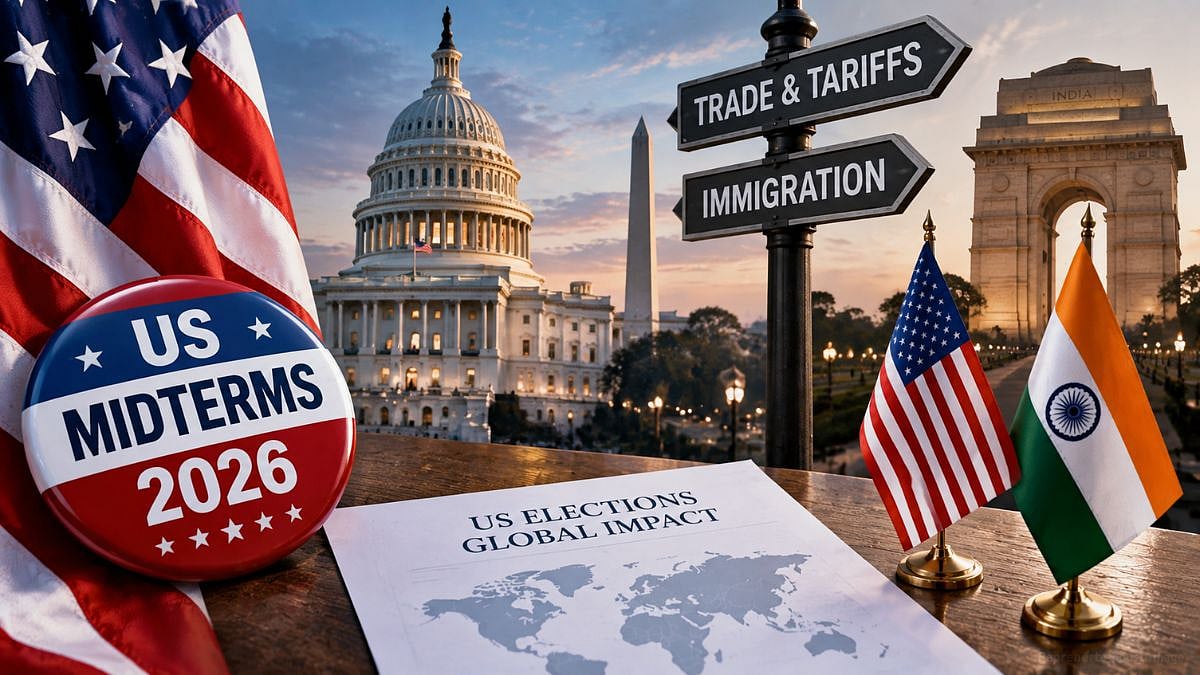
The United States will hold an important election in November 2026.
Voters will choose every member of the House of Representatives and 35 senators.
The result could affect how much power President Donald Trump has in Congress.
This matters to India because many Indian workers in the United States use H-1B visas.
A proposed rule could give workers only 24 hours to find a new sponsor after losing their jobs, instead of 60 days.
The election could also influence US tariffs on Indian goods and pressure over India’s purchases of oil from Russia or Iran.
It may affect whether the United States uses military force or seeks negotiations in the Middle East.
India is therefore expected to watch the election while continuing to build relationships with several countries and alliances.

The November 3, 2026, election will determine all 435 House seats and 35 Senate seats.
India is particularly concerned about US trade and tariff policies, immigration rules, and congressional oversight.
A proposed reduction of the H-1B grace period from 60 days to 24 hours could sharply increase risks for Indian technology workers.
A Republican-controlled Congress could give President Donald Trump greater freedom on tariffs and military policy, while Democratic control could strengthen oversight.
India is urged to deepen partnerships and maintain strategic autonomy regardless of the election outcome.
- Who
- US voters, President Donald Trump, the Republican and Democratic parties, and Indian workers and policymakers are central to the issue.
- What
- The 2026 US midterm elections could change congressional control and influence US trade, immigration, military, and India-related policies.
- Where
- The election will take place across the United States, with consequences for India-US relations and Indians living in the United States.
- When
- November 3, 2026; the article also cites polling from September 15, 2026.
- Why
- Congressional control could determine the level of oversight applied to Trump administration policies affecting tariffs, H-1B visas, oil-related pressure, and foreign policy.
Democratic Control and Oversight
Republican Control and Executive Continuity
Congressional oversight
Democratic Control and Oversight
Democratic control of one or both chambers could increase hearings, investigations, and checks on the Trump administration.
Republican Control and Executive Continuity
Continued Republican control could allow the administration to operate with limited legislative resistance, which the article characterizes as a potential rubber stamp.
Immigration and H-1B workers
Democratic Control and Oversight
Democrats could seek legislative protections for high-skilled legal immigrants and scrutinize immigration enforcement spending.
Republican Control and Executive Continuity
The Trump administration’s proposed H-1B changes could sharply reduce the time laid-off workers have to find new sponsors or leave the United States.
Military policy
Democratic Control and Oversight
Democratic control of a chamber could pressure the administration toward negotiations and greater scrutiny of military action.
Republican Control and Executive Continuity
A Republican-led Congress could approve expanded war spending with less congressional oversight, according to the article.
Key facts
- Election date
- November 3, 2026
- House seats
- All 435 seats are up for election
- Senate seats
- 35 seats are up for election
- Current Senate balance
- Republicans hold 53 seats; Democrats hold 45, with two independents
- Current House balance
- Republicans hold 218 seats and Democrats hold 214, with two vacancies
- H-1B proposal
- The article says the administration proposed reducing the legal workers’ grace period from 60 days to 24 hours
- Polling cited
- A September 15 New York Times-Siena poll showed Democrats leading Republicans 51% to 43%
Sources
Related news
2026 Midterms Will Test Trump’s America First Strategy
Indian-American Voters Shift From Trump Toward Democrats Ahead Of Midterms

Readers Debate Trump Visa Restrictions and India’s Technology Response
Indian-American voters emerge as pivotal in 2026 Senate races
Indian American Voters Lean Democratic Ahead of 2026 Midterms

US Midterms Could Reshape Trump's Agenda Amid Economic Discontent
Vance Calls for “Actual Geniuses” in H-1B Program
US, UK Visa Squeeze Fuels Global Race for Skilled Talent
Ending H-1B Grace Period Could Disrupt Workers and Companies
H-2B Visa Cap Limits Foreign Workers, Barely Affecting Indians