2 weeks ago
Partition's Fractured Borders Rewrote the Subcontinent's Recipe Book
Long ago, a giant country called India was split into new countries called India, Pakistan and Bangladesh.
Millions of people had to cross the new borders to find new homes.
They could not carry their houses, but they carried their favourite recipes in their memories.
That is why today you can enjoy Sindhi food in Mumbai and Punjabi dhaba food in Delhi.
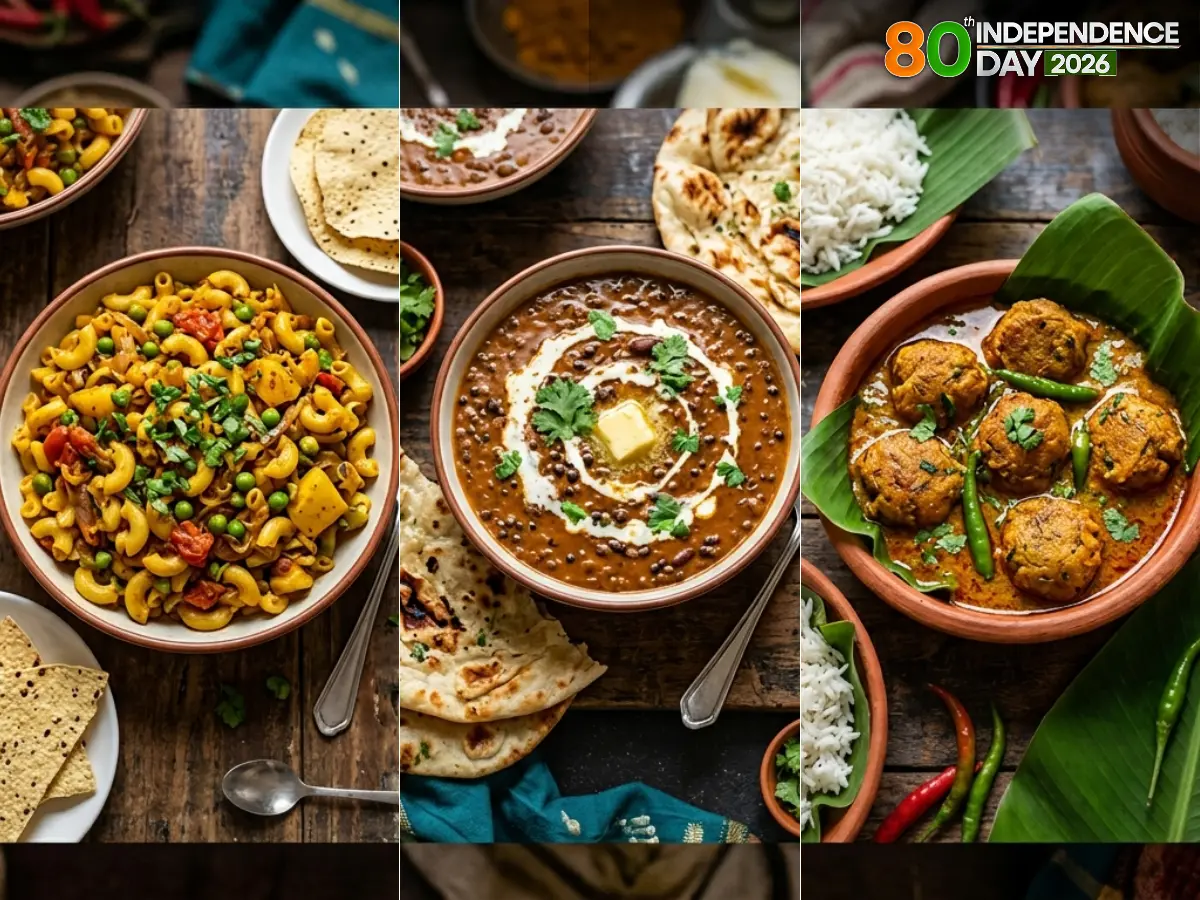
Some famous dishes, like Butter Chicken and Dal Makhani, were invented after the split because people wanted to use every bit of food and waste nothing.
In refugee camps, families turned dry macaroni from food kits into a new dish called Macaroni Sabji.
In Bengal, sweet makers moved across the border and brought new sweets, and some shops in Kolkata still name sweets after their old homes like Dhaka and Pabna.
Experts say food helped people stitch their broken world back together, one bite at a time.

On India's 80th Independence Day, experts explore how Partition's migration rewrote the subcontinent's culinary map.
Refugees fleeing West and East Pakistan carried their tastes across the borders, from tandoori sizzles on Delhi sidewalks to Padma Ilish in West Bengal kitchens.
Dr Kurush F Dalal says Sindh brought an entire cuisine to India, with Sindhi refugees popularising dishes such as spicy papads.
Butter Chicken and Dal Makhani were born after Partition as ways to avoid wasting food, while Macaroni Sabji came from refugee camp food kits.
In Bengal, sweets like Pithe travelled with migrants, and Kolkata shops still honour old homes like Dhaka and Pabna in their names.
- Who
- Culinary experts — archaeologist and culinary anthropologist Dr Kurush F Dalal, food and culture researcher Vernika Awal, and sociologist and author Dr Ishita Dey
- What
- An exploration of how Partition's migration rewrote the subcontinent's recipe book, carrying whole cuisines and inspiring dishes like Butter Chicken, Dal Makhani and Macaroni Sabji
- Where
- Across India, Pakistan and Bangladesh — from Punjab, Sindh and Delhi-Mumbai to West Bengal, Dhaka and beyond
- When
- On the occasion of India's 80th Independence Day
- Why
- Partition displaced millions of refugees, who carried their tastes across the new borders and invented new dishes out of necessity and austerity
Popular Perception
Expert Findings
Meat in Punjabi cuisine
Popular Perception
Chicken is widely seen as a staple of Punjabi cuisine, with meat dishes as the region's signature food.
Expert Findings
Experts say most Punjabis were actually vegetarian, and finer meat dishes were reserved for royals, as seen in the courts of Maharaja Ranjit Singh in Lahore and Patiala.
Origins of classic Punjabi dishes
Popular Perception
Butter Chicken and Dal Makhani are often regarded as timeless staples of Punjabi food.
Expert Findings
Experts say both dishes were born after Partition, created partly to avoid wasting food, with Dal Makhani evolving from the traditional Maa Ki Daal in dhabas.
Key facts
- Occasion
- India's 80th Independence Day
- Topic
- How Partition rewrote the subcontinent's food and cuisine
- Key experts
- Dr Kurush F Dalal, Vernika Awal, Dr Ishita Dey
- Cuisines carried by refugees
- Sindhi cuisine from Sindh
- Dishes invented post-Partition
- Butter Chicken, Dal Makhani, Macaroni Sabji
- Bengal sweet heritage
- Dhakai sweets, Pithe and Postokodom
- Regions covered
- Delhi, Mumbai, Punjab, Sindh, West Bengal, Dhaka, Pabna, Lahore, Patiala
Quotes
Dr Kurush F Dalal
Mumbai‑based archaeologist and culinary anthropologist
“"Meat consumption was always a thing of, well, not your common people. They were having probably the lesser variety of meat, the offal and all of these things. So it's the royals where you would see the finer, you know, techniques which are being used in meats which they could afford and of course, sea stone, which is also what you see in the courts of Maharaja Ranjit Singh in Lahore and also in Patiala."”
 wionews.com
“"It's not one dish; it's an entire cuisine that came to India. We have a large number of Sindhis who came here as refugees. So the whole of Sindhi cuisine as we understand it today is in India, essentially thanks to these migrants."”
wionews.com
Sources
Related news

Indian Restaurants Turn History, Memory And Heritage Into Shared Meals
Chefs Celebrate Independence Day with Regional Indian Heritage Recipes

Delhi and Kolkata Eateries That Survived Raj, Independence, Partition
US Snack Detective Says Indian Food Ruined Other Cuisines
Nankhatai’s Long Journey from Surat to Kolkata Bakeries
Partition and poverty: the fractured India British left behind

Sharma and Malik share halfway lead at Telangana Golconda Masters
India Replaces Sri Lanka as 2027 Women’s Champions Trophy Host
Centre Assures JDU Bihar’s Interests In Farakka Treaty Decision
India’s Record Wheat Harvest Opens $1.5 Billion Export Window
West Bengal CM Crushes Nearly 2 Lakh Seized Syrup Bottles