

3 weeks ago
Vulture Release Revives Calls To Restore Mumbai's Tower Of Silence

Vultures are large birds that eat dead animals, and they help clean nature.
For hundreds of years, the Parsi community in Mumbai used vultures for a special burial tradition called sky burial.
In sky burial, dead bodies are placed on tall towers and vultures eat them.
But vulture numbers dropped hugely because of medicines given to farm animals like cows.
This made sky burial very difficult to continue.
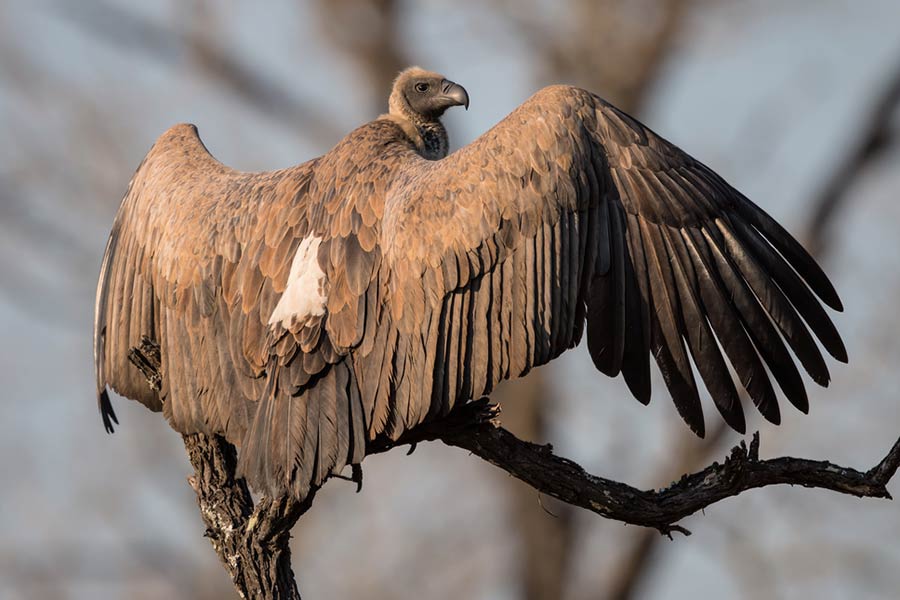
Recently, scientists released five slender-billed vultures back into the wild in Assam, the first time ever for this type of bird.
They also released five white-rumped vultures at a special centre.
Now some Parsi people hope vultures can return to the Tower of Silence in Mumbai.
Scientists say it will be hard because the area is surrounded by houses, but both sides are talking to find a solution.

Five captive-bred slender-billed vultures were released into the wild in Assam, marking the first known introduction of the species into the wild anywhere in the world.
Five white-rumped vultures were also released at the Jatayu Soft Release Centre in Tewaripal, Biswanath, in an initiative by the Assam Forest Department and the Bombay Natural History Society (BNHS).
The birds were released via a scientific 'soft release' after three months of acclimatisation and were fitted with numbered blue leg rings and back tags for monitoring.
The release has renewed calls by Mumbai's Parsi-Zoroastrian community to reintroduce vultures at the Doongerwadi Tower of Silence on Malabar Hill to support traditional Dokhmenashini (sky burial) practices.
BNHS Director Kishore Rithe cited practical hurdles such as surrounding human settlements and food availability, while Bombay Parsi Punchayet (BPP) trustee Adil Malia expressed optimism that a permanent solution can be found.
- Who
- The Assam Forest Department and the Bombay Natural History Society (BNHS) released the vultures, with the Parsi-Zoroastrian community and the Bombay Parsi Punchayet involved in reintroduction discussions.
- What
- Ten captive-bred vultures (five slender-billed and five white-rumped) were released into the wild in Assam, reviving calls to reintroduce vultures at Mumbai's Doongerwadi Tower of Silence.
- Where
- Jatayu Soft Release Centre in Tewaripal, Biswanath, Assam; the Tower of Silence cemetery on Malabar Hill, Mumbai.
- When
- Friday, August 8, 2026.
- Why
- To restore vulture populations devastated largely by veterinary diclofenac and other banned drugs, and to help revive traditional Parsi sky burial practices.
Parsi Community Advocates Reintroduction
Conservationists Cite Practical Hurdles
Vultures at the Tower of Silence
Parsi Community Advocates Reintroduction
Orthodox Parsi members believe Dokhmenashini (sky burial) will not work without vultures and want the birds reintroduced at Doongerwadi, saying the birds will stay if food is available.
Conservationists Cite Practical Hurdles
BNHS says the Doongerwadi area is surrounded by human settlements and birds will not adopt the area unless food is available permanently and human movement is reduced.
Enclosure for an experiment
Parsi Community Advocates Reintroduction
The community does not accept an enclosure over the towers, and bringing bodies to separate cages would not align with religious practices.
Conservationists Cite Practical Hurdles
BNHS suggests keeping the birds in an enclosure to conduct an experiment, since permanent food availability at the site is uncertain.
Key facts
- Species released
- Five slender-billed vultures and five white-rumped vultures
- Release method
- Soft release after three months of acclimatisation in a release aviary
- Location
- Jatayu Soft Release Centre, Tewaripal, Biswanath, Assam
- Organizations involved
- Assam Forest Department and Bombay Natural History Society (BNHS)
- Population decline
- Gyps vulture population fell by nearly 99 per cent over the past two decades
- Cause of decline
- Veterinary diclofenac and other banned drugs (aceclofenac, ketoprofen, nimesulide)
- Bird monitoring
- Numbered blue leg ring and back tag fitted to each released bird
- Debate site
- Doongerwadi Tower of Silence, Malabar Hill, Mumbai
Quotes
Dr Viraf Kapadia
Resident of Nepean Sea Road and Parsi community member
“"While non-orthodox members are using crematoriums, the orthodox feel that Dokhmenashini will not work without vultures. Vultures can be introduced at the cemetery as they will stay if food is available."”
 freepressjournal.in
Kishore Rithe
Director of the Bombay Natural History Society
“"The birds have left Mumbai and Doongerwadi area is surrounded by human settlements. Unless food is available on a permanent basis and there is less human movement, the birds will not adopt the area. You will have to keep the birds in an enclosure if we want to do some experiment. I was told that the enclosure over the towers is not acceptable to the community. If the birds are kept in a separate enclosure, the bodies would have to be brought to the cages, which may not align with religious..."”
freepressjournal.in
Sources
Related news
Assam releases captive-bred vultures into wild in global first

India Builds Vulture Restaurants to Aid Vanishing Scavengers
Barrukhar Village Challenges India’s Protected Vulture Conservation Model

BNHS sterilises over 2,950 dogs to save black-necked cranes
India Gifts Five Peacocks to UN, Reviving Indira Gandhi's Tradition
