

1 hr ago
Infrared Surveys Reveal Possible New Planet Nine Candidate

Scientists are looking for a possible planet far beyond Neptune.
They compared infrared maps made years apart to find something faint that had moved slowly.
The maps came from surveys in 1983 and 2006–2007.
After checking many possible matches, the researchers found one especially promising candidate.
It appears to have moved between the two sets of observations.
The candidate’s distance and estimated size fit what the team was searching for.
But scientists have not proved that it is a planet.
They still need to check whether its path matches what a Planet Nine would need to do.

Researchers from National Tsing Hua University identified one leading candidate by comparing infrared survey data.
The analysis used observations from IRAS in 1983 and Japan’s AKARI surveys in 2006 and 2007.
The team searched for an object roughly 500–700 astronomical units away and about 7–17 times Earth’s mass.
After narrowing 22 possible pairings to 13, researchers selected one candidate that shifted 47.46 arcminutes between observations.
The object is not confirmed as Planet Nine and must still be assessed against the orbital requirements.
- Who
- Researchers led by Terry Long Phan at National Tsing Hua University in Taiwan.
- What
- They identified one leading infrared-source candidate for the hypothetical Planet Nine.
- Where
- The candidate is thought to be in the distant outer Solar System, beyond Neptune.
- When
- The observations came from 1983 and 2006–2007; the study was published in the Publications of the Astronomical Society of Australia.
- Why
- The researchers are searching for a body that could explain the unusual orbits of some objects in the outer Solar System.
Evidence supporting the candidate
Reasons for caution
Infrared observations
Evidence supporting the candidate
The faint object appeared in two surveys decades apart and showed slow movement consistent with the search.
Reasons for caution
A match across the surveys is only a candidate, not proof that the object is a planet.
Planet Nine interpretation
Evidence supporting the candidate
The candidate’s apparent brightness and motion fit the characteristics the researchers sought for a distant planet.
Reasons for caution
It still needs to meet the orbital requirements for a body that could account for unusual outer Solar System trajectories; Planet Nine itself remains hypothetical.
Key facts
- Research institution
- National Tsing Hua University, Taiwan
- Earlier survey
- IRAS observations from 1983
- Later survey
- Japan’s AKARI observations from 2006 and 2007
- Search distance
- 500–700 astronomical units
- Sought mass range
- About 7–17 times Earth’s mass
- Candidate motion
- 47.46 arcminutes between the IRAS and AKARI observations
- Confirmation status
- Not confirmed as Planet Nine; its orbital path still needs assessment
Sources
Related news
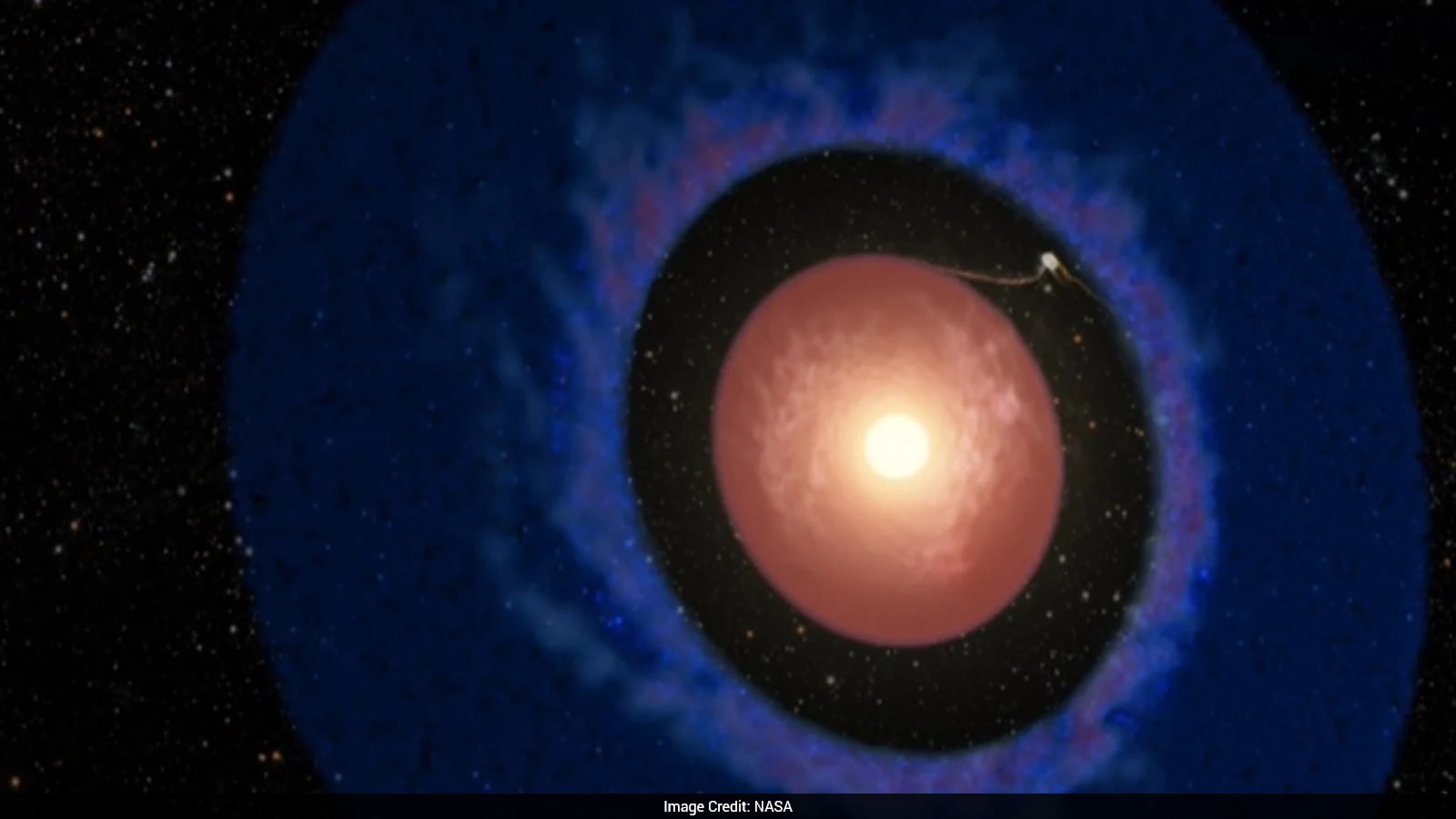
Astronomers Confirm Youngest Known Planet, Still Inside Birth Disk

First Radio Signals Directly Localized to Exoplanet Beta Pictoris b

September 2026 Venus Reaches Its Brightest Point Of The Year

Astronomers Detect Radio Emission From Exoplanet, Urge Caution

Small Asteroid Detected Before Exploding Over Australia's Waters

NASA and IBM Launch Open-Source AI Model for Moon Mapping

Indian Businesses Urged to Strengthen Semiconductor Supply Chain Resilience

Taiwan Pulls Ahead of Korea in Global AI Market Trade

Taiwan Says US Defence Commitment Unchanged as Arms Sale Awaits Approval

Nashik Industries Target Taiwan Markets in Robotics, Aerospace, Medical Devices
