2 hrs ago
Scientists Detect First Radio Signals From Exoplanet Beta Pictoris b
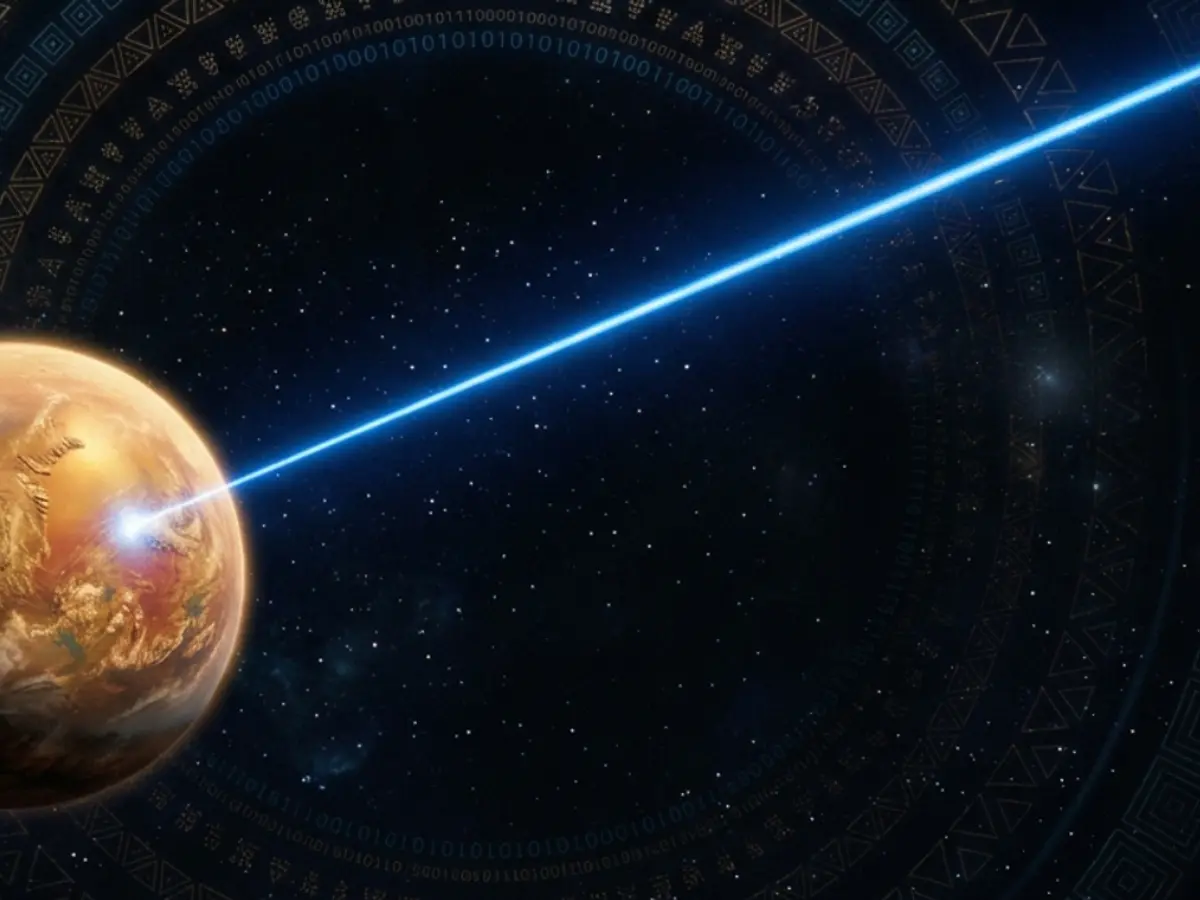
Scientists detected repeating radio signals from a planet outside our solar system.
The planet is called Beta Pictoris b and is about 63 light-years from Earth.
They used a large radio telescope array in South Africa to find where the signals came from.
The signals came from the planet rather than its star.
This does not mean aliens are sending a message.
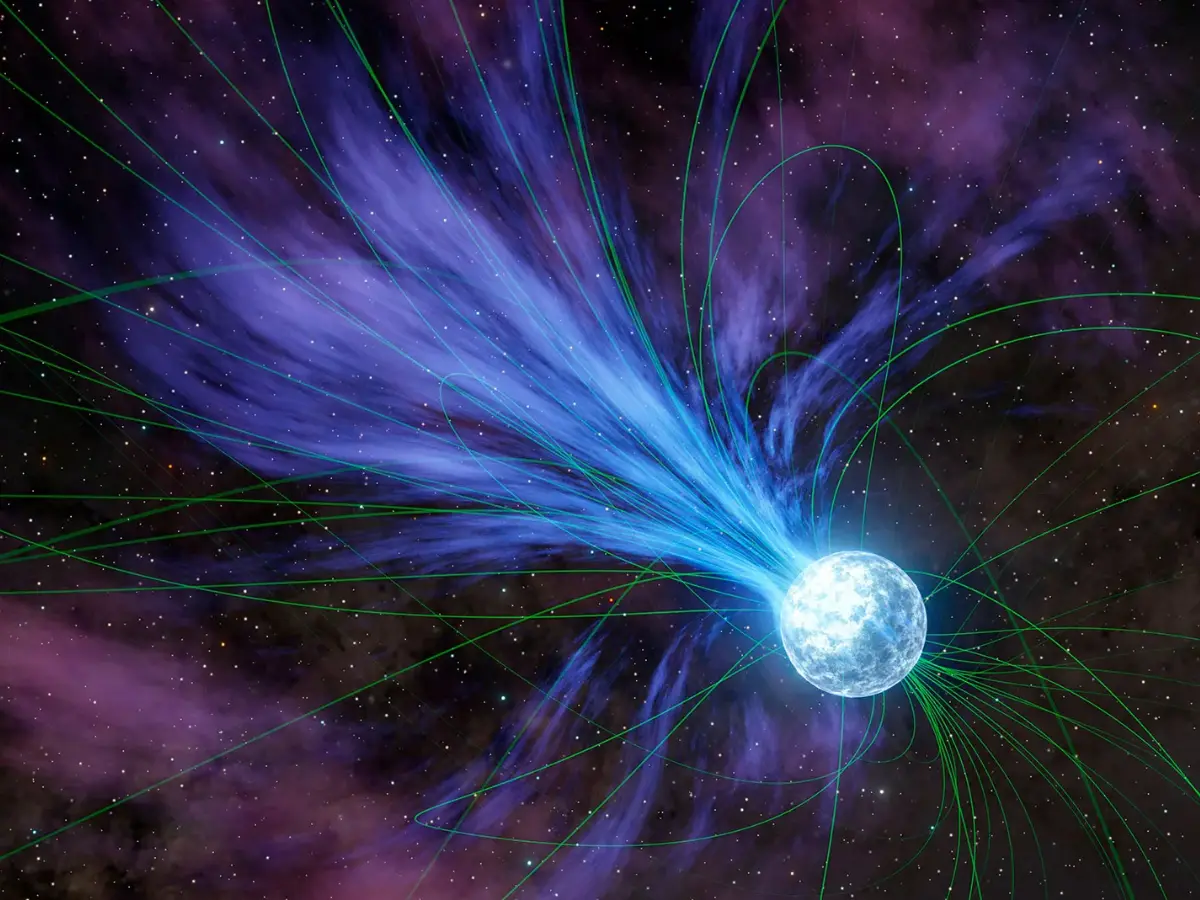
Scientists think the signals are giant auroras, like Earth’s Northern and Southern Lights.
Particles moving through the planet’s magnetic field create these radio bursts.
The planet spins very quickly, which may help produce the emissions.
Studying these signals can help scientists learn about magnetic fields on distant planets.

Researchers localized repeating radio bursts to Beta Pictoris b, about 63 light-years away.
The MeerKAT radio telescope array detected emissions separate from the planet’s parent star.
Scientists attribute the signals to powerful auroras produced by the planet’s magnetic field.
Beta Pictoris b rotates every eight to nine hours and may have a magnetic field 2,500 times stronger than Earth’s.
The findings are posted on arXiv but have not yet undergone peer review.
- Who
- Researchers from the Harvard & Smithsonian Center for Astrophysics and the University of Oregon.
- What
- They detected and localized repeating radio emissions from the exoplanet Beta Pictoris b.
- Where
- The signals came from Beta Pictoris b, approximately 63 light-years from Earth, and were detected using the MeerKAT array in South Africa.
- When
- The research findings are currently available online on arXiv; the articles do not provide a detection date.
- Why
- The emissions are believed to be planetary auroras, and studying them provides a way to measure and understand exoplanetary magnetic fields.
Key facts
- Exoplanet
- Beta Pictoris b
- Distance from Earth
- Approximately 63 light-years
- Detection instrument
- MeerKAT radio telescope array in South Africa
- Signal frequency
- 0.85 to 3.5 GHz
- Rotation period
- Approximately eight to nine hours
- Estimated magnetic field
- Roughly 2,500 times stronger than Earth’s
- Publication status
- Available on arXiv and not yet published in a peer-reviewed journal
Quotes
The researchers
Researchers who authored the study of Beta Pictoris b’s radio emissions
“This constitutes the first direct measurement of magnetic field strength for an exoplanet, and is consistent with dynamo-scaling predictions for a young, massive giant planet.”
 NDTV
NDTV
 wionews.com
“We detect rapid, recurring, and highly circularly polarised bursts, as well as persistent emission, at frequencies of 0.85 to 3.5 GHz.”
NDTV
wionews.com
Sources
Related news
Astronomers Confirm Youngest Known Planet, Still Inside Birth Disk

Scientists Spot Giant Ten-Sided Wave Over Saturn’s South Pole

Small Asteroid Detected Before Exploding Over Australia's Waters

CERN Experiment Recreates Cosmic Ray Collisions in Earth’s Atmosphere
Astronomers Confirm 3I/ATLAS is Natural