1 hr ago
Astronomers Confirm Youngest Known Planet, Still Inside Birth Disk
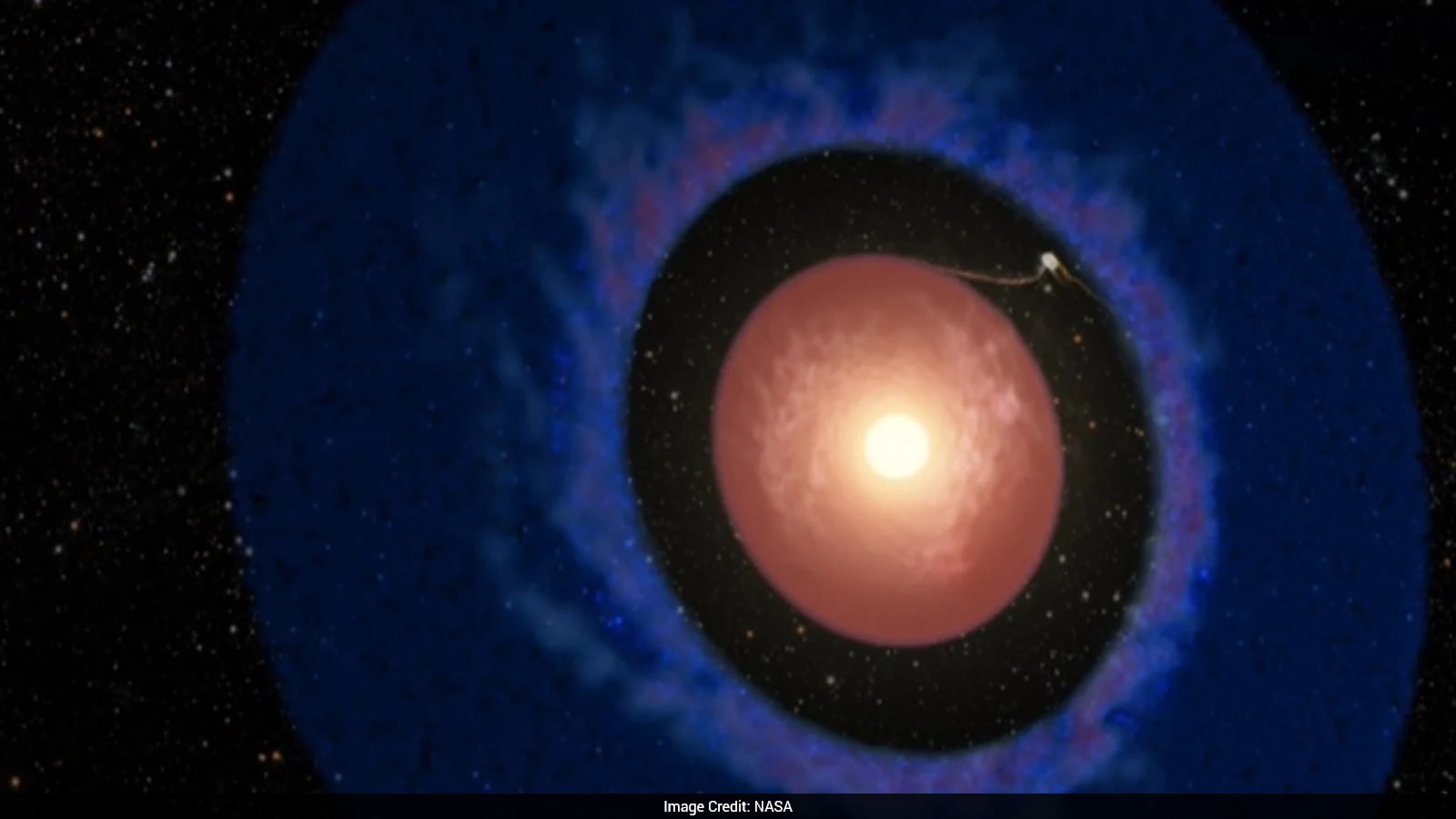
Astronomers found a very young planet called Elias 2-24 b.
It is less than one million years old.
That makes it the youngest confirmed planet scientists have found.
The planet is about as massive as Jupiter and circles a star far from Earth.
It is still traveling through the dusty and gassy disk where it formed.
Scientists found it in a gap in that disk, which may have been created by the planet itself.
These young planets are difficult to see because dust can hide them.
Most known planets are much older because they are easier to detect.
Studying this planet may help scientists improve their ideas about how planets are born.

Elias 2-24 b is less than one million years old, making it the youngest confirmed planet known.
The planet has roughly Jupiter’s mass and orbits the star Elias 2-24, about 450 light-years from Earth.
Researchers identified it in a gap within the star’s disk of dust, gas, ice and rock.
The discovery used archival observations from the W. M. Keck Observatory’s coronagraph in Hawaii.
The finding may reveal missing details in existing models of how planets form and develop.
- Who
- A team led by Andrea Bernardi, with co-author Lucas Cieza, discovered the planet.
- What
- Astronomers confirmed Elias 2-24 b, a planet less than one million years old and roughly as massive as Jupiter.
- Where
- The planet orbits the star Elias 2-24, about 450 light-years from Earth; observations were made using the W. M. Keck Observatory in Hawaii.
- When
- The study was published Wednesday in The Astrophysical Journal Letters; the articles do not provide a calendar date.
- Why
- Finding such a young planet could help scientists address gaps in models of planet formation.
Key facts
- Planet
- Elias 2-24 b
- Estimated age
- Less than one million years
- Approximate mass
- Similar to Jupiter
- Host star
- Elias 2-24
- Distance from Earth
- About 450 light-years
- Discovery data
- Archival observations from the W. M. Keck Observatory
- Publication
- The Astrophysical Journal Letters
Sources
Related news
NASA Launches Roman Telescope to Explore Cosmic Mysteries
Rare Moon Crater Discovered in NASA Scan After 2024 Impact
Small Asteroid Detected Before Exploding Over Australia's Waters

NASA Finds Earth Microbes Could Survive Near Moon’s South Pole