1 week ago
French Tourist Amazed as UPI QR Codes Spread Across India

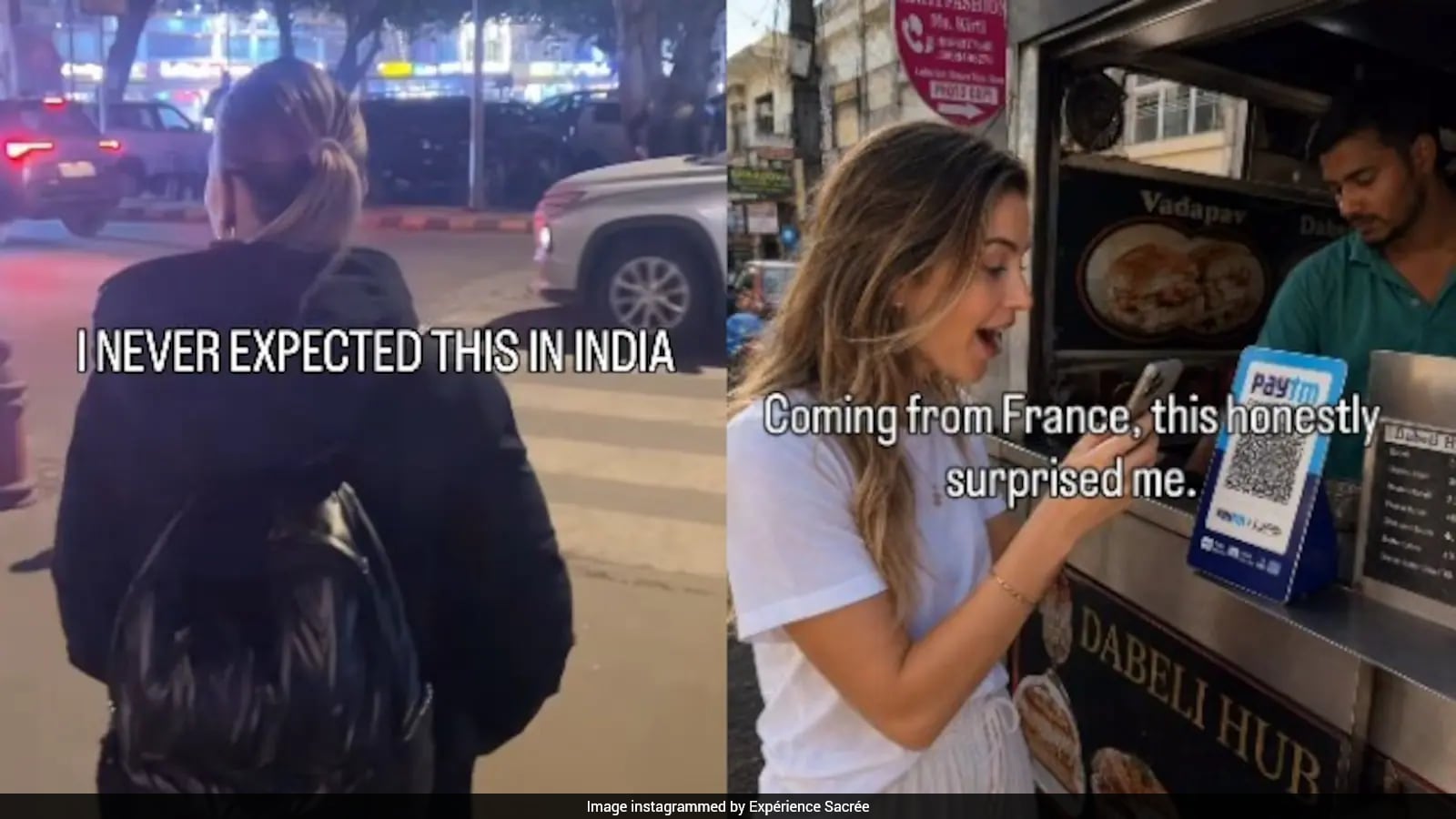
A French creator named Manika visited India and noticed QR codes almost everywhere.
People used them to pay for food, tea, rides and small purchases.
She was surprised because she expected digital payments mostly in large shops or cities.
Instead, she saw them at roadside stalls, cafés, rickshaws and neighbourhood businesses.
She already knew about UPI before visiting India.
However, she did not know it was used so much in ordinary daily life.
Paying could be as simple as scanning a code and confirming on a phone.
Some people online called UPI very convenient.
One commenter said Indians have used it widely for around 10 years.

French content creator Manika was surprised to find UPI QR codes throughout everyday commerce in India.
She saw QR payments at street-food stalls, chai shops, cafés, autorickshaws and tiny local businesses.
Manika already knew about UPI but did not expect it to support purchases as small as a ₹20 snack or ₹10 tea.
Online users praised UPI’s convenience, while another commenter said it has been widely used in India for about 10 years.
UPI processed 21.70 billion transactions worth more than ₹28.33 lakh crore in January 2026.
- Who
- French content creator and traveller Manika, along with online commenters.
- What
- Manika shared her surprise at seeing UPI QR-code payments used for everyday purchases and small businesses.
- Where
- Across India, including street-food stalls, chai shops, cafés, autorickshaws, local shops and neighbourhood businesses.
- When
- She shared the video on Instagram as UPI marked its 10th anniversary; January 2026 transaction figures were also cited.
- Why
- The widespread use of UPI showed Manika a cultural difference between everyday payments in India and France.
UPI as remarkable everyday convenience
UPI as an established payment norm
Use at small vendors
UPI as remarkable everyday convenience
Manika and several commenters viewed QR payments at tiny vendors and for low-cost purchases as seamless, impressive and convenient.
UPI as an established payment norm
Another commenter said the system has been widespread in India for about 10 years and that they had not used cash in four years.
Foreign visitor reaction
UPI as remarkable everyday convenience
Manika described the reach of UPI beyond big cities and upscale businesses as an unexpected cultural difference for someone from France.
UPI as an established payment norm
The contrasting view is that Indians generally regard these payments as ordinary daily transactions rather than a novelty.
Key facts
- Payment system
- Unified Payments Interface (UPI)
- Launch
- Introduced in August 2016 by the National Payments Corporation of India
- Small purchases cited
- A ₹20 snack and ₹10 street-side tea
- Payment locations
- Street stalls, local shops, cafés, autorickshaws and other neighbourhood businesses
- January 2026 transaction volume
- 21.70 billion transactions
- January 2026 transaction value
- More than ₹28.33 lakh crore
- Long-term growth
- Annual transaction volume rose from 1.78 crore in FY 2016–17 to 24,162 crore in FY 2025–26
Quotes
Unnamed online commenter
User responding to the discussion about India's long-running use of UPI
“Street food? Just scan the QR code. Chai? Scan the QR code. Auto? Scan the QR code. Even a tiny little shop in the middle of the street? QR code. Coming from France, this honestly surprised me.”
 livemint.com
“And what surprised me most is that it’s not just in big cities or fancy places. You can find QR codes at small street-food stalls, local shops, cafés, rickshaws and businesses of all kinds.”
livemint.com
 freepressjournal.in
Sources

Related news

Modi Marks UPI’s Decade as India’s Digital Payments Turning Point
UPI Turns India’s Payment Experiment Into Global Infrastructure
India’s UPI Revolution Pushes Digital Payments Toward Cashlessness

UPI at Ten: India’s Payment Rail Enters Next Decade

Naidu Hails UPI’s Transformative Impact on India’s Payments

Foreign Tourists Can Now Pay Via UPI in India
UPI Accepted in 11 Countries, But Payments Vary
Axis Bank Adds Separate UPI Limits for Payment Categories

Credit Card Transactions Surge as Average Spending Falls in July
India Plans Agentic AI Payments Through Popular UPI Network

India’s Banking Summit Maps AI’s Responsible Financial Frontier