2 hrs ago
MCD Outlines Delhi Waste Management Plans Amid Councillor Concerns
Delhi produces a very large amount of garbage every day.
The Municipal Corporation of Delhi wants to process more of this waste instead of sending it to landfills.
It plans to build five new waste-processing plants.
The corporation also wants people to separate waste into four types before collection.
Some councillors said this may be difficult for households with limited space.
They also said separated waste is sometimes mixed again during collection and transport.
MCD plans to remove more garbage spots and clean old landfill waste.
Officials also discussed processing cattle waste to help reduce pollution in the Yamuna.
Other councillors called for stronger inspections and higher fines for dumping waste in public places.

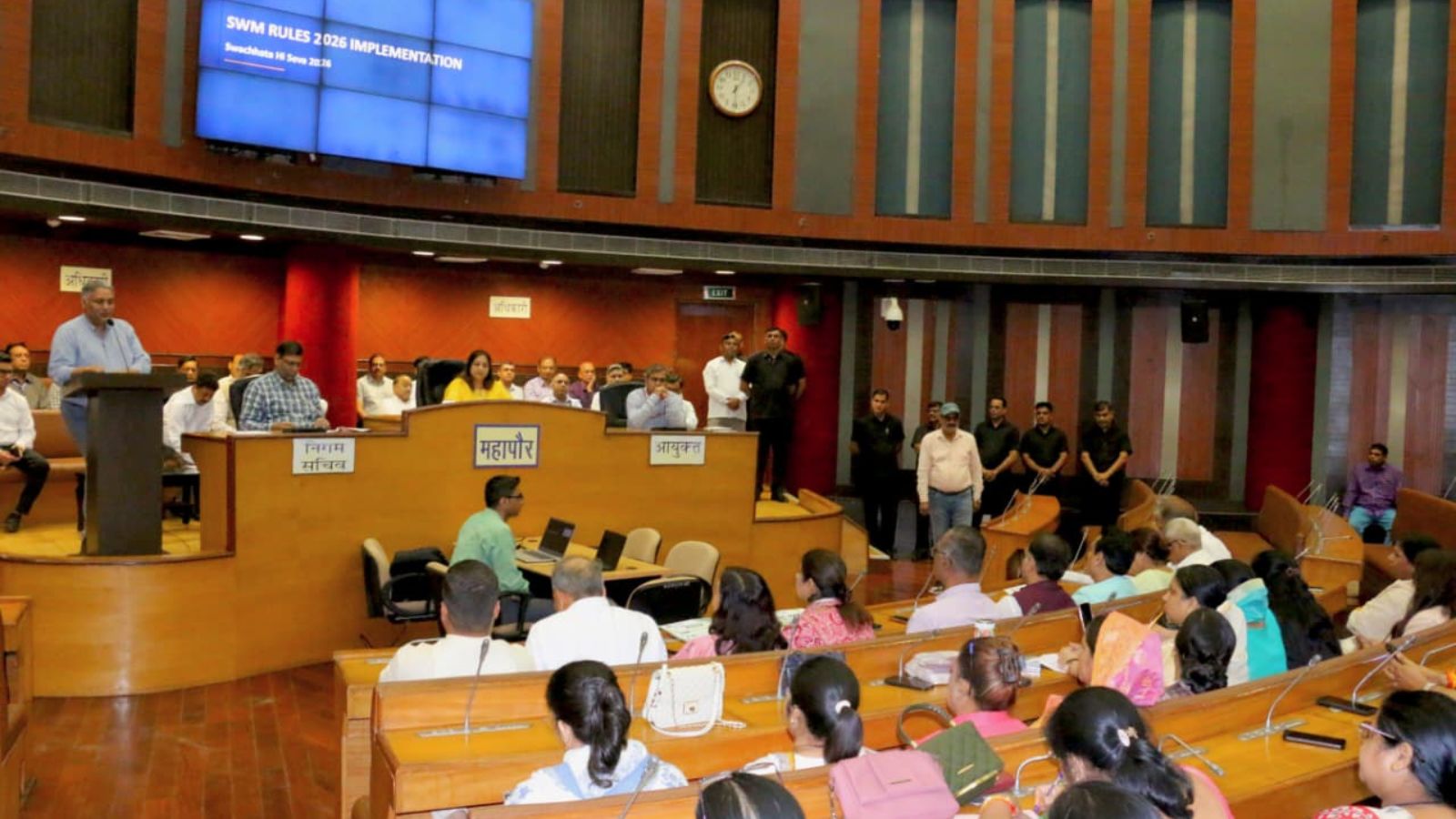
MCD discussed implementing the Solid Waste Management Rules, 2026, and improving monitoring at a Special Committee meeting.
Delhi generates about 13,500 tonnes of waste daily, while MCD currently processes around 60%.
Five decentralised processing plants with combined capacity of 6,000 tonnes are expected to open by December or mid-January.
MCD plans to eliminate more garbage points, expand transfer stations, increase tipper capacity and clear legacy landfill waste.
Councillors questioned four-bin segregation, waste mixing during collection, limited equipment and the adequacy of existing penalties.
- Who
- The Municipal Corporation of Delhi, its Chief Engineer Ajay Aggarwal, and MCD councillors, including opposition leader Ankush Narang.
- What
- The MCD Special Committee discussed implementing the Solid Waste Management Rules, 2026, and improving waste collection, segregation, processing and landfill clearance.
- Where
- The meeting took place at the MCD civic centre in Delhi, with waste sites including Okhla, Bhalswa and Ghazipur also discussed.
- When
- The meeting was held on Friday; a cleanup drive is scheduled from October 2 to October 17, with several facilities planned for December or mid-January.
- Why
- The discussion aimed to address gaps in waste segregation and processing, reduce landfill dependence, eliminate garbage points and tackle pollution linked to waste.
MCD Plans and Proposals
Councillor Concerns and Criticism
Four-way segregation
MCD Plans and Proposals
MCD urged residents to separate waste into different bins before handing it to collectors and is promoting source-level segregation.
Councillor Concerns and Criticism
Councillor Yogita Singh questioned whether households realistically have enough space for four bins and said residents resist nearby processing or composting points because of odour.
Collection and transport
MCD Plans and Proposals
MCD plans to increase tipper capacity by 30%, expand Fixed Compactor Transfer Stations and adopt collection and processing elements from Indore’s sanitation model.
Councillor Concerns and Criticism
Councillor Manisha Ashish Punia said segregation breaks down when waste is mixed during collection and transport, while her zone has only five or six tippers.
Enforcement and accountability
MCD Plans and Proposals
MCD is conducting a drive to clean and eliminate garbage points and is establishing Reduce-Reuse-Recycle centres in every ward.
Councillor Concerns and Criticism
Councillors called for stricter penalties and physical inspections of Bulk Waste Generators; Ankush Narang also alleged that the meeting was scheduled to stop AAP councillors from attending a protest over Election Commission Special Intensive Revision irregularities.
Key facts
- Daily waste generation
- Delhi generates approximately 13,500 tonnes of waste daily.
- Current processing
- MCD currently processes about 60% of the waste.
- New processing plants
- Five decentralised plants are being constructed with a combined capacity of 6,000 tonnes.
- Garbage Vulnerable Points
- MCD identified 823 points and has eliminated 230 of them.
- Legacy waste
- MCD said 200 to 220 lakh tonnes of an estimated 280 lakh tonnes have been cleared from three landfill sites.
- Cattle-waste processing
- MCD plans to divert 1,500 tonnes of cattle waste from the Yamuna area and increase dung-processing capacity to nearly 1,400 tonnes daily within a year.
- Proposed penalty
- A councillor proposed raising the open-dumping penalty from Rs 500 to Rs 10,000.
Sources
Related news
MCD Special Meeting Targets Better Waste Segregation and Cleanliness
Chanakyapuri Neighbourhood Takes a Different Route to Zero Waste
BMC Records 5,256 Waste Violations, Collects ₹90.22 Lakh

Dehradun DM Orders FIRs For Riverbank Garbage Dumping
Bengaluru Plans Waste Overhaul With GPS-Tracked Collection
MCD Flags Off 176 Electric Sanitation Vehicles in South Delhi
MCD Approves Rooftop Solar Plan for 1,100 Buildings
Delhi Chief Minister Launches Swachhata Hi Seva Campaign

Delhi High Court Orders Protection for Uttam Nagar Accused’s Mother