

2 weeks ago
PCOS Symptoms Return Despite Weight Loss, Doctor Explains Why
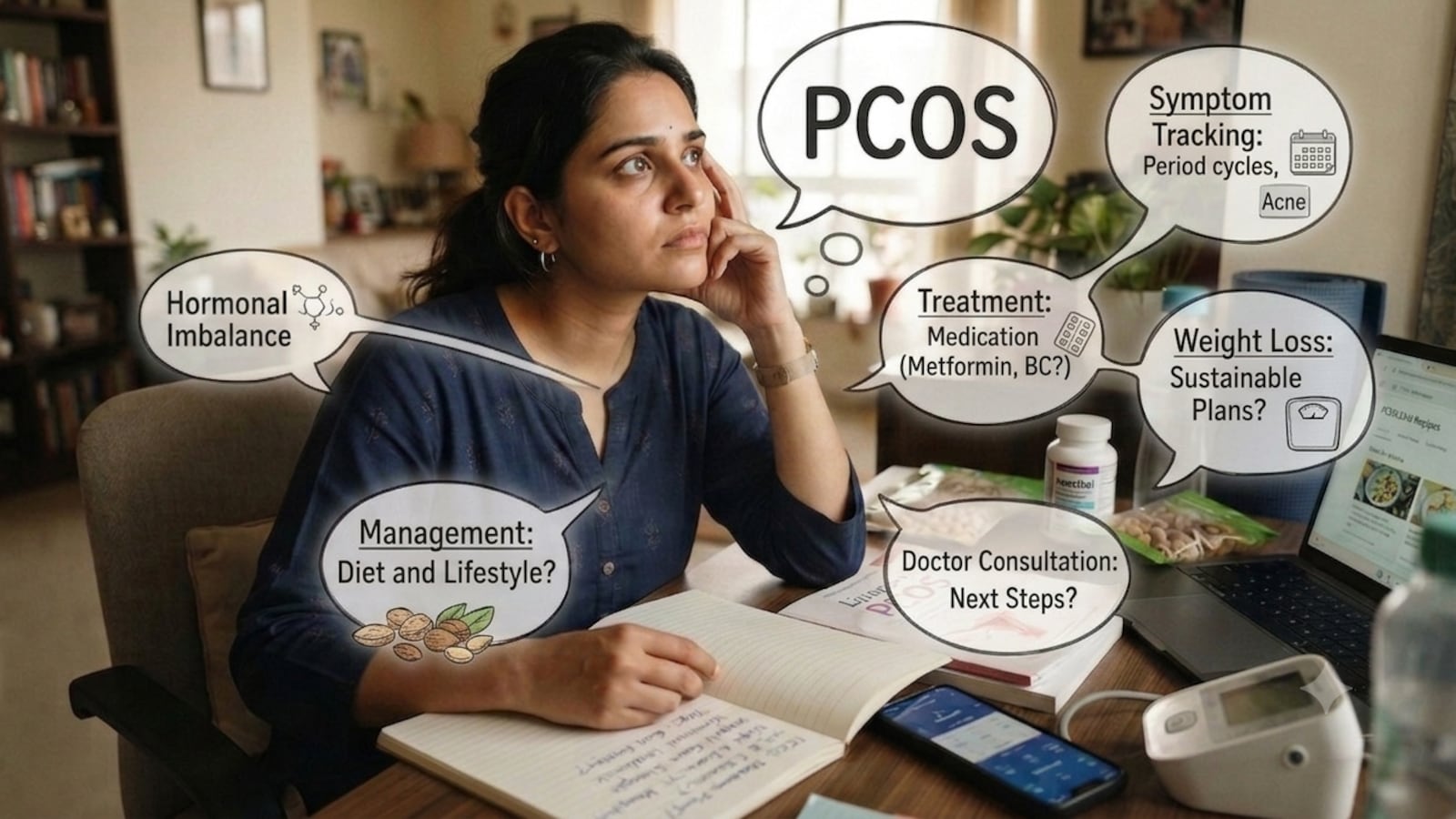
PCOS is a long-term health condition that can affect periods, energy, mood, weight and ovulation.
Tanisha was diagnosed when she was 13 years old.
Her symptoms improved when she lost weight, but they later returned after her routine changed and she gained weight.
She also experienced fatigue, mood swings and irregular periods.
Losing weight again in 2024 helped her symptoms improve for a time.
Her doctor explains that this does not mean PCOS has disappeared permanently.
PCOS can become harder to manage when weight, activity or metabolic health change, although every person is different.
The doctor recommends healthy habits that are realistic to continue, regular checkups and treatment for individual symptoms.

Tanisha Sharma, diagnosed with PCOS at 13, says symptoms have repeatedly returned over 15 years.
Her symptoms improved after weight loss at 23 and again after losing about 7 kilograms in 2024.
After beginning a desk job and gaining weight, she experienced renewed fatigue, mood swings and irregular periods.
Dr. Anjana Singh says PCOS is a long-term condition whose symptoms can improve and reappear, with no single explanation for every relapse.
The doctor recommends sustainable eating, regular physical activity, behavioural support and ongoing monitoring rather than short-term restrictive routines.
- Who
- Tanisha Sharma, a 28-year-old working professional, and Dr. Anjana Singh, Director of Obstetrics and Gynaecology at Fortis Hospital Noida.
- What
- Tanisha describes recurring PCOS symptoms, while Dr. Singh explains why symptoms may improve and return and how the condition can be managed.
- Where
- The article does not specify where Tanisha's diagnosis and relapses occurred; Dr. Singh is identified with Fortis Hospital Noida.
- When
- Tanisha was diagnosed at 13, improved at 23, lost about 7 kilograms in 2024, and reported that PCOS had returned by mid-2026.
- Why
- PCOS is a long-term condition, and symptoms may be influenced by changes in weight, physical activity and metabolic health, though there is no single reason for relapse in every woman.
Key facts
- Condition
- Polycystic ovary syndrome (PCOS), also referred to in the article as PMOS.
- Initial diagnosis
- Tanisha was diagnosed at age 13.
- Symptoms described
- Irregular periods, fatigue, mood swings, hair loss, weight gain and acne.
- First improvement
- At age 23, weight loss was followed by regular periods, clearer skin and improved wellbeing.
- 2024 weight loss
- Tanisha lost approximately 7 kilograms, after which her doctor found no signs of PCOS and her periods were regular.
- Later recurrence
- By mid-2026, Tanisha said her PCOS had returned and was worse than before.
- Management advice
- Dr. Singh recommends sustainable healthy eating, regular physical activity, behavioural support and regular follow-up.
Quotes
Dr. Anjana Singh
Director of Obstetrics and Gynaecology at Fortis Hospital Noida
“"PCOS is a long-term condition, so symptoms can improve and then become noticeable again over time. Weight changes, physical activity and metabolic health can influence symptoms such as irregular periods, difficulty with ovulation, acne and excess hair growth."”
 NDTV
NDTV
“"It's a never-ending cycle. It keeps coming back. I've tried everything. With busy lifestyles, it's hard to stick to a strict diet or exercise regularly, but if I don't, PCOS simply destroys everything."”
NDTV
Sources
Related news
Doctor With PCOS Took Inositol for 60 Days, Shares Results

Ancy Sojan Breaks India’s Long Jump Record While Managing PCOD

GLP-1 Obesity Drugs Show Early Promise Against Hormonal Disorder PMOS

Why Weight Returns and How to Make Maintenance Sustainable

Menstrual Changes May Signal Hidden Health Problems, Doctor Says

Sharma and Malik share halfway lead at Telangana Golconda Masters

Films Raise Awareness of Violence but Cannot End It

Teen Allegedly Gangraped on Moving Delhi Bus; Two Arrested

Noida Intensifies Bus Checks After Gang-Rape; Delhi, RTO Absent

NHRC Seeks Police Reports Over Alleged Minor’s Bus Gang Rape
