1 week ago
How Shrinking Freedom of Expression Threatens India’s Democracy
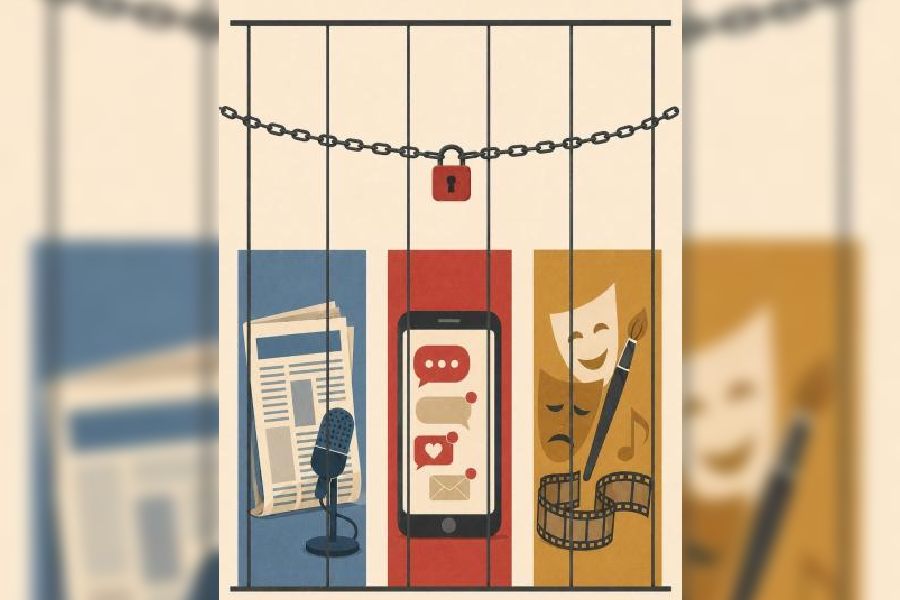
The article says democracy needs people to be able to speak and listen freely.
Citizens use speech to understand problems and question their leaders.
News gives people information about what is happening.
Social media gives them places to discuss and debate that information.
Movies and stories help people imagine how others experience the world.
The article argues that legal threats, harassment, and censorship can make people afraid to speak.
This fear may affect journalists, women, minorities, filmmakers, and ordinary citizens.
Elections can still happen even if people no longer feel able to participate openly.
The writer says that people who keep speaking help preserve freedom for everyone.

The article argues that free expression enables citizens to deliberate, form public opinion, and hold governments accountable.
It identifies journalism, social media, and entertainment as three connected areas where public voice may be weakened.
The article says investigations, raids, legal threats, ownership pressures, and advertising dependence can discourage critical journalism.
Online harassment, doxxing, hate spin, and government takedown orders can raise the cost of participation, especially for women and minorities.
It argues that regular elections may continue even as citizens gradually lose the informational, deliberative, and imaginative capacities democracy requires.
- Who
- The article is written by Manoj Kumar Jha, a Rajya Sabha member of the Rashtriya Janata Dal, and discusses citizens, journalists, online participants, and artists.
- What
- It examines how intimidation, legal pressure, harassment, and censorship may weaken freedom of expression and democratic participation.
- Where
- India, including its news media, social-media platforms, and film, television, and streaming industries.
- When
- The article discusses present conditions in India and refers to developments across contemporary public life.
- Why
- The author argues that democracy depends on information, public debate, and the freedom to imagine and express alternative views.
Key facts
- Author
- Manoj Kumar Jha
- Author’s position
- Member of Parliament (Rajya Sabha), Rashtriya Janata Dal
- Central principle
- Freedom of expression is presented as necessary for democratic self-government.
- Areas examined
- News, social media, and cinema and entertainment
- Reported pressures
- Investigations, raids, legal provisions, criminal complaints, harassment, doxxing, and takedown orders
- Most affected groups
- The article says online participation costs fall hardest on women and minorities.
- Democratic risk
- Elections may continue while the public’s capacity for informed judgment and participation declines.
Sources
Related news
India’s Digital Blocking Orders Raise Fresh Free Expression Concerns
India’s Press Protests Have Repeatedly Forced Government Retreats

Democracy's Soul Depends on Institutions, Not Ballots Alone, Essay Argues
Indian social media users prefer voice messaging, survey finds

BJP Leader Sanjay Tandon Warns Against Parliamentary Disruptions
Opposition Challenges 7.8% GDP Growth Amid Jobs, Price Concerns
Bhagwat’s US Diversity Message Draws Opposition Doublespeak Charge
Jyoti Yadav’s Covid Book Challenges India’s Forced Forgetting

Kolkata Police Review Jadavpur Clashes Footage; No Arrests Yet