1 hr ago
Government to Track Merchant Charges After UPI MDR Change
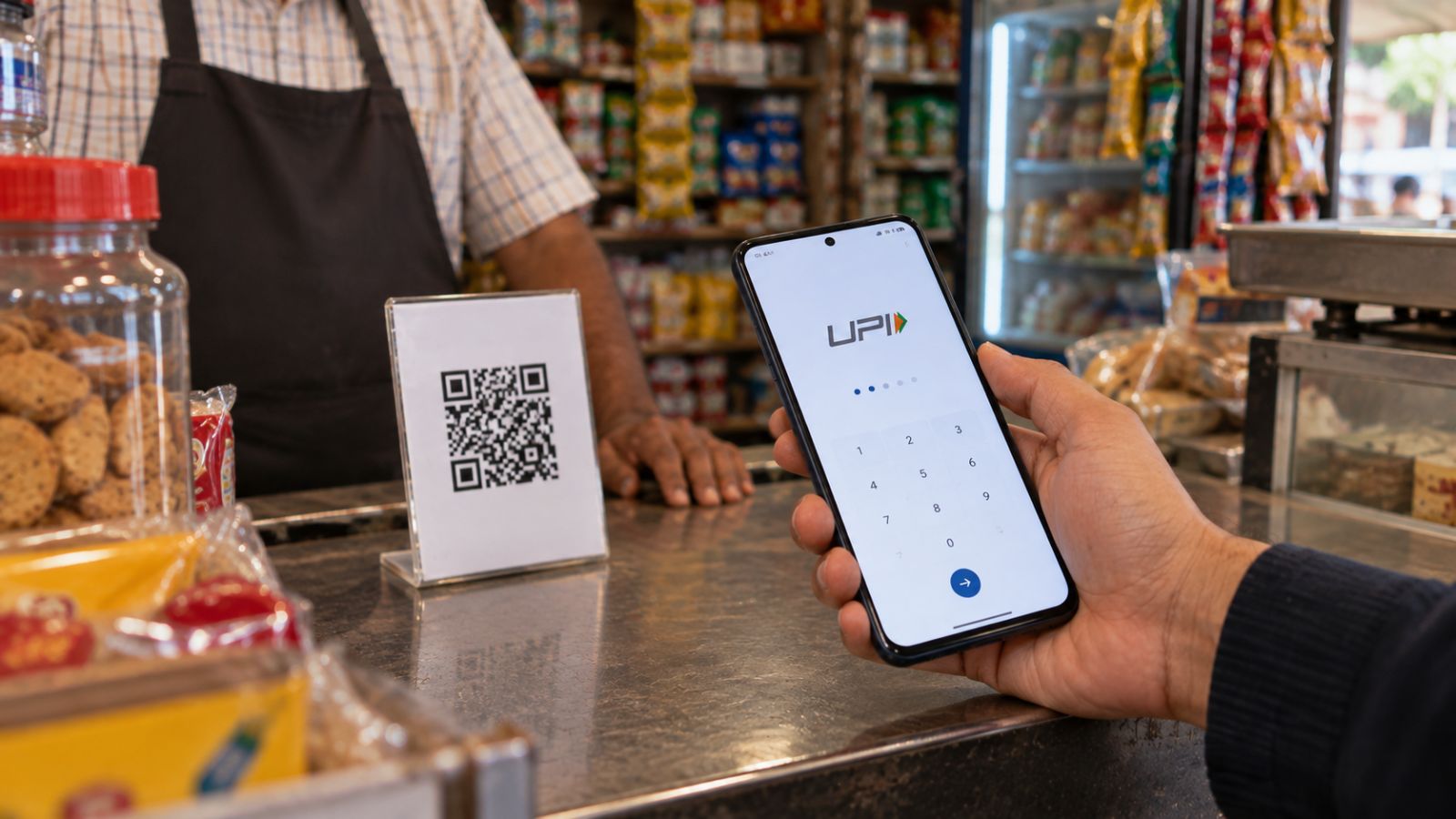
The government plans to watch how shops handle a new fee on some UPI payments.
The fee applies when a person pays a merchant more than Rs 2,000 through UPI.
Merchants are supposed to pay the fee, not customers.
The usual fee will be 0.4% of the payment, with a maximum of Rs 300.
Some purchases will have a smaller fixed fee or no fee at all.
The government says fees could help pay for and improve the UPI system.
Shopkeepers worry that they may need to charge customers more or take cash instead.
Officials say they do not expect UPI use to fall, but the actual effect will only be known after the new rules begin.

The government will monitor daily whether merchants pass the new UPI MDR to consumers from October 15.
The MDR is 0.4% on person-to-merchant UPI payments above Rs 2,000, capped at Rs 300.
Certain goods and services will have a flat Rs 5 fee, while some transactions remain exempt.
The subsidy incentive for UPI payments below Rs 2,000 will end after October 15.
Merchants have warned they may pass on costs or accept cash, raising concerns about higher prices and slower digital payments.
- Who
- The Indian government, the National Payments Corporation of India, payment companies, and merchants are involved.
- What
- The government will track whether merchants pass a new Merchant Discount Rate on certain UPI payments to consumers.
- Where
- India.
- When
- Monitoring is scheduled to begin on October 15; the year is not specified in the article.
- Why
- The revised fee framework is intended to help cover UPI’s operating costs and support innovation, while the government seeks to ensure merchants do not improperly charge consumers.
Government and Payments Industry
Merchants and Consumer Concerns
Who should bear the cost
Government and Payments Industry
The government says the MDR is a merchant charge and will monitor whether merchants pass it to consumers.
Merchants and Consumer Concerns
Merchants say they may pass the additional cost to consumers or stop accepting UPI for some payments.
Effect on UPI use
Government and Payments Industry
A senior official expressed confidence that UPI transactions will not decline after the new framework begins.
Merchants and Consumer Concerns
Merchants and critics fear higher prices or a shift toward cash could slow India’s digital-payments expansion.
Need for the fee
Government and Payments Industry
Government officials argue that fully subsidising UPI cannot ensure continued innovation and that the system costs about Rs 20,000 crore annually to operate.
Merchants and Consumer Concerns
Merchants are concerned about the practical burden of the new charge and its possible effect on customers and sales.
Key facts
- MDR rate
- 0.4% of eligible UPI transactions above Rs 2,000, capped at Rs 300.
- Who pays
- The MDR is intended to be paid by merchants, not consumers.
- Transaction scope
- The fee applies only to person-to-merchant payments; person-to-person transfers remain free.
- Exemptions
- Recurring UPI payments such as OTT subscriptions and SIP investments will not face a fee.
- Special rates
- Certain goods and services will attract a flat Rs 5 fee, while some capital-market transactions will have a 0.02% fee.
- Monitoring
- Officials plan to compare daily merchant-payment data with figures from a year earlier.
- Estimated revenue
- Industry officials estimate the revised framework could generate about Rs 15,000 crore annually.
Quotes
Senior government official
An unnamed senior government official explaining the rationale for the revised UPI fee framework
“From October 15, we will monitor on a daily basis whether merchants are passing on the MDR to consumers. Comparisons will be made with year ago figures.”
 indianexpress.com
“You can keep a system running through subsidies, but that can’t ensure innovation. There is a limit to innovations when subsidies are involved.”
indianexpress.com
Sources
Related news

UPI Sets 0.4% MDR on High-Value Merchant Payments

India Adds UPI Merchant Fees Above ₹2,000

UPI MDR Begins October 15, Merchants Face Charges, Customers Don’t
UPI MDR Above ₹2,000 May Begin Within Two Weeks

New UPI MDR Rules Keep Consumers Free, Charge Eligible Merchants
India’s UPI MDR Plan Tests Digital Payments’ Durability
CII President Urges India to Accelerate Growth and Reforms
BharatPe Backs New UPI MDR Framework, Rejects Grover’s Criticism

UPI Fee Could Create ₹270 Billion Revenue Pool
Petroleum Dealers Seek UPI MDR Exemption on Fuel Sales