1 week ago
Supreme Court Says False FIR Alone Cannot Abet Suicide

The Supreme Court explained when someone can be blamed for helping cause a suicide.
It said that filing a legal case against someone is not automatically the same as telling or forcing them to die.
This remains true even if the case or FIR is later described as false.
A person cannot be accused only because the person they took legal action against later died by suicide.
The court said there must be direct instigation.
Direct instigation means clearly encouraging or pushing someone toward suicide.
The decision was made by Justices Manoj Misra and Vijay Bishnoi.
It was issued on August 18 in New Delhi.

The Supreme Court ruled that initiating legal action does not by itself amount to abetment of suicide.
The ruling applies even when the legal action is alleged to involve a false FIR.
A person cannot be accused of abetting suicide solely because someone they pursued legally later dies by suicide.
The court said direct instigation is required to establish abetment of suicide.
The ruling was delivered on August 18 by Justices Manoj Misra and Vijay Bishnoi.
- Who
- A Supreme Court bench comprising Justices Manoj Misra and Vijay Bishnoi.
- What
- The court ruled that even a false FIR or other legal action does not by itself constitute abetment of suicide without direct instigation.
- Where
- New Delhi.
- When
- August 18.
- Why
- To clarify that using the legal system to protect one’s rights is not, by itself, direct instigation to suicide.
Key facts
- Court
- Supreme Court
- Judges
- Justices Manoj Misra and Vijay Bishnoi
- Ruling
- Legal action alone does not amount to abetment of suicide.
- False FIR
- Even an allegedly false FIR cannot by itself establish abetment.
- Required element
- Direct instigation is required.
- Date
- August 18
- Location
- New Delhi
Sources
Related news
Supreme Court Sets Limits for Abetment of Suicide Claims
Telangana High Court Grants Bail to Advocates in Suicide Case

Thane Man Dies by Suicide During Video Call; Four Booked

Five Held in Hyderabad Suicide Case Over Motorcycle Damage
Mumbai Law Graduate Jumps to Death After Ex-Girlfriend's Threats
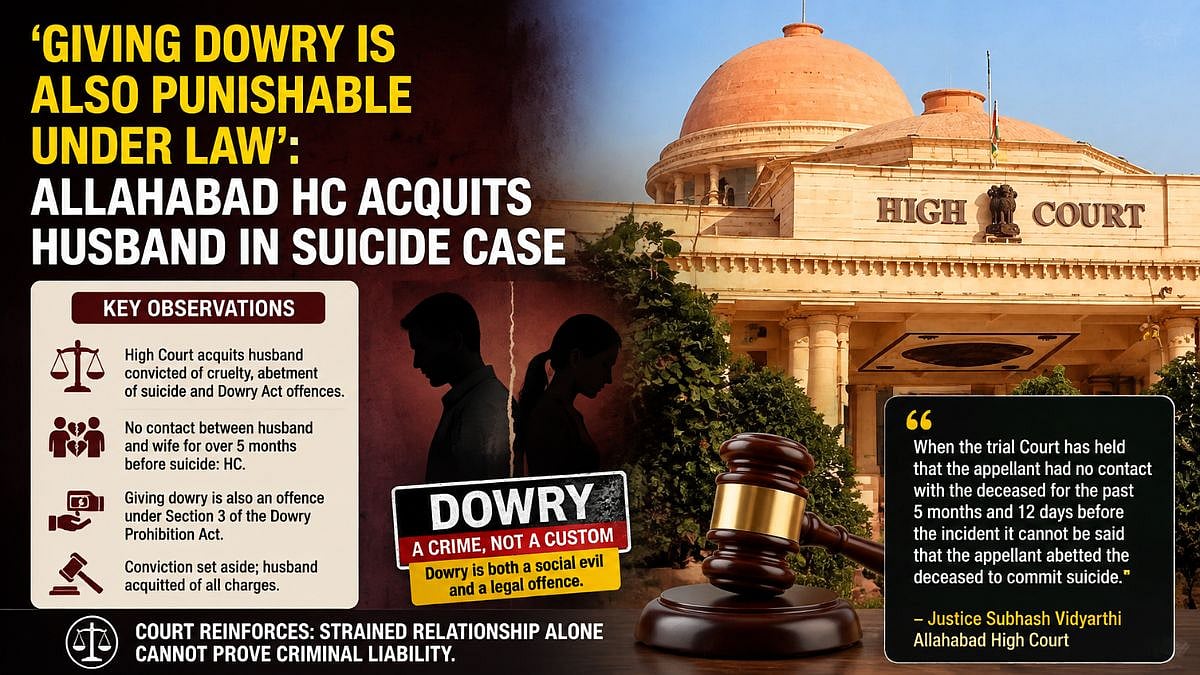
Allahabad High Court Acquits Husband in Dowry Abetment Suicide Case

Two Years After RG Kar Doctor's Rape-Murder, Case Remains Unresolved

ED widens Chhattisgarh probes with two arrests and searches
Delhi High Court Orders Madhya Pradesh to Pay Advocate Dues
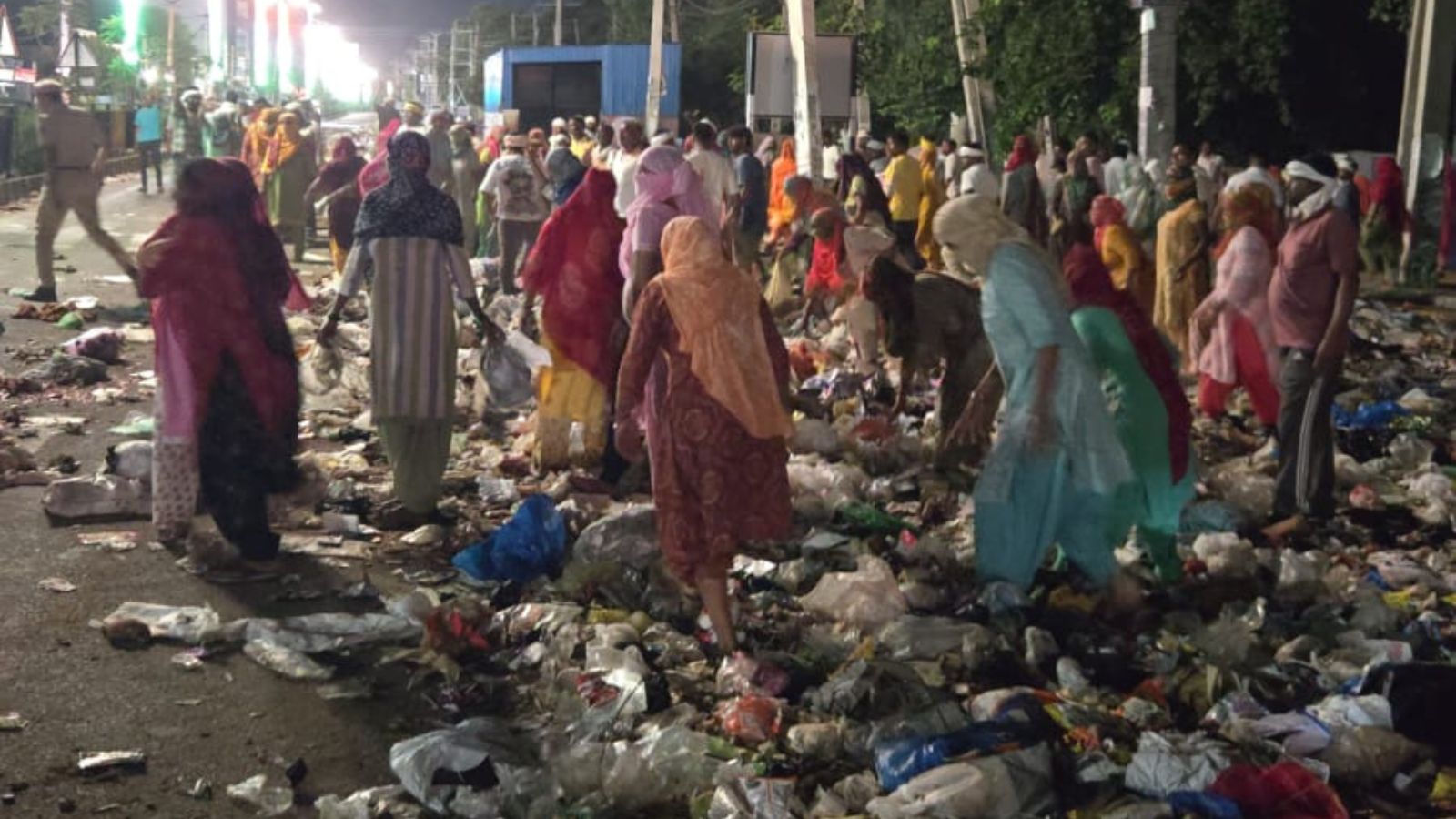
Haryana sanitation workers’ strike puts BJP government under pressure
Orissa High Court Says Brothel Customers Cannot Face Trafficking Charges