1 day ago
India’s growth stays strong despite oil, war and monsoon risks
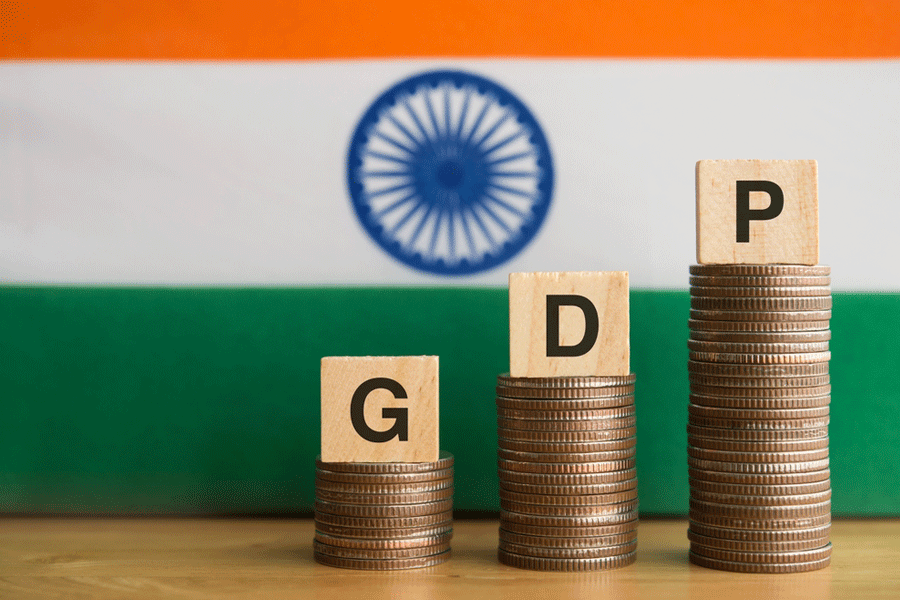
India’s economy grew faster than experts expected in April to June.
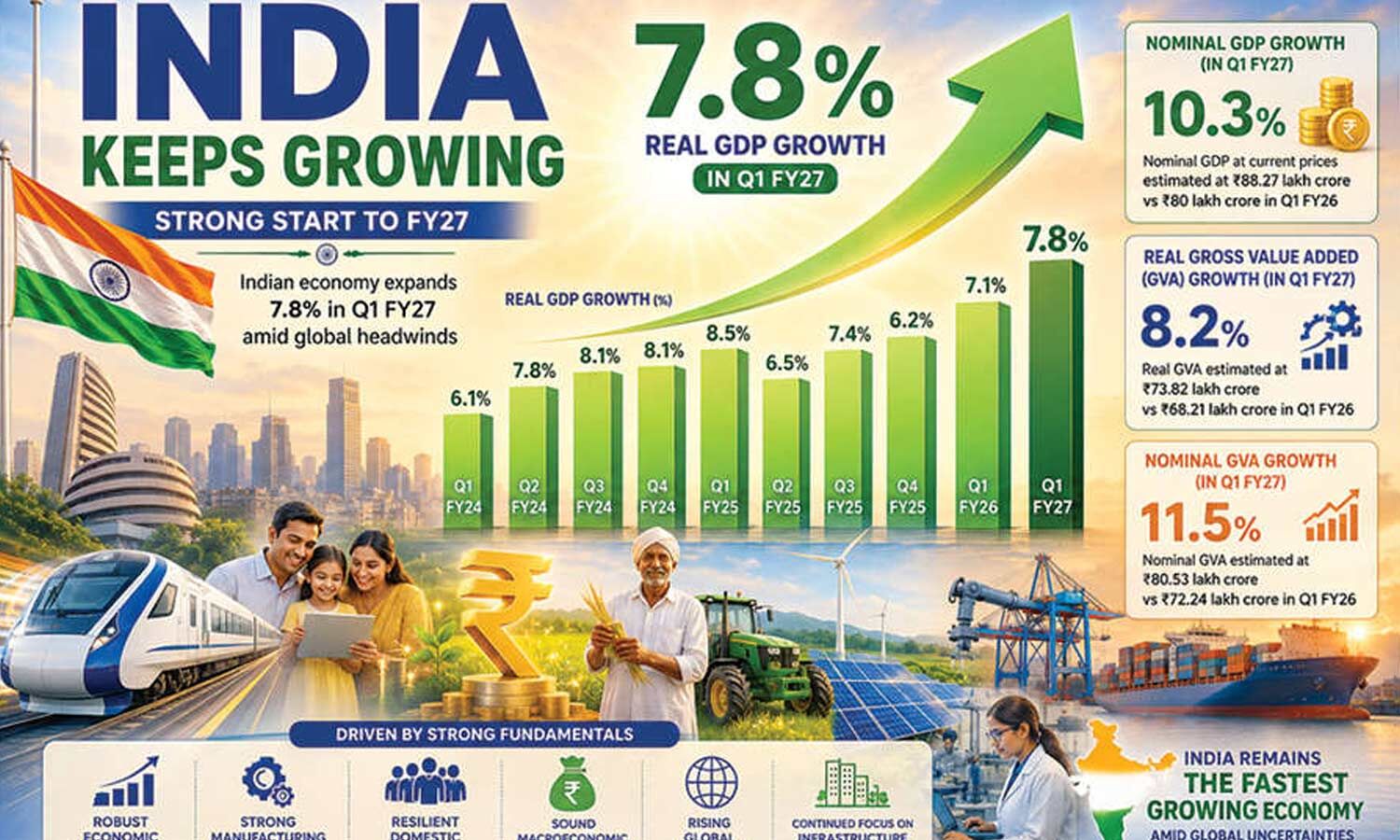
It grew 7.8 percent during that quarter.
People kept buying things, factories stayed busy, and companies invested more.
Government spending and exports also helped.
A war involving Iran and uneven rain have not slowed the economy as much as feared.
But India imports about 90 percent of its oil, so expensive oil is a serious danger.
Higher oil and food prices could make everyday goods cost more.
The central bank might then raise interest rates, making loans more expensive.
Economists will watch investment, exports, monsoon rainfall and Diwali shopping to see whether growth continues.

India’s economy grew 7.8% in the April-to-June quarter, exceeding forecasts.
Economists raised full-year growth forecasts to about 7%, citing resilient consumption and investment.
Private investment rose nearly 12%, with data centers, power and metals among key drivers.
India’s exposure to expensive oil remains a major risk because it imports about 90% of its crude needs.
Higher oil or food prices could weaken the rupee and prompt the Reserve Bank of India to raise interest rates.
- Who
- India’s economy, companies, households, economists and the Reserve Bank of India are central to the story.
- What
- India recorded 7.8% quarterly growth, prompting economists to raise full-year forecasts while warning of external risks.
- Where
- India, with risks also linked to global oil markets and potential disruptions through the Strait of Hormuz.
- When
- The growth figure covers the April-to-June quarter; economists are assessing prospects for the rest of the financial year.
- Why
- Strong domestic consumption, manufacturing, government spending, exports and private investment supported growth, while oil prices, inflation and the monsoon could affect future performance.
Growth optimists
Risk-focused economists
Domestic momentum
Growth optimists
Strong consumption, manufacturing, exports and investment suggest India can continue growing above 7%.
Risk-focused economists
Future momentum depends on whether companies maintain capital spending, bank lending remains strong and corporate earnings support investment.
Oil shock
Growth optimists
The economy has absorbed the Iran-related oil shock better than expected, and growth could remain above 7% if crude prices stay near current levels and supplies remain secure.
Risk-focused economists
A worsening conflict or serious disruption through the Strait of Hormuz could raise energy, transport, manufacturing and food costs, weaken the rupee and reduce household spending.
Interest rates and inflation
Growth optimists
Stronger growth gives the Reserve Bank of India more room to focus on inflation rather than supporting domestic activity.
Risk-focused economists
If oil and food prices rise while growth remains strong, pressure could intensify for interest-rate increases, making mortgages, car loans and business borrowing more expensive.
Key facts
- Quarterly growth
- India grew 7.8% in the April-to-June quarter.
- Forecast revisions
- Several economists now see full-year growth at about 7%, with some estimates ranging from 7% to 7.2%.
- Private investment
- Private investment increased nearly 12% in the latest quarter.
- Inflation
- Inflation was reported at 4.45%, above the central bank’s target.
- Oil dependence
- India imports around 90% of its crude oil needs.
- Monsoon
- Rainfall was broadly adequate in many key agricultural areas, helping limit risks to rural demand.
- Growth streak
- India has exceeded growth forecasts for 12 consecutive quarters, according to ANZ Research economist Dhiraj Nim.
Quotes
Radhika Rao
Senior economist at DBS Bank
“The key risks are now less about a softer domestic story and more about the persistence of high oil prices, rupee weakness and tighter global financial conditions”
 telegraphindia.com
Sources
Related news
India’s Q1 FY27 Growth Beats Forecast Despite Iran War Fears
No hike, no panic: RBI holds rates, raises GDP forecast

India’s Strong First-Quarter Growth Outpaces Expectations Despite Risks
India’s 7.8% Q1 Growth Outpaces Forecast Despite Global Risks
India’s Economy Shows Strong Resilience Despite External Pressures

India’s Economy Shows Resilience, But Risks Remain

Saudi Arabia Says Iranian Tanker Attack Killed Two Sailors
U.S.-Iran Exchange Escalates Across Middle East, Markets Slide

Trump Aides Seek Quiet Iran War Before Midterm Elections

US Warns Middle East Travelers Amid Escalating Iran-Linked Tensions

Indian Stocks Slide as Oil, Conflict and Yields Rise