2 weeks ago
Why India's contribution to mathematics of zero is remarkable
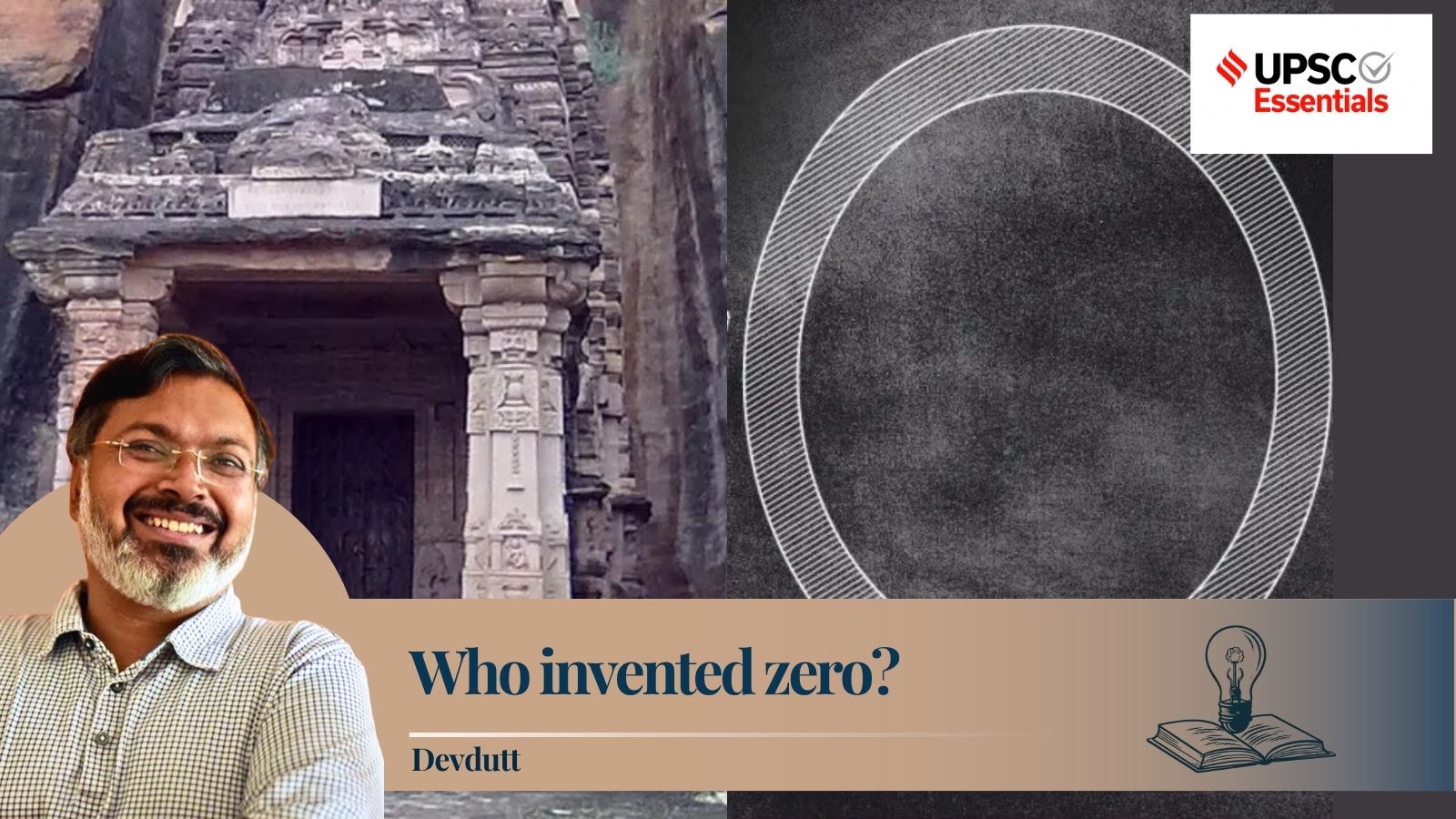
Zero is a very special number that helps us count and do math.
In India, many people believe that India invented zero, and schoolchildren are taught this.
But the true story is bigger and involves many countries.
Long ago, people in India, China, and Greece all began counting in groups of ten, like our ten fingers.
Later, the idea of place value meant a digit's spot changed its value, like the number 1 being able to mean one, ten, or a hundred.
To show an empty spot, people needed a zero symbol.
The oldest zero symbol we know of was found in Cambodia, not India.
India's great gift was to treat zero as a real number that could be added, subtracted, and multiplied.
From India, these ideas traveled to the Islamic world and then to Europe.
Today, the number system we all use is the work of many cultures over many centuries.

India's role in developing zero is widely celebrated in schools, but the real history spans several civilizations.
Decimal counting appeared independently in India, Greece, and China, including in the Rig Veda and Chinese records from around 1500 BCE.
The oldest known zero symbol is a stone inscription in Cambodia dated 683 CE, older than India's Gwalior inscription of 876 CE.
India's greatest contribution was treating zero as a number with mathematical properties for calculations, not just a placeholder.
Zero's mathematics spread from India through the Islamic world to Europe, forming today's global number system.
- Who
- Indian, Chinese, and Southeast Asian mathematicians and scribes, along with historians such as Joseph Needham and Lam Lay-Yong; the article is written by mythologist Devdutt.
- What
- The history of zero, decimal counting, and place-value notation across several civilizations.
- Where
- India, China, Cambodia, Indonesia, the Islamic world, and Europe.
- When
- From Chinese records around 1500 BCE through the Gwalior inscription of 876 CE and the later spread of zero to Europe.
- Why
- Zero is essential to modern science, computers, engineering, and finance, and India played a vital role in developing the mathematics of zero.
India-centric narrative
Multi-civilization history
Origin of zero
India-centric narrative
India invented zero, a claim widely taught in Indian schools and repeated in public discussions.
Multi-civilization history
Zero's story spans several civilizations, with the oldest known zero symbol found in Cambodia (683 CE) and the written symbol possibly developing in Southeast Asia.
Place-value notation
India-centric narrative
India is credited with developing place-value notation, linked to Panini's idea of limited forms creating unlimited ideas.
Multi-civilization history
Chinese mathematicians had a place-value system using counting rods by about 400 BCE, before written place-value notation appeared in India around the third century CE.
Key facts
- Oldest known zero symbol
- Stone inscription in Cambodia, 683 CE
- India's earliest undisputed zero inscription
- Chaturbhuj Temple, Gwalior, 876 CE
- Bakhshali manuscript
- Uses a dot for zero, dated around 7th century CE (debated)
- Chinese place-value system
- Counting rods by about 400 BCE
- Written place-value notation in India
- Appeared around third century CE; Brahmi numerals lacked place value
- India's key mathematical contribution
- Treating zero as a number with rules for addition, subtraction, and multiplication
- Spread of the number system
- India to the Islamic world, then to Europe
- Scholars of Southeast Asian origin theory
- Joseph Needham and Lam Lay-Yong
Sources
Related news

Sudha Murty Visits Nalanda With Parliamentary Delegation
Experts Challenge Maharashtra Textbook’s Depiction of Vedic Mathematics

Sujatha Ramdorai’s Journey from Number Plates to Number Theory
India’s UPI Revolution Pushes Digital Payments Toward Cashlessness

India’s Cultural Heritage Strengthens Its Global Soft Power

Pregnant Inmates in Madhya Pradesh Jails Struggle to Access Release

Two Women Allegedly Assault Colleague In Gwalior Street Fight

Supreme Court Quashes FIRs Against 15 CJP Activists
Bhopal GRP Recovers ₹62.26 Lakh in Train Theft Crackdown

Four Killed, Two Critically Injured in Ashoknagar Bike Crash