1 hr ago
Pakistan Says Oil Shock Could Accelerate Electric Vehicle Shift
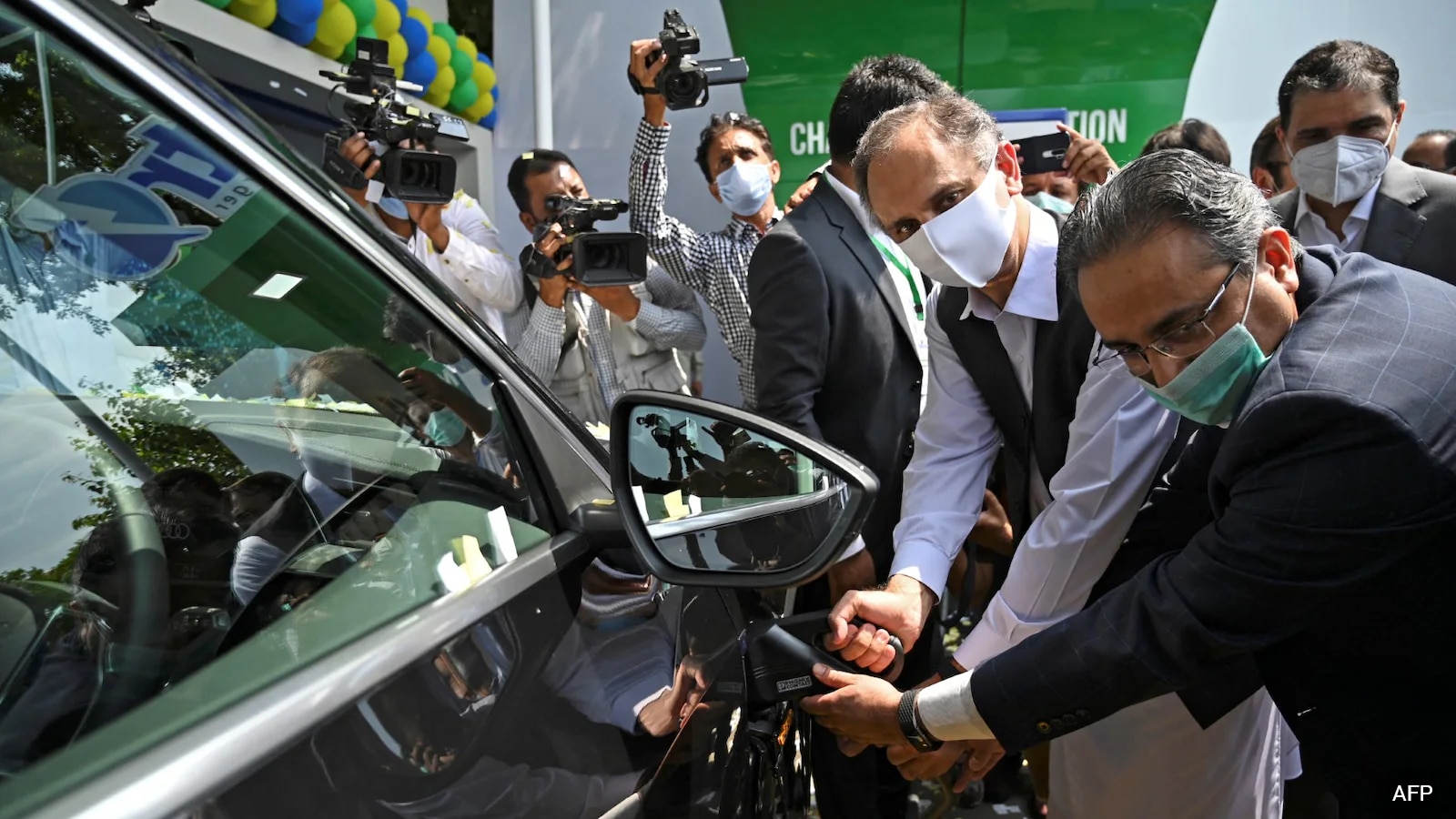
Pakistan wants more people to buy electric vehicles.
Its goal is for electric vehicles to make up 30% of new vehicle sales by 2030.
A government adviser says higher petrol and diesel prices are making electric vehicles more appealing.
He says buyers may now earn back the extra cost of an electric vehicle sooner.
Sales of electric motorcycles and scooters have reportedly tripled, and electric-car sales have doubled.
The government is working on a new auto policy that may offer tax incentives.
But electric vehicles can still cost more, and charging stations are a challenge.
So the change may happen faster, but changing most vehicles will take years.

Pakistan's government aims for electric vehicles to make up 30% of new vehicle sales by 2030.
Government adviser Haroon Akhtar says rising fuel prices could help the country reach that target earlier.
Since the Middle East war began in February, petrol prices rose 54% and diesel prices 43%, according to the article.
Akhtar says electric motorcycle and scooter sales tripled year over year, while electric-car sales doubled; comprehensive industry data are not publicly available.
Pakistan is preparing a new auto policy that may include tax incentives for electric vehicles, though cost and charging infrastructure remain barriers.
- Who
- Pakistan's government, including adviser Haroon Akhtar, and prospective vehicle buyers.
- What
- The government expects rising fuel prices to speed electric-vehicle adoption and is preparing a new auto policy.
- Where
- Pakistan.
- When
- The 30% new-vehicle sales target is for 2030; the article says the Middle East war began in February.
- Why
- Higher petrol and diesel prices make electric vehicles more attractive and can increase Pakistan's import costs.
Reasons for faster EV adoption
Limits to a rapid transition
Impact of higher fuel prices
Reasons for faster EV adoption
Haroon Akhtar says rising oil prices have shortened the time buyers need to recover an EV's higher upfront cost, and he expects the 2030 target to be reached earlier.
Limits to a rapid transition
The article notes that high vehicle costs and limited charging infrastructure remain obstacles to a large-scale change.
Economic effects
Reasons for faster EV adoption
A shift toward EVs could reduce exposure to petroleum imports, which accounted for almost a quarter of Pakistan's imports in the cited period.
Limits to a rapid transition
The article cautions that even with incentives and greater interest, changing the country's vehicle fleet and oil consumption will take years.
Key facts
- EV target
- 30% of new vehicle sales by 2030.
- Petrol price change
- Up 54% since the Middle East war began in February, according to the article's cited data.
- Diesel price change
- Up 43% over the same period, according to the article's cited data.
- Reported EV sales
- Electric motorcycle and scooter sales tripled year over year; electric-car sales doubled. Industry-wide EV sales data are not publicly available.
- Petroleum imports
- $16.9 billion in the year through June 2026, almost a quarter of Pakistan's total imports.
- Proposed policy
- A new auto policy could go to the cabinet within two weeks; tax incentives for EVs are under consideration.
- EV adoption constraints
- Vehicle costs and charging infrastructure mean a large-scale fleet transformation is expected to take years.
Quotes
Haroon Akhtar
Pakistan’s adviser to the prime minister on industries and production
“I feel that the target we had set in our electric-vehicle policy last year, we will achieve it much earlier as rise in oil prices has brought cost recovery of EV to one to one and a half year”
 NDTV
NDTV
“This is an impact of the Middle East conflict, as fuel prices have gone up”
NDTV
Sources
Related news

Pakistan Announces Three-Month Austerity Drive Amid Gulf Conflict
Pakistan Weighs Smart Lockdown as Fuel Prices Surge
EV Adoption Could Slow Oil Demand Growth, Bloomberg Columnist Argues

Pakistan Announces Austerity Measures as Gulf Conflict Raises Fuel Prices
Why India Needs Electric Transport to Cut Crude Dependence

PTI Lawmakers Ride Donkey Carts to Protest Pakistan Fuel Hike

Rising Utility Bills Deepen Pakistan’s Middle-Class Financial Strain