1 week ago
India’s Defence Electronics Shift Opens Rs 3,100-Crore Opportunity
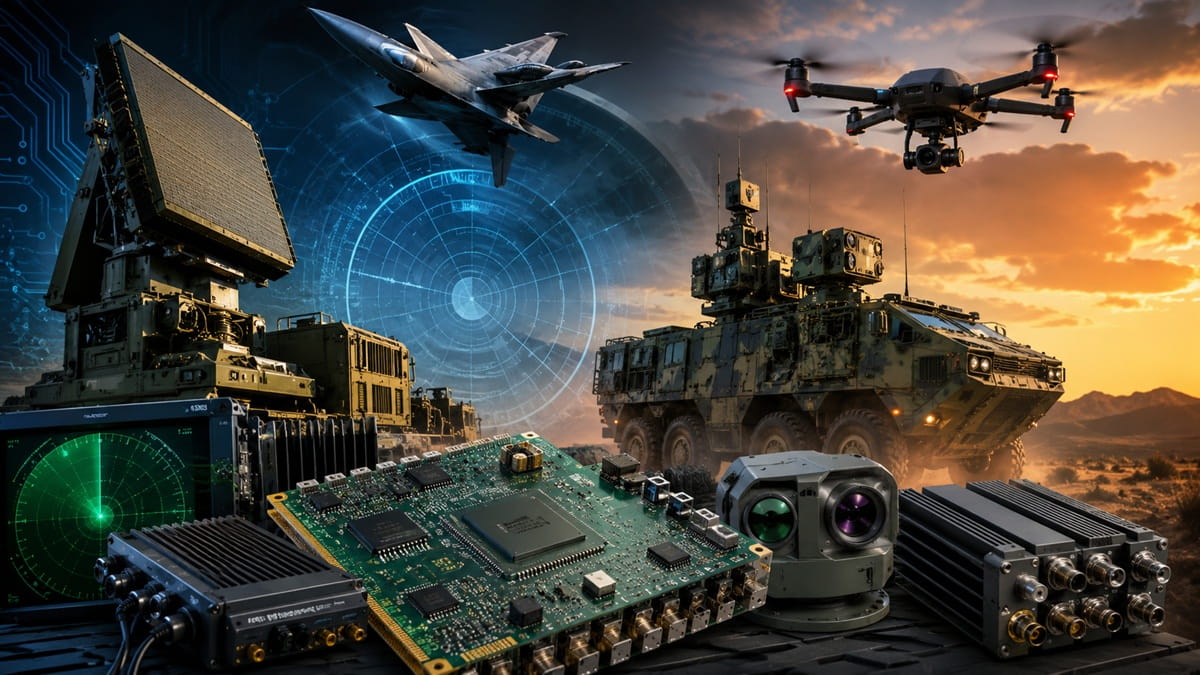
India wants to make more of its military equipment at home.
A new government list covers 405 parts and systems that could create about Rs 3,100 crore in domestic business through FY32.
Many of these are small but important electronic parts used inside weapons and aircraft.
Bharat Electronics Limited is connected to the largest number of listed items.
Other companies may benefit by making radars, sensors, electronic equipment and counter-drone systems.
Some companies have already received large orders linked to these technologies.
The defence industry also expects more orders as India buys and builds more military equipment.
However, analysts say the companies have high share-price valuations and must deliver the expected growth.

The sixth Positive Indigenisation List covers 405 items worth an estimated Rs 3,070-3,100 crore through FY32.
Defence electronics make up about 56% of the list, while aerospace represents another 21%.
Bharat Electronics Limited is linked to 227 items, and Hindustan Aeronautics Limited to 86.
Data Patterns, Astra Microwave Products and Paras Defence could benefit from radar, electronics and counter-drone demand.
Analysts cite strong growth potential but warn that valuations, execution risks and relatively low R&D spending raise challenges.
- Who
- The Ministry of Defence and Indian defence companies including Bharat Electronics Limited, Hindustan Aeronautics Limited, Data Patterns, Astra Microwave Products and Paras Defence.
- What
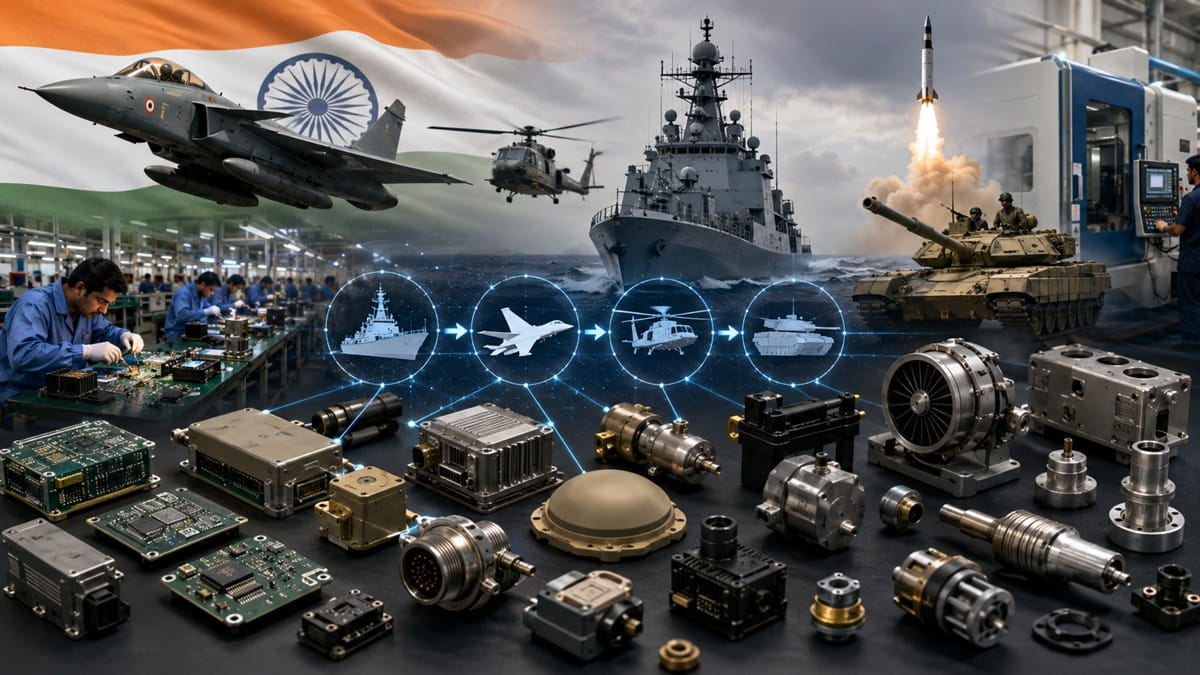
- India’s sixth Positive Indigenisation List is shifting attention toward locally made electronics, components, subsystems, spares and line-replaceable units.
- Where
- India’s defence manufacturing and supply-chain ecosystem.
- When
- The list covers business opportunities through FY32; cited company orders and disclosures occurred during FY26 and in July-August.
- Why
- To reduce dependence on imported military electronics and deepen domestic defence manufacturing.
Growth and Indigenisation Opportunity
Valuation and Execution Risks
Electronics supply-chain expansion
Growth and Indigenisation Opportunity
The list’s focus on components and subsystems could expand the addressable market for defence-electronics, radar, sensor and communications suppliers.
Valuation and Execution Risks
The headline opportunity is not limited to four companies, and actual benefits depend on orders, supplier participation and successful execution.
Defence-sector growth
Growth and Indigenisation Opportunity
India’s expanding procurement pipeline, domestic production and export ambitions could support stronger future ordering and revenue growth.
Valuation and Execution Risks
Programme delays, including those affecting P-75I submarines, QRSAM and next-generation corvettes, have already affected order inflows.
Industry competitiveness
Growth and Indigenisation Opportunity
Companies are increasing investment in capacity, research and local supply chains; BEL is targeting zero imports of subsystem modules within five years.
Valuation and Execution Risks
Indian defence manufacturers’ R&D spending is estimated at 3.5% of revenue, below the 5.9% reported for global peers, while sector valuations carry a substantial premium.
Key facts
- Indigenisation list
- The sixth Positive Indigenisation List contains 405 items.
- Estimated opportunity
- The domestic business opportunity is estimated at Rs 3,070-3,100 crore through FY32.
- Largest category
- Defence electronics account for about 56% of the listed items; aerospace accounts for 21%.
- BEL allocation
- Bharat Electronics Limited is linked to 227 of the 405 items.
- HAL allocation
- Hindustan Aeronautics Limited is linked to 86 items; together, BEL and HAL account for about 77%.
- Counter-drone estimate
- Kotak estimated India’s counter-drone demand at about $5 billion over the next decade.
- Valuation comparison
- Kotak said Indian defence companies traded at roughly 50 times one-year forward earnings versus about 28 times for global peers.
Sources
Related news
India’s Defence Indigenisation Targets 405 Components Across Supply Chains
BEL’s Rs 1.2 Lakh Crore Pipeline Faces Order Conversion Test
India Restricts 914 Defence Items to Boost Domestic Manufacturing
Kotak Favors HAL as Defence Indigenization Benefits Electronics
Govt Notifies 405-Item Defence Indigenisation List Worth Rs 3,070 Crore
Ashika Institutional Sets Hold Targets for Five Defence Stocks
Revanth Reddy to Open Hyderabad Steel Flyover Thursday
DRDO, University of Hyderabad Researchers Secure Patent for Rocket Propellant

Telangana CM Invites Rajnath Singh to Defence Summit
India’s Post-Sindoor Defence Push Targets Networked Future Warfare

India's R&D Ecosystem Faces Hurdles On Path To Knowledge Economy