6 hrs ago
DRDO, University of Hyderabad Researchers Secure Patent for Rocket Propellant
Researchers in Hyderabad created a new material called BAM-H24.
It could be used in solid rocket fuel.
The material contains boron, hydrogen and nitrogen.
It is stable when heated and less sensitive to impacts and friction.
It also does not easily absorb water from the air.
These features could make it easier to store and handle.
The material might also help rockets burn fuel more effectively.
India’s Patent Office has officially recognized the invention.
More testing is needed before it can be used in particular rockets or missiles.

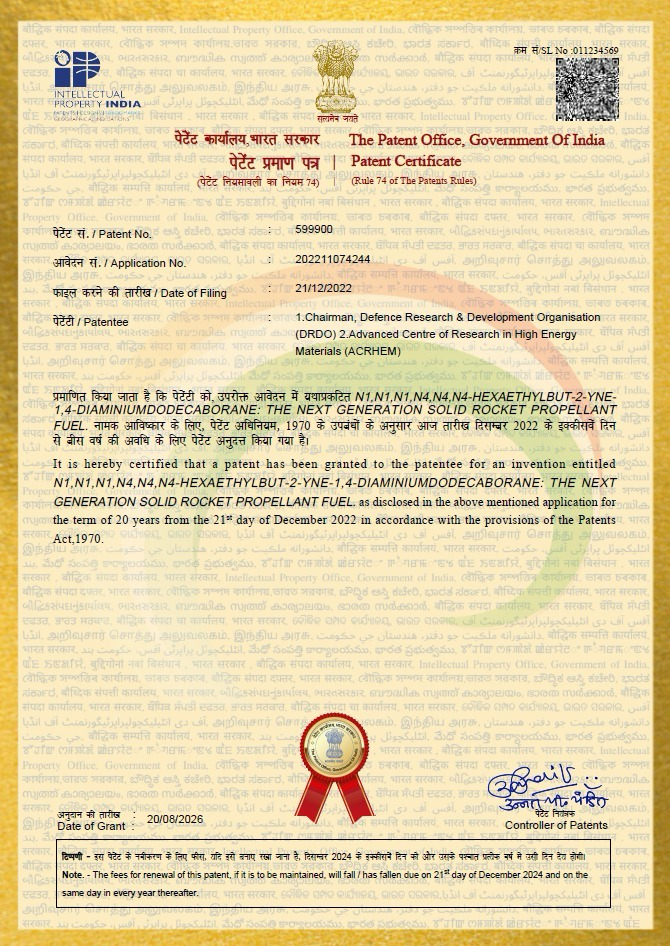
The Indian Patent Office granted Patent No. 599900 for the compound BAM-H24.
Researchers at the University of Hyderabad and DRDO developed the boron-, hydrogen- and nitrogen-rich material.
BAM-H24 is designed for use as a solid rocket fuel, additive and burn-rate accelerator.
The compound has chemical and thermal stability, low impact and friction sensitivity, and is non-hygroscopic.
Further research is needed to assess its performance and suitability in specific propulsion systems.
- Who
- Researchers Dr. Muddamarri Hanumantha Rao and Prof. Muralidharan Krishnamurthi, working with the Defence Research and Development Organisation and the University of Hyderabad’s ACRHEM/DIA-CoE.
- What
- An Indian patent was granted for BAM-H24, a compound intended for solid rocket fuel, propellant additives and burn-rate acceleration.
- Where
- The research was conducted at the University of Hyderabad in Hyderabad, India.
- When
- The patent application was filed on December 21, 2022, and the patent was granted on August 20, 2026, according to one article.
- Why
- The compound could provide another option for high-energy solid propulsion and may have applications in missile systems and launch vehicles.
Key facts
- Patent number
- Indian Patent No. 599900
- Patent title
- “N1,N1,N1,N4,N4,N4-hexaethylbut-2-yne-1,4-diaminiumdodecaborane: The Next Generation Solid Rocket Propellant Fuel”
- Compound
- BAM-H24
- Patent application
- Filed December 21, 2022
- Patent grant
- Granted August 20, 2026, as stated in the second article
- Key properties
- Chemical and thermal stability, low impact and friction sensitivity, and non-hygroscopic behavior
- Potential uses
- Solid rocket fuel, propellant additive, burn-rate accelerator, missile systems and launch vehicles
Sources

Related news
Nanded University Secures Indian Patent for Tuberculosis Nano-Drug Delivery

Parul University, IIT Palakkad Patent E-Waste Innovation
Hindalco Commissions India’s First Superfine ATH Plant in Karnataka
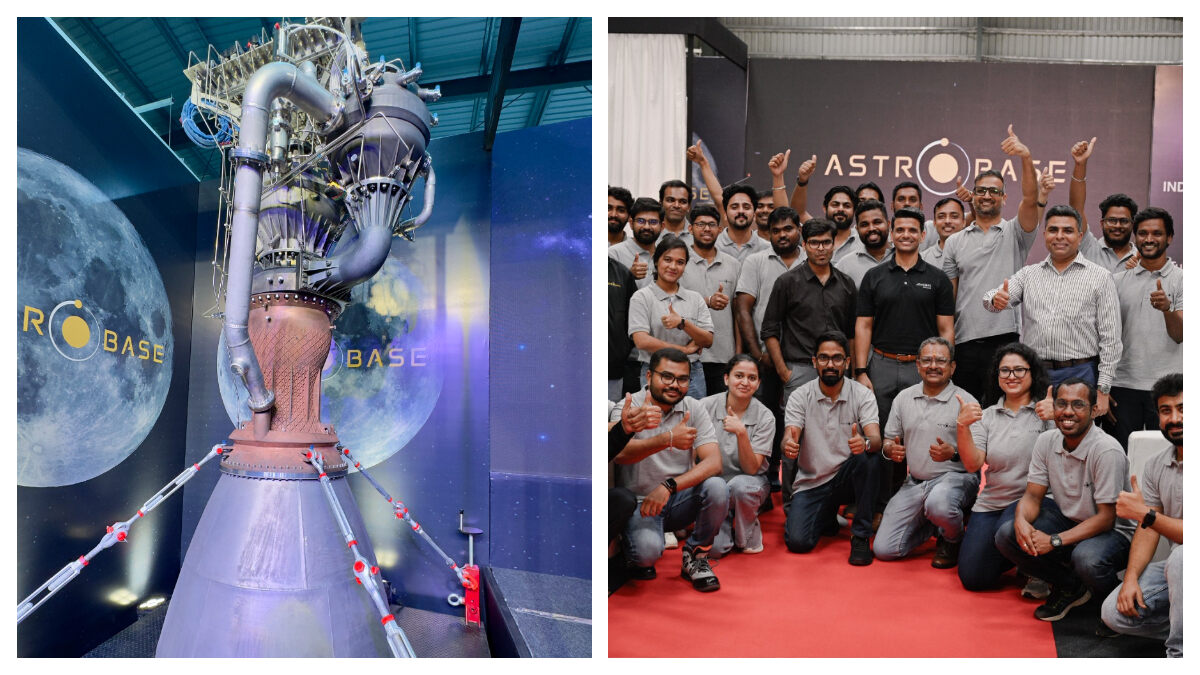
Astrobase unveils EVEREST, India's first private FFSC rocket engine

Revanth Reddy to Open Hyderabad Steel Flyover Thursday

Telangana CM Invites Rajnath Singh to Defence Summit

India’s Post-Sindoor Defence Push Targets Networked Future Warfare

India's R&D Ecosystem Faces Hurdles On Path To Knowledge Economy