

1 hr ago
Scientists Reconstruct Chirps Of Jurassic Forest Insect Soundscape
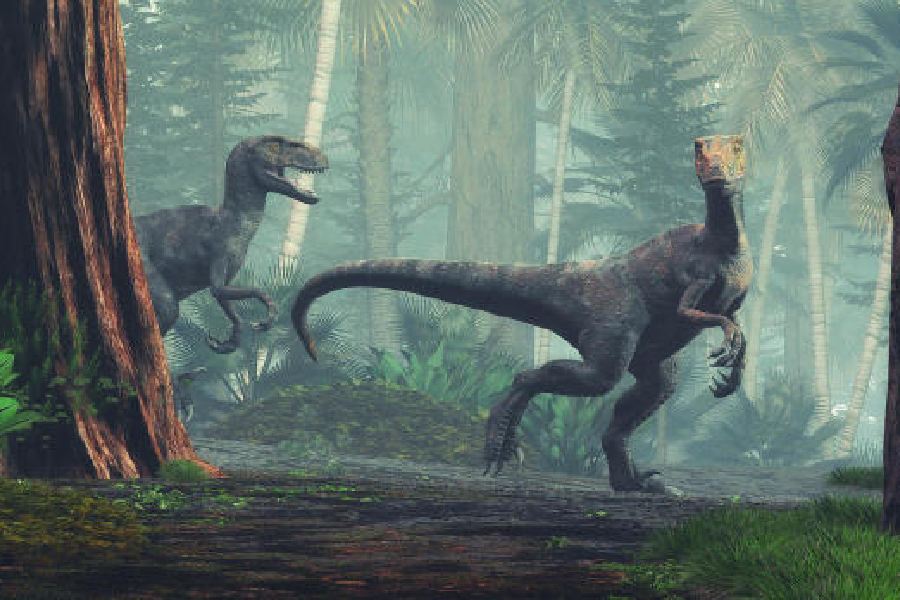
Scientists wanted to know what forests sounded like 165 million years ago.
They studied fossil wings from ancient relatives of crickets and katydids.
These insects had special wing parts that could rub together and make sounds.
Researchers compared them with living insects and used computers to recreate their calls.
They reconstructed nine different chirps, trills and clicks.
One insect made a sound too high for humans to hear.
Bats did not yet exist during the Jurassic period.
The scientists suggest the insects may have used high sounds to avoid predators or keep their messages separate from other insects.
The result is a scientific estimate, not a recording from the actual ancient forest.

Researchers recreated nine calls from fossilised Jurassic cricket and katydid ancestors.
The insects made sounds by rubbing ridged and scraping structures on their wings together.
Computer modelling combined fossil-wing data with measurements from living relatives.
One species, Sigmaboilus peregrinus, produced a call above 20 kilohertz, beyond human hearing.
The findings challenge the idea that bats were the main reason insects evolved ultrasonic communication.
- Who
- Jun-Jie Gu and colleagues, with analysis discussed by Rex Cocroft, studied nine Jurassic cricket and katydid ancestors.
- What
- Researchers reconstructed nine likely insect calls from fossilised wings using bioacoustic measurements, computer modelling and machine learning.
- Where
- The fossil specimens were found in Inner Mongolia, China.
- When
- The reconstructed soundscape dates to about 165 million years ago, during the Jurassic period; the study was published recently in Proceedings of the National Academy of Sciences.
- Why
- The researchers sought evidence-based insight into the sounds of ancient forests and possible reasons Jurassic insects developed ultrasonic communication.
Alternative ultrasonic explanations
Earlier bat-centered explanation
Why Jurassic insects may have used ultrasonic calls
Alternative ultrasonic explanations
Jun-Jie Gu and colleagues argue that insects could have evolved ultrasonic communication to create separate communication channels or avoid early mammals and other predators.
Earlier bat-centered explanation
A long-held view suggested that insects developed ultrasonic communication mainly to evade bats, but bats appeared roughly 100 million years after the Jurassic period ended.
Assessment of the predator hypothesis
Alternative ultrasonic explanations
Rex Cocroft said predation is a major force in the evolution of communication and called the researchers’ explanation plausible.
Earlier bat-centered explanation
The study challenges treating bats as the primary driver because they did not yet exist when these Jurassic insects lived.
Key facts
- Estimated age
- About 165 million years
- Fossil material
- 20 specimens representing nine species of cricket and katydid ancestors
- Sound-production method
- Rubbing a scraping structure on one wing against comblike ridges on the other
- Reconstructed calls
- Nine distinct calls
- Ultrasonic species
- Sigmaboilus peregrinus
- Publication
- Proceedings of the National Academy of Sciences
- Research institution
- Sichuan Agricultural University
Quotes
Jun-Jie Gu
Professor of entomology at Sichuan Agricultural University and a study researcher
““Before, all the sounds of the Jurassic came from films like Jurassic Park, but those sounds are not real. They come from artistes. This is the first reconstruction of the acoustic landscape of insects in ancient forests based on scientific methods and real fossil materials.””
 telegraphindia.com
““The first time we reconstructed the song and saw it was over 20 kilohertz, we were so excited,””
telegraphindia.com
Rex Cocroft
Professor of biological sciences at the University of Missouri and an outside expert
““It’s a very plausible hypothesis. Predation is a major force in the evolution of communication.””
telegraphindia.com
Sources
Related news

AI Decodes Animal Sounds, Raising Hopes of Interspecies Communication

AI Animal Communication Research Offers Hope Alongside Risks
Why Wild Animals Need Quiet Places to Survive
Swiftie Scientist Names New Australian Insect Genus After Taylor Swift

Cockroach Milk, Nose-Blowing Studies Win 2026 Ig Nobels

Can Animals Sense Disasters? Science Examines Indian Beliefs

China Creates Italy-Sized Permanent Restricted Airspace Around Beijing

China races to build AI data centres beyond megacities

DeepSeek’s Huawei Chip Order Signals Uneven AI Decoupling

DeepSeek Plans Massive Huawei AI Chip Cluster in Inner Mongolia