2 hrs ago
China races to build AI data centres beyond megacities
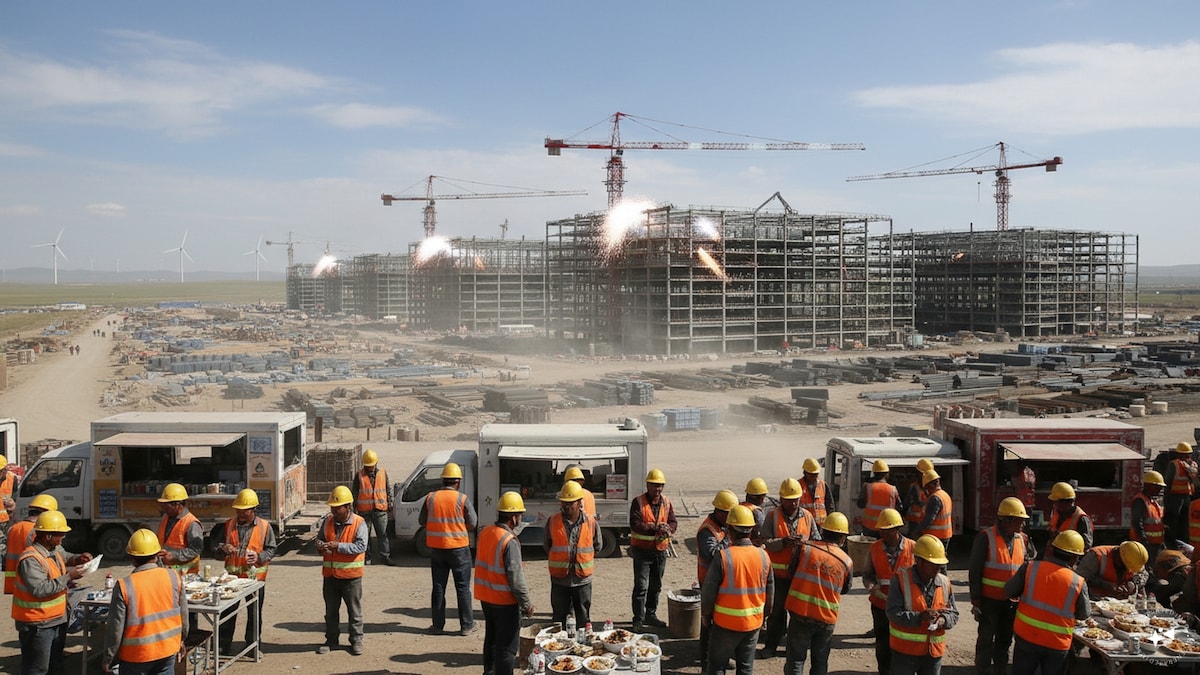
China is building many new computer centres in places far from its biggest cities.
One important location is Ulanqab in Inner Mongolia.
These areas have more open land, cooler weather and inexpensive renewable electricity.
China wants city-based centres to handle tasks that need very quick responses.
It wants western centres to handle tasks such as cloud storage and training AI models.
Companies including DeepSeek and Z.AI Co.
are building very large facilities.
The plan could make the northern and western regions China’s biggest source of computing power by 2028.
Officials are also trying to prevent companies from building too many duplicate centres that might waste resources.

China is shifting data-centre construction toward northern and western regions with cheaper power and more available land.
More than half of the country’s data-centre project pipeline is now in the north and northwest, according to BloombergNEF.
Ulanqab in Inner Mongolia is experiencing a major construction boom, with projects including facilities planned by DeepSeek and Z.AI Co.
The northern and northwestern regions are expected to become China’s largest source of computing capacity by 2028.
China’s data-centre electricity demand is projected to reach 329 terawatt-hours by 2030, or 2.4% of national consumption.
- Who
- The Chinese government, data-centre developers, and AI companies including DeepSeek and Z.AI Co.
- What
- A national effort to move computing capacity from eastern cities to northern and western China.
- Where
- Ulanqab and other northern and western regions, including Inner Mongolia, Gansu, Ningxia, Guizhou and the Chengdu-Chongqing region.
- When
- The campaign has been underway since 2022, with major capacity changes projected by 2028 and 2030.
- Why
- To use cheaper renewable power, cooler climates and available land while shifting less time-sensitive computing away from crowded eastern cities.
Benefits of Western Expansion
Risks and Constraints
Energy and land
Benefits of Western Expansion
Supporters say northern and western regions offer inexpensive renewable power, cooler climates and plentiful land for energy-intensive servers.
Risks and Constraints
Critics may point to grid limitations, because electricity infrastructure in some areas is taking longer to build than the data centres themselves.
Economic development
Benefits of Western Expansion
The construction boom is bringing investment, jobs and new activity to places such as Ulanqab.
Risks and Constraints
The policy push could encourage speculative or duplicate projects and create overcapacity, a problem seen in other Chinese industries.
Location of computing
Benefits of Western Expansion
Moving cloud storage and AI model training west can reduce pressure on eastern cities while preserving fast-response computing in those cities.
Risks and Constraints
Megacities still offer better connectivity, which could limit the appeal of western facilities for some workloads.
Key facts
- Policy name
- Data in the East, Computing in the West
- Ulanqab location
- Inner Mongolia, about 350 kilometres northwest of Beijing
- Project pipeline
- More than half of China’s data-centre pipeline is now in the north and northwest, according to BloombergNEF
- Expected 2028 leader
- The northern and western region is projected to surpass Beijing, Shanghai and other established urban areas in computing capacity
- Projected 2030 electricity demand
- 329 terawatt-hours, a 151% increase from current levels
- Share of national electricity
- Data centres are expected to account for 2.4% of China’s total electricity demand by 2030
- Renewable-energy requirement
- New regional data centres must obtain more than 80% of annual electricity use from renewable sources
Quotes
Yin
A food-stall operator serving workers at data-centre construction sites in Ulanqab.
“Every day, there are hundreds of workers. It never stops.”
 CNBC TV 18
“Take a look around. How can this not be good?”
CNBC TV 18

BloombergNEF analysts
Analysts whose research assessed China’s data-centre development and regional capacity.
“North and northwestern China has emerged as “the main growth pole for new development, despite having a much smaller operating fleet.””
CNBC TV 18
Sources
Related news
India’s Data Centre Capacity Could Triple by 2030
Jewar Data Centre Hub Plans ₹26,910 Crore Investment

Argentina’s Patagonia Draws Mega Data Center Investment Interest

Trump Links Data Centre Opposition to China AI Advantage

India’s Data Centre Capacity Set to Triple by 2030

Nvidia to Lease Land and Power for AI Factories

Apple Could Leap to No. 2 in Foldable Phones

Huawei Unveils New Foldable as Chinese Premium Phone Rivalry Intensifies
DeepSeek’s Huawei Chip Order Signals Uneven AI Decoupling

DeepSeek Plans Massive Huawei AI Chip Cluster in Inner Mongolia