1 hr ago
Calisthenics Offers Effective Training and Complements Weightlifting
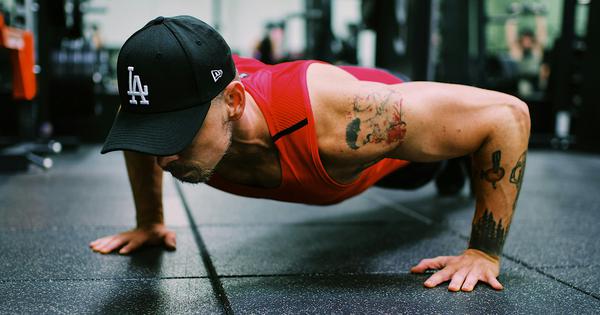
Calisthenics is exercise that uses your own body as resistance.
Push-ups, squats, dips, and pull-ups are examples.
You can start with an easier version, such as pushing against a wall.
As you get stronger, you can try harder versions.
Research cited in the article shows that bodyweight exercises can improve strength and muscle size.
Calisthenics can be done at home or in a park without expensive equipment.
However, bodyweight exercises are not automatically easy, and some movements may be very difficult for beginners.
Weights make it easier to increase resistance in small steps.
The two types of exercise can work well together rather than being competitors.

Calisthenics uses body weight as resistance in exercises ranging from wall push-ups to advanced movements.
The 2026 American College of Sports Medicine recommendations support bodyweight and home-based training for improving strength and physical function.
Research cited in the article found progressive push-ups can produce strength and muscle gains comparable to bench pressing.
Progression can come from changing body position, support points, range of motion, or exercise difficulty—not only adding repetitions.
Calisthenics is affordable and accessible, but weights may be more useful for gradual loading and very heavy resistance.
- Who
- People using calisthenics, including beginners and experienced exercisers; the article cites the American College of Sports Medicine's recommendations.
- What
- The article evaluates whether calisthenics is an effective form of exercise or merely a fitness fad.
- Where
- Calisthenics can be performed at home, in parks, or practically anywhere.
- When
- The article cites the American College of Sports Medicine's 2026 recommendations; no specific publication date is given.
- Why
- To explain how bodyweight training works, how it can be progressed, and when weights may provide additional benefits.
Key facts
- Training method
- Uses a person's body weight as resistance.
- Examples
- Squats, lunges, push-ups, pull-ups, dips, muscle-ups, planches, and front levers.
- Push-up load
- The arms support around two-thirds of body weight during a conventional push-up.
- ACSM evidence review
- The 2026 recommendations followed an overview of 137 systematic reviews involving more than 30,000 participants.
- Comparative finding
- Progressive push-up and bench-press programs both produced strength gains in a cited study.
- Muscle study
- After eight weeks, comparable push-up and bench-press programs produced similar improvements in pectoral and triceps strength and thickness.
- Main limitation
- Bodyweight progression can be less gradual than adding small amounts of weight, especially for heavy resistance and leg training.
Sources
Related news
Seven Bodyweight Exercises That Build Muscle Without Weights

Yug Devgn's Workout Highlights Safe Strength Training For Teenagers
Janhvi Kapoor Shares Leg Workout Routine

Research Questions Whether Three Sets Are Needed for Hypertrophy
Four Easy Resistance Band Exercises For At-Home Fitness
5/3/1 Workout Program Builds Strength Through Sustainable Progression

Why Combining Yoga With Exercise Creates a Balanced Routine
Yo Yo Honey Singh Shares Body Recomposition Fitness Preparation

Doctor Explains 80% Hydration Rule for Safer Running
Does training to failure build better muscle strength?