3 hrs ago
How Many Seats Each Party Needs in 2026 Midterms
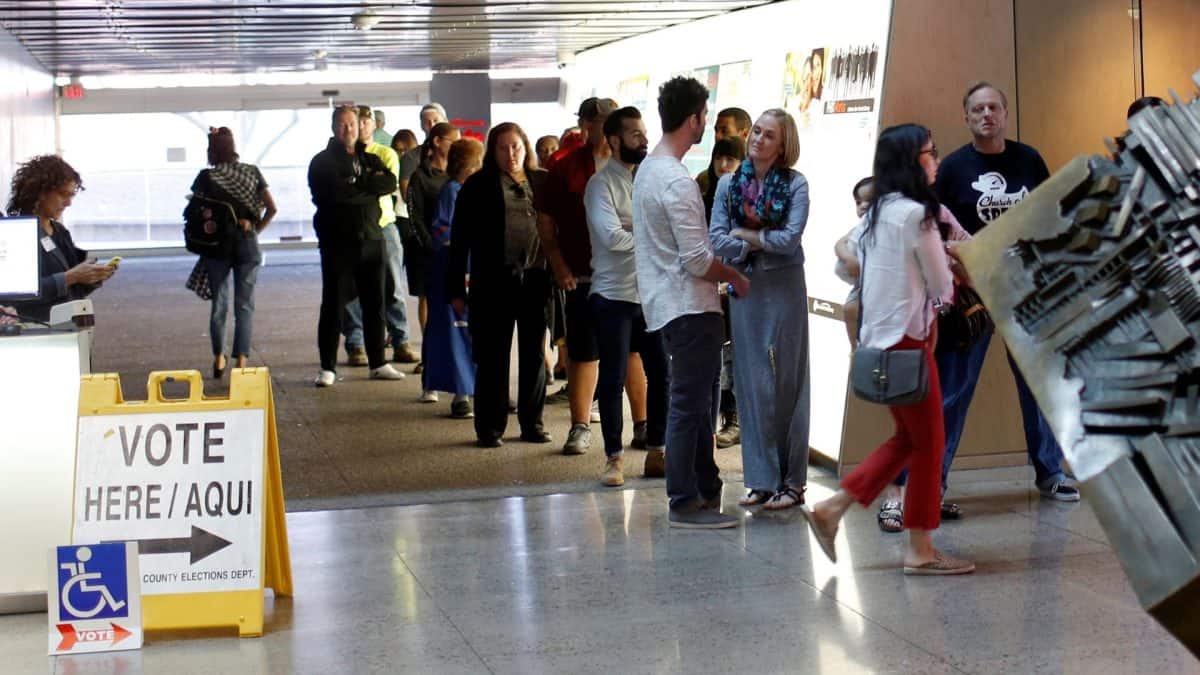
The 2026 midterm elections will decide which party controls Congress.
Voters will choose all 435 members of the House of Representatives.
A party needs 218 House seats to have a majority.
Republicans currently have 218 House seats, while Democrats have 214, with some vacancies and one independent who works with Republicans.
Voters will also choose 35 senators.
Democrats currently have 47 Senate seats when two allied independents are counted, while Republicans have 53.
Democrats need to gain four Senate seats for an outright majority of 51.
Republicans could keep control by holding at least 51 seats, or possibly with a 50-50 split because Vice-President JD Vance could break some ties.
The election results will affect how Washington operates until January 2029.

All 435 House seats will be contested, and 218 seats are needed for a majority.
Republicans hold 218 House seats, while Democrats hold 214, alongside vacancies and one Republican-caucusing independent.
Democrats need a net gain of four Senate seats to reach an outright majority of 51.
Republicans hold a 53-47 Senate advantage and could retain control with 51 seats, or potentially organize with a 50-50 split.
Voters will elect House members and 35 senators on November 3, 2026, with control of Congress at stake.
- Who
- The Republican and Democratic parties, along with independent senators who caucus with Democrats, are competing for control of Congress.
- What
- The 2026 midterm elections will decide all 435 House seats and 35 Senate seats.
- Where
- Across the United States, including congressional districts and Senate races nationwide.
- When
- November 3, 2026.
- Why
- The election will determine which party controls the House and Senate and can shape the president’s legislative agenda.
Key facts
- House majority threshold
- 218 of 435 voting seats
- Current House position
- Republicans hold 218 seats; Democrats hold 214, with vacancies and one independent who caucuses with Republicans
- Senate majority threshold
- 51 seats for an outright majority
- Current Senate position
- Republicans hold 53 seats; the Democratic caucus includes 45 Democrats and two independents
- Seats contested
- All 435 House seats and 35 Senate seats
- Democratic Senate target
- A net gain of four seats to reach 51
- Republican Senate position
- Republicans could lose two seats and still hold 51; a 50-50 split could also allow them to organize with the vice president’s tie-breaking vote
Sources
Related news
2026 Midterms Highlight House-Senate Differences and Trump’s Leverage
What the 2026 US Midterm Elections Could Decide

US Midterms Put Trump’s Power at Stake Amid War

Prediction Markets Favor Democrats in 2026 Midterm Congress Control

Forecast Favors Democrats to Retake House in Midterm Elections

Nine Senate Battlegrounds Could Decide Midterm Control

Republicans Rush Funds Into Dozens Of Once-Safe House Races