

3 hrs ago
Nine Senate Battlegrounds Could Decide Midterm Control
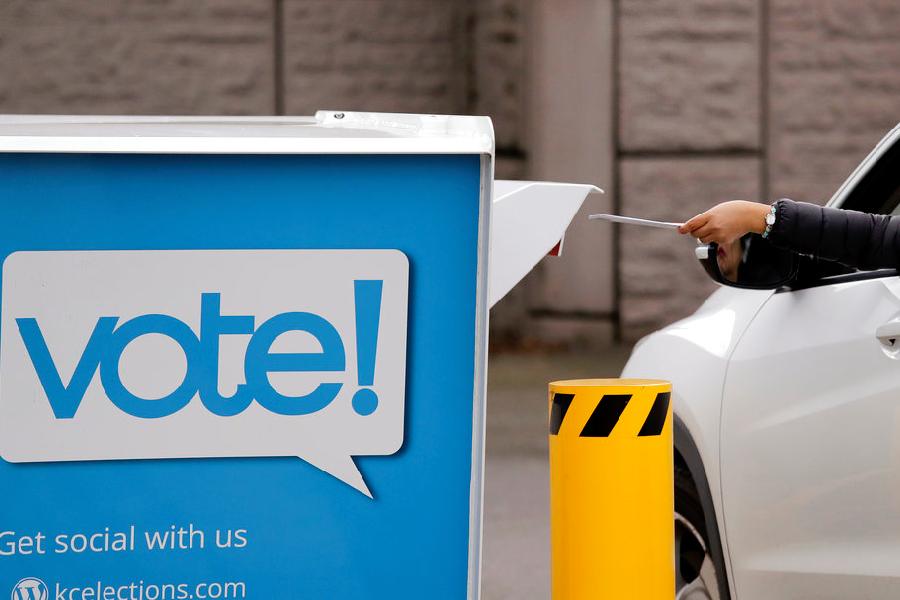
The midterm elections will decide which party controls the United States Senate.
Democrats need to win four seats currently held by Republicans.
Analysts say nine states have especially important and competitive Senate races.
North Carolina, Georgia and New Hampshire currently look more favorable to Democrats.
Michigan, Texas, Alaska, Iowa and Ohio are considered toss-ups.
Maine is also closely watched, with Democrat Troy Jackson leading some recent polls.
The candidates have different strengths and weaknesses, including political experience, ties to Donald Trump and controversies.
Voters will choose among the candidates on November 3, with New Hampshire holding its primary on September 8.

Democrats need four Republican seat pickups to control the 100-seat Senate, with the election scheduled for November 3.
Independent analysts identify competitive Senate races in North Carolina, Michigan, Texas, Alaska, Iowa, Maine, Georgia, Ohio and New Hampshire.
Democrats are favored or advantaged in North Carolina, Georgia and New Hampshire, while Maine polls show Troy Jackson narrowly ahead.
Michigan, Texas, Alaska, Iowa and Ohio are considered toss-ups, with candidates facing varied political, personal and regional challenges.
The New Hampshire primary is set for September 8, while several races feature retirements, incumbents seeking reelection or candidates attempting comebacks.
- Who
- Democratic and Republican Senate candidates, including incumbents, challengers and nominees in nine states.
- What
- Competitive 2026 midterm Senate races that could determine control of the 100-seat chamber.
- Where
- North Carolina, Michigan, Texas, Alaska, Iowa, Maine, Georgia, Ohio and New Hampshire.
- When
- The general election is scheduled for November 3; New Hampshire's primary is scheduled for September 8.
- Why
- Democrats need four Republican seat pickups to win control of the Senate.
Democratic prospects
Republican prospects
Control of the Senate
Democratic prospects
Democrats are seeking four Republican-held seats and see several opportunities in competitive states.
Republican prospects
Republicans are defending vulnerable seats but could retain control if challengers fail to convert close races.
Candidate strengths
Democratic prospects
Democratic candidates such as Roy Cooper, Mary Peltola, Jon Ossoff and Sherrod Brown bring established records or centrist and economic-populist appeals.
Republican prospects
Republican candidates including Mike Rogers, Ken Paxton, Susan Collins and Jon Husted bring political experience, incumbency or established party support.
Political liabilities
Democratic prospects
Democratic candidates face concerns over progressive positions, past comments and the difficulty of defending seats in states trending Republican.
Republican prospects
Republican candidates face scrutiny over ties to Donald Trump, personal controversies, divisive rhetoric and, in Alaska, a same-name candidate on the ballot.
Key facts
- Senate control threshold
- Democrats need four Republican seat pickups to control the 100-seat Senate.
- Election date
- November 3
- Competitive races
- Independent analysts identify nine competitive races among 35 Senate contests.
- Democratic advantages
- Analysts favor or give an advantage to Democrats in North Carolina, Georgia and New Hampshire.
- Toss-up states
- Michigan, Texas, Alaska, Iowa and Ohio are rated toss-ups.
- Maine polling
- Recent polls show Troy Jackson leading Susan Collins by three to four percentage points.
- New Hampshire primary
- The primary to replace retiring Senator Jeanne Shaheen is scheduled for September 8.
Sources
Related news

Democrats Need Four Senate Flips to Reclaim Majority

Democrats Target Republican States as Senate Race Becomes Toss-Up

Florida Left-Wing Upset and Alaska Democrat Boost Primaries
Record Democratic primary turnout offers uncertain boost for US midterms
Texas Senate Race Becomes Money Test for Trump’s GOP

El-Sayed hits back at Trump: 'Main character of the midterms'

Trump Links Data Centre Opposition to China AI Advantage
Iran War Threatens Republican Midterm Prospects as Voter Frustration Grows

OpenAI Data Centre Chief Exits Amid Executive Turnover, Infrastructure Backlash
