3 weeks ago
August 12: Solar Eclipse, Six-Planet Alignment and Perseid Meteor Shower
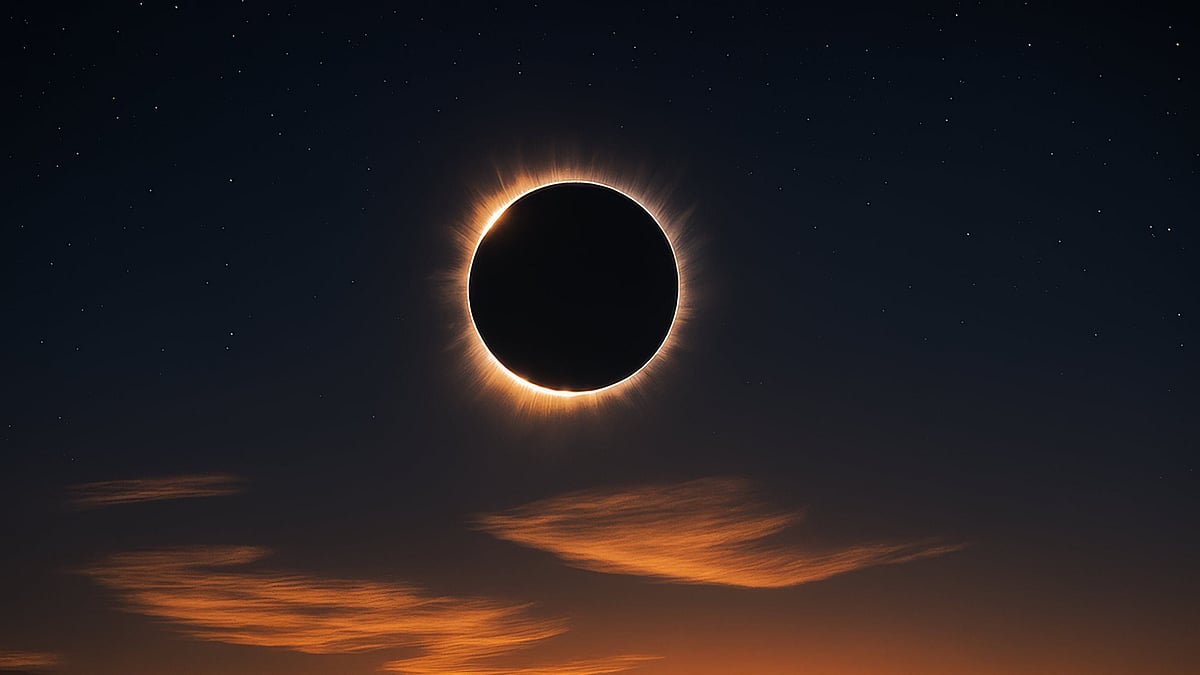
On August 12, the sky will put on a big show with several special things happening on the same day.
Early in the morning, six planets will line up in the sky; some, like Jupiter and Mars, can be seen with your eyes alone, while others need a telescope.
Later, there will be a total solar eclipse, when the Moon covers the Sun from our view on Earth.
People in Greenland, Iceland, parts of Portugal, Spain, and Russia will see it fully, but people in India will not.
At night, the Perseid meteor shower will peak with many shooting stars, maybe 50 to 100 every hour.
Shooting stars happen when Earth passes through dusty leftovers from a comet called Swift-Tuttle.
Because it is a New Moon night, the sky is extra dark, making the meteors easier to spot.
To see them well, you need a dark place away from city lights.
It is a very exciting day for anyone who loves looking up at the stars!

August 12 features a total solar eclipse, a six-planet pre-dawn alignment, a New Moon, and the peak of the Perseid meteor shower within a roughly 24-hour window, with NASA highlighting the date as a major skywatching day.
The total solar eclipse will cross parts of northern Russia, Greenland, Iceland, northern Spain, and a small section of Portugal, with partial views across Europe, northern Africa, western and northern Asia, and parts of North America.
The eclipse will not be visible from India; globally, the partial eclipse begins at 9:04pm IST, totality starts around 10:28pm IST, with maximum at 11:16pm and the last location ending at 12:04am on August 13.
The six-planet alignment includes Jupiter, Mercury, Mars, Uranus, Saturn, and Neptune, with Mercury, Jupiter, Mars, and Saturn visible to the naked eye while Uranus and Neptune require optical aid.
The Perseid meteor shower peaks on the night of August 12-13 with 50-100 meteors per hour, best seen away from city lights; the recommended viewing time in India is 10pm August 12 to 2am August 13.
The Perseids occur as Earth passes through debris left by Comet 109P/Swift-Tuttle, which orbits close to the Sun every 133 years, and the New Moon leaves skies extra dark for viewing.
- Who
- Sky-watchers and stargazers worldwide, including Indian observers, with expert commentary from Debiprosad Duari, former director of MP Birla Planetarium
- What
- A day featuring a total solar eclipse, a six-planet alignment, a New Moon, and the peak of the Perseid meteor shower
- Where
- Totality crosses northern Russia, Greenland, Iceland, northern Spain, and a small part of Portugal, with partial eclipse over Europe, northern Africa, western and northern Asia, and parts of North America; the planet alignment is visible low along the eastern horizon before sunrise, including from Calcutta; the meteor shower is best seen away from city lights and monsoon clouds in India
- When
- August 12, with the Perseid meteor shower peaking on the night of August 12-13
- Why
- The Moon aligns between Earth and the Sun to cause the eclipse, the planets appear along the ecliptic in a line-of-sight alignment, and Earth passes through debris from Comet Swift-Tuttle, producing the meteor shower
Key facts
- Astronomical events
- Total solar eclipse, six-planet alignment, New Moon, Perseid meteor shower peak
- Planets in alignment
- Jupiter, Mercury, Mars, Uranus, Saturn, Neptune
- Naked-eye planets
- Mercury, Jupiter, Mars, Saturn
- Total eclipse visibility
- Northern Russia, Greenland, Iceland, northern Spain, small part of Portugal
- Eclipse global timings (IST)
- Partial from 9:04pm; total begins ~10:28pm; maximum 11:16pm; last location ends 12:04am August 13
- Meteor shower rate
- 50-100 meteors per hour (up to ~100 under ideal dark skies)
- Perseid comet
- Comet 109P/Swift-Tuttle, orbits close to the Sun every 133 years
- Best viewing time in India (shower)
- 10pm August 12 to 2am August 13
Sources
Related news
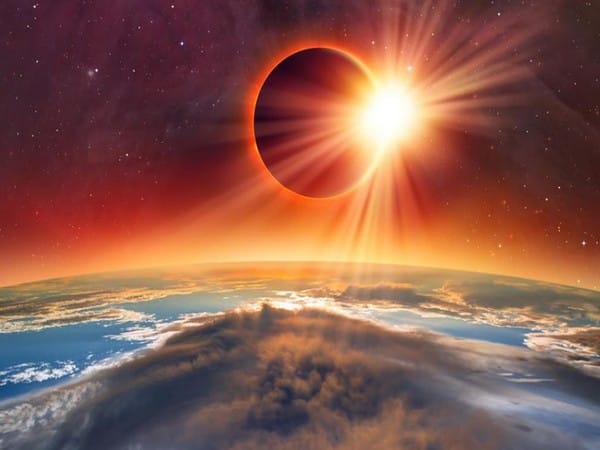
Four rare celestial events to coincide on August 12

Total Solar Eclipse August 2026: India Out, Greenland, Spain In
Total Solar Eclipse August 12: Path, Timing and Viewing Guide

Total Solar Eclipse 2026: Greenland, Iceland Covered; India Misses
Second Solar Eclipse of 2026 Tonight, Not Visible in India
Solar Eclipse 2026: rare total eclipse sweeps Europe, Spain, Iceland

Bhavana Reddy Brings Kuchipudi Performances to Iceland, Germany

Iceland Rejects EU Talks, Putting Membership Debate On Ice

Iceland Rejects Restarting EU Talks in Close-Fought Referendum

Iceland Votes in Tight Referendum on Reopening EU Membership Talks
Iceland’s EU Talks Referendum Remains Too Close to Call