7 hrs ago
Supreme Court Denies Bail, Orders Burglary Trial Within Six Months
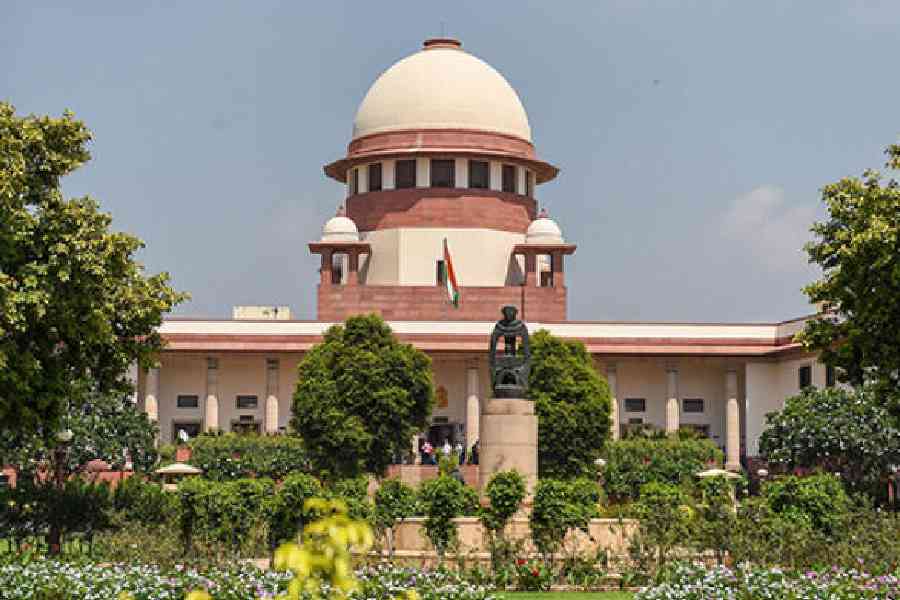
The Supreme Court decided not to release Lisham Ibungotomba Singh on bail while his burglary case is being tried.
He has been in jail for eight years and six months without a final trial decision.
The judges were shocked that only six witnesses had given evidence during that time.
The case involves jewellery allegedly taken from a shop in Calcutta.
The gold jewellery was said to weigh 752.100 grams.
The court also heard that Singh had allegedly been involved in similar offences before.
That past record was the main reason bail was refused.
However, the judges ordered the trial court to finish the case within six months and report back.

The Supreme Court refused bail to Lisham Ibungotomba Singh, who has spent eight years and six months in judicial custody as an undertrial.
The bench called it “shocking” that only six witnesses had been examined during his prolonged detention.
Singh is accused in an alleged jewellery-shop burglary in Calcutta involving 752.100 grams of gold valued at ₹21,66,048.
The court said his alleged previous involvement in similar offences deterred it from granting bail.
The trial court was ordered to complete the case within six months and report its disposal to the Supreme Court.
- Who
- The Supreme Court bench of Justices J.B. Pardiwala and K. Vinod Chandran, and accused Lisham Ibungotomba Singh.
- What
- The court refused Singh’s bail plea but ordered the trial to be completed within six months.
- Where
- The alleged burglary occurred at a jewellery shop in Calcutta, with proceedings involving the Calcutta High Court and a trial court in West Bengal.
- When
- Singh had been in custody for eight years and six months when the Supreme Court considered his appeal; the six-month deadline runs from the order.
- Why
- Bail was refused because the court cited Singh’s alleged previous involvement in similar offences, while the trial deadline addressed the case’s prolonged delay.
Arguments Supporting Bail
Reasons Against Bail
Prolonged detention
Arguments Supporting Bail
Singh’s eight years and six months in custody as an undertrial, with only six witnesses examined, was a serious concern that the court said could have supported bail.
Reasons Against Bail
The Supreme Court ultimately declined to grant bail despite the lengthy detention.
Past alleged offences
Arguments Supporting Bail
The slow trial raised concerns about Singh remaining in custody for an extended period before judgment.
Reasons Against Bail
The court cited his alleged antecedents involving offences of the same nature as a reason to withhold bail.
Trial delay
Arguments Supporting Bail
The fact that only six witnesses had been examined after more than eight years suggested that the proceedings had moved too slowly.
Reasons Against Bail
Rather than grant bail, the court ordered the trial court to complete the entire trial within six months and report its disposal.
Key facts
- Case
- Lisham Ibungotomba Singh v State of West Bengal
- Custody
- Eight years and six months in judicial custody
- Trial progress
- Six witnesses had been examined
- Alleged offence
- Burglary at a jewellery shop in Calcutta
- Alleged stolen property
- 752.100 grams of gold jewellery valued at ₹21,66,048
- Earlier ruling
- The Calcutta High Court rejected Singh’s bail plea on February 17
- Supreme Court direction
- The trial must be completed within six months and its disposal reported to the Supreme Court
Quotes
Supreme Court bench of Justice J.B. Pardiwala and Justice K. Vinod Chandran
The two-judge Supreme Court bench hearing Singh’s appeal.
“We would have definitely considered the plea for bail only on the ground that the petitioner is in judicial custody as an under-trial prisoner past more than eight years, however, what has deterred us in exercising our discretion are the antecedents of the petitioner of the very same nature with which he has been charged with in the presence case.”
 telegraphindia.com
“Let the trial proceed further expeditiously. The Trial Court shall see to it that the entire trial is completed within a period of six months from today without fail. The disposal of the trial shall be informed to this court.”
telegraphindia.com
Sources

Related news

Allahabad HC grants bail to PFI members over slow trial

SC asks trial court to examine witnesses within 3 months
Bombay High Court Grants Bail to Young Murder Accused

Intellectuals Urge CJI to Uphold Liberty in Umar Khalid Case

Delhi High Court Denies Sushil Kumar Bail in Murder Case

SC Asks Gujarat HC to Decide Narayan Sai's Rape Appeal

West Bengal Fire Department Orders Abhishek Banerjee Office Vacated
Six arrested after Abhishek Banerjee office vandalism, political link unconfirmed

Mamata Warns BJP Over TMC Office Vandalism

Anti-corruption panel searches firms linked to Firhad Hakim