

1 hr ago
Junk Food, Lifestyle Risks Raise Heart Concerns Among Young Indians
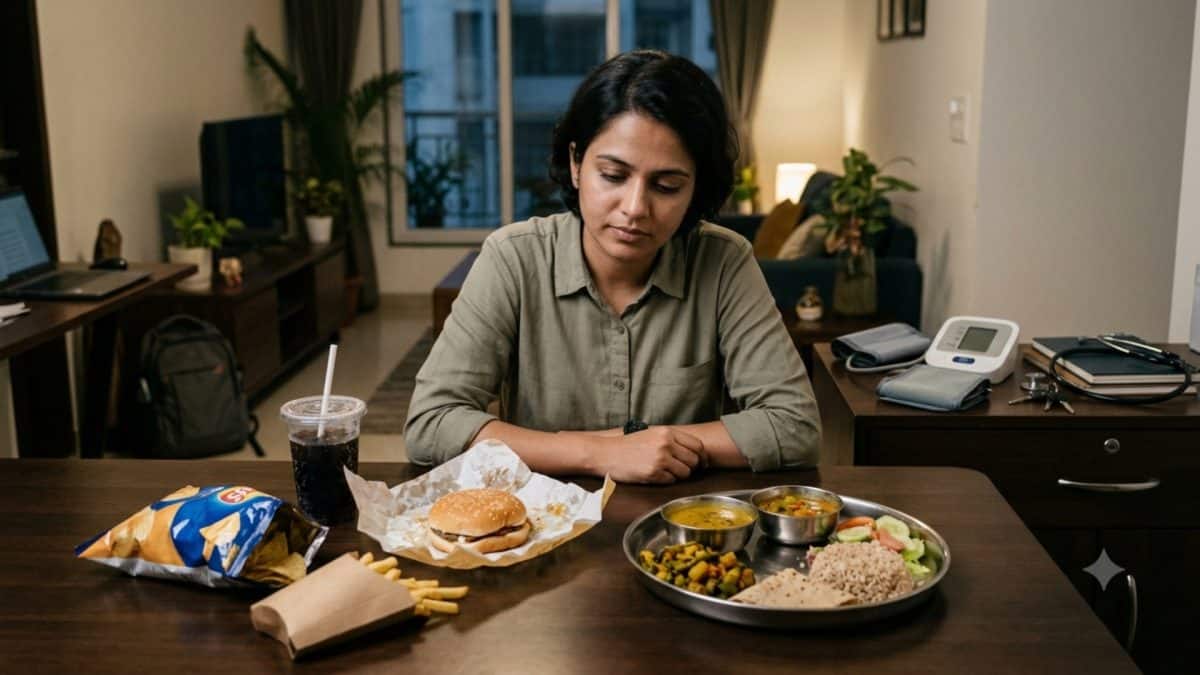
Eating a burger sometimes usually does not decide how healthy your heart will be.
The bigger problem is eating packaged snacks, fried food and sugary drinks very often.
These foods can add too much salt, sugar, unhealthy fat and calories to the diet.
Over time, that can contribute to weight gain, high blood pressure, diabetes and unhealthy cholesterol.
Sitting too much, sleeping poorly, smoking, stress, alcohol and air pollution can add to the risk.
Young people may feel safe because heart problems can develop silently.
Doctors suggest eating more fruits, vegetables, whole grains, pulses, nuts and seeds, while drinking more water.
Regular exercise and checks of blood pressure, blood sugar and cholesterol can help prevent future problems.

Cardiologists say regular consumption of ultra-processed foods, sugary drinks, fried snacks and high-salt foods can increase cardiovascular risk among young Indians.
Unhealthy diets can contribute to obesity, high blood pressure, abnormal cholesterol, insulin resistance, diabetes and other metabolic problems.
Doctors say junk food is only one factor, alongside inactivity, poor sleep, stress, smoking, vaping, alcohol use, family history and air pollution.
Occasional treats are not the main concern; doctors warn that making fast food and packaged snacks routine can gradually harm heart and metabolic health.
Experts recommend regular screening, more vegetables, fruits, whole grains, pulses, nuts and seeds, plus exercise and public-health measures such as nutrition labels.
- Who
- Young Indians, cardiologists Dr Ajeet Singh and Dr Anupam Das, and the World Health Organization.
- What
- Doctors are warning that routine consumption of junk food and other lifestyle factors may increase cardiovascular risk among younger adults.
- Where
- India, within the wider South-East Asia region.
- When
- The issue is discussed in connection with World Heart Day 2026; the article also cites ultra-processed food market data from 2011 to 2021 and trans-fat limits reached by 2022.
- Why
- Regular unhealthy eating, inactivity and other behavioural or environmental risks can contribute to obesity, high blood pressure, diabetes, abnormal cholesterol and cardiovascular disease.
Key facts
- Main dietary risks
- Ultra-processed foods, sugary drinks, fried snacks, refined carbohydrates, excess salt and unhealthy fats.
- Associated conditions
- Obesity, high blood pressure, abnormal cholesterol, insulin resistance, diabetes and fatty liver.
- Additional risk factors
- Physical inactivity, poor sleep, stress, smoking, vaping, alcohol use, family history and air pollution.
- Recommended foods
- Vegetables, fruits, whole grains, pulses, nuts and seeds, with less salt, added sugar and saturated or trans fats.
- Recommended checks
- Regular monitoring of blood pressure, blood sugar and cholesterol.
- India trans-fat limit
- The regulatory limit for industrially produced trans fats in oils and fats reached 2% by 2022.
- Public-health proposals
- Front-of-pack warning labels, sugary-drink taxes, restrictions on marketing near schools and stronger trans-fat controls.
Quotes
Dr Ajeet Singh
Senior Consultant and Head of Cardiology at ShardaCare – Healthcity
“India is witnessing a growing concern around heart health among younger adults, and unhealthy eating habits are one of the factors contributing to this trend.”
 firstpost.com
“Ultimately, prevention through lifestyle change and early detection is far cheaper and more effective than treatment.”
firstpost.com
Sources
Related news

Doctors Explain Why Your Heart May Age Faster

Daily Ultra-Processed Foods May Raise Heart Risks, Cardiologist Explains
Study Links 100g More Daily Ultra-Processed Food to Heart Risk

Cardiologist Urges Breaking Eight Habits to Protect Heart Health

Study Links Ultra-Processed Foods to Major Health Risks

New Study Finds 240,000 Plastic Particles Per Litre
India Has 50 Million Children Without School Sanitation Services

Xi Jinping and Peng Liyuan: China’s High-Profile Political Couple
Rabies Prevention Requires Immediate Action After Animal Exposures
