

5 hrs ago
Study Finds Devil’s Arrows Were Deliberately Transported
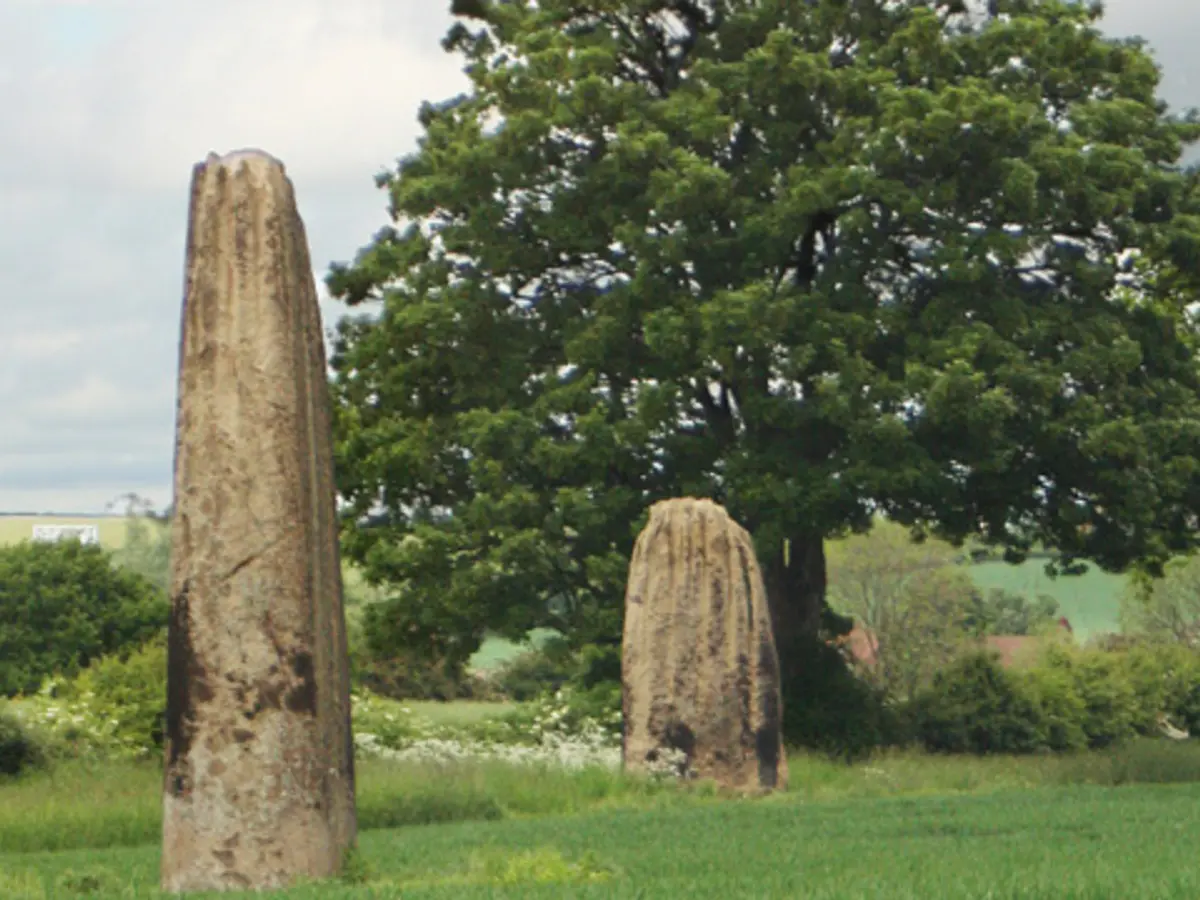
The Devil’s Arrows are three very large standing stones in England.
They are about 23 feet tall and together weigh nearly 28 tons.
Scientists wanted to know how the stones got to their current location.
One idea was that moving ice carried them there naturally.
A new study says that idea does not fit the evidence.
Researchers found that the stones came from Brimham Rocks, more than 17 kilometres away.
They identified the source by comparing tiny mineral grains in the stones.
This means people probably chose and moved the stones on purpose.
The distant landscape may have been important to them.

The 23-foot-high Devil’s Arrows in northern England were moved more than 17 kilometres over 4,000 years ago.
Researchers rejected a theory that glacial movement carried the nearly 28-ton stones to their current location.
Mineral-grain analysis matched the stones to Brimham Rocks, rather than the closer Plumpton Rocks.
The stones were likely erected around 2000 BCE during the Late Neolithic or Early Bronze Age.
Researchers say the distant source may have had cultural or symbolic meaning for the prehistoric people who moved them.
- Who
- Researchers from Curtin University and the University of York, including lead author Anthony Clarke, studied the Devil’s Arrows.
- What
- The study found that the standing stones were deliberately extracted and transported from Brimham Rocks rather than moved by ice or taken from the nearer Plumpton Rocks.
- Where
- The stones stand at Boroughbridge in northern England and were traced to Brimham Rocks, more than 17 kilometres away.
- When
- The stones were likely erected around 2000 BCE, during the Late Neolithic or Early Bronze Age, and were moved more than 4,000 years ago.
- Why
- The researchers say the stones were deliberately selected despite the difficult journey, possibly because their source landscape held meaning.
Deliberate Human Transport
Natural Glacial Movement or Nearby Source
How the stones arrived
Deliberate Human Transport
The new study concludes that prehistoric people deliberately extracted and transported the stones from Brimham Rocks.
Natural Glacial Movement or Nearby Source
An earlier theory proposed that glacial movement carried the stones to the site.
Where the stones came from
Deliberate Human Transport
Mineral-grain fingerprints matched the stones to Brimham Rocks, more than 17 kilometres away.
Natural Glacial Movement or Nearby Source
Previous research had identified the much closer Plumpton Rocks as the source.
Meaning of the source landscape
Deliberate Human Transport
Researchers say the difficult-to-reach upland source may have held cultural or symbolic meaning.
Natural Glacial Movement or Nearby Source
The earlier explanations emphasized natural movement or the use of a nearer stone source rather than deliberate selection of a distant landscape.
Key facts
- Monument
- The Devil’s Arrows
- Location
- Boroughbridge, northern England
- Height
- About 23 feet
- Weight
- Nearly 28 tons
- Identified source
- Brimham Rocks
- Distance moved
- More than 17 kilometres
- Estimated erection date
- Around 2000 BCE
- Earlier proposed source
- Plumpton Rocks
Quotes
Anthony Clarke
Lead author of the study
“Our research shows these stones weren’t simply taken from the nearest available source—they were deliberately chosen from a challenging landscape.”
 wionews.com
“It wasn’t just about convenience. The location the stones came from likely held meaning for them.”
wionews.com
Sources
Related news
Ancient Million-Atomic-Bomb Volcano Discovered Beneath England’s East Coast by Scientists
Ladakh’s Ancient Petroglyphs Reveal Millennia of Art and History

Ancient Supervolcano Beneath England's East Coast Predates Dinosaurs
Paleolithic Quartz Hand Axe Discovered Near Kongarakalan, Hyderabad
Telangana Evidence Pushes India’s Stone Sculpting Tradition Earlier

Researchers Defend Monte Verde’s Older Age in Chile

Ed Sheeran’s Apolitical Stance Faces Ethical Questions Over Macklemore
Study Links Air Pollution With Suicide-Related Mental Health Risks

Why Dubai Is Emerging as a Study Abroad Destination

Defunct NASA Satellite Emits Powerful Radio Signal After Decades
