1 hr ago
Ed Sheeran’s Apolitical Stance Faces Ethical Questions Over Macklemore
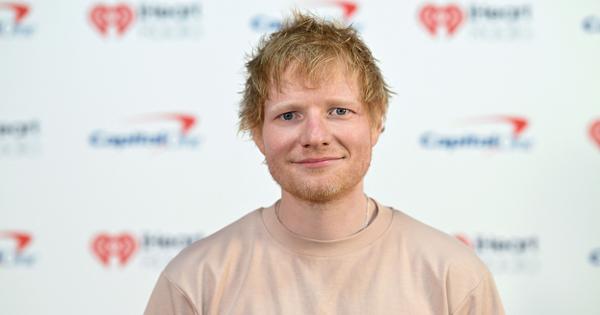
Macklemore spoke publicly in support of Palestine during a concert.
Soon afterward, he was removed from Ed Sheeran’s tour.
Macklemore said a stadium owner helped prevent him from performing there.
Sheeran said the decision was made by the promoter, not by him.
Sheeran also said he usually avoids telling people his political opinions.
The ethicist writing this article says avoiding politics can still have political effects.
She argues that Sheeran has supported political causes in the past.
The bigger question is whether staying neutral is possible when someone’s voice is being stopped.

Macklemore was dropped from Ed Sheeran’s Loop tour after publicly calling to “free Palestine.”
Macklemore said Robert Kraft barred him from Gillette Stadium and encouraged other stadiums to join the boycott.
Sheeran said the decision belonged to the promoter, not him, and described himself as apolitical.
The ethicist argues that Sheeran has previously taken political positions, including on Brexit, racism, Ukraine and Jeremy Corbyn.
The article argues that allowing Macklemore’s views to be removed may itself favor one political interest over another.
- Who
- Ed Sheeran, Macklemore, Robert Kraft, the tour promoter and ethicist Jacqueline Boaks are central to the discussion.
- What
- Macklemore was dropped from Sheeran’s Loop tour after public calls to “free Palestine,” prompting a debate over political neutrality.
- Where
- The dispute involves Sheeran’s Loop tour, Gillette Stadium and the broader debate over Palestine; the article includes an image captioned as Gaza City on September 18.
- When
- The controversy occurred during the week discussed in the article; the article also references Sheeran’s 2022 Concert For Ukraine appearance.
- Why
- Macklemore’s pro-Palestinian statements triggered the dispute, while Sheeran’s claim of being apolitical prompted criticism that inaction can still support existing power arrangements.
Sheeran’s Apolitical Position
Ethicist’s Critique
Responsibility for Macklemore’s removal
Sheeran’s Apolitical Position
Sheeran has attempted to distance himself from the decision, saying it was made by the promoter rather than by him.
Ethicist’s Critique
Boaks argues that Sheeran allowed Macklemore’s political views to be removed at the request of another party, making his involvement politically consequential.
Meaning of neutrality
Sheeran’s Apolitical Position
Sheeran says he keeps political views separate from his music and does not tell others how to vote or think.
Ethicist’s Critique
The article argues that neutrality is not always neutral in practice, particularly when significant injustice or unequal power is involved.
Whether artists should take sides
Sheeran’s Apolitical Position
An artist may reasonably avoid political statements and focus on entertainment, a position the article connects with philosophical arguments for withdrawing from politics.
Ethicist’s Critique
The article says privileged people often have greater ability to influence change, and that choosing not to act can favor existing power relationships.
Key facts
- Artist removed
- Macklemore was dropped from Ed Sheeran’s Loop tour.
- Public statement
- Macklemore called publicly to “free Palestine.”
- Stadium claim
- Macklemore said Robert Kraft barred him from Gillette Stadium and encouraged other stadiums to join the boycott.
- Sheeran’s position
- Sheeran said the decision was made by the promoter rather than by him.
- Earlier positions
- The article says Sheeran previously supported campaigns against Brexit and far-right racism, supported Jeremy Corbyn and performed at a 2022 Concert For Ukraine.
- Ethical issue
- The article examines whether refusing to take a political position can nevertheless affect political power and injustice.
Quotes

Ed Sheeran
English singer-songwriter discussing his approach to political expression
“People buy my records to put on while they make out. I’m not Mr Political. I vote the way I feel I should, but won’t tell somebody else what to do.”
 scroll.in

Hugo Grotius
Seventeenth-century philosopher cited in the article’s discussion of mercenaries
“there is no course of life more abominable and to be detested”
scroll.in
Sources
Related news

Ed Sheeran Returns to Stage Amid Macklemore Tour Fallout

Sheeran Says Promoter Axed Macklemore as Acts Quit Tour
Macklemore Removal Deepens Dispute Over Sheeran’s Loop Tour

Macklemore Dropped From Sheeran Tour as Support Acts Quit

Macklemore Ouster Raises Questions About Who Controls Concert Stages

Ed Sheeran Addresses Loop Tour Row After Acts Quit
Study Links Air Pollution With Suicide-Related Mental Health Risks

Why Dubai Is Emerging as a Study Abroad Destination

Defunct NASA Satellite Emits Powerful Radio Signal After Decades

Study: Depression in Middle Age Linked to Higher Dementia Risk