2 hrs ago
India's States Take E-Governance To Citizens' Doorsteps With Human Help
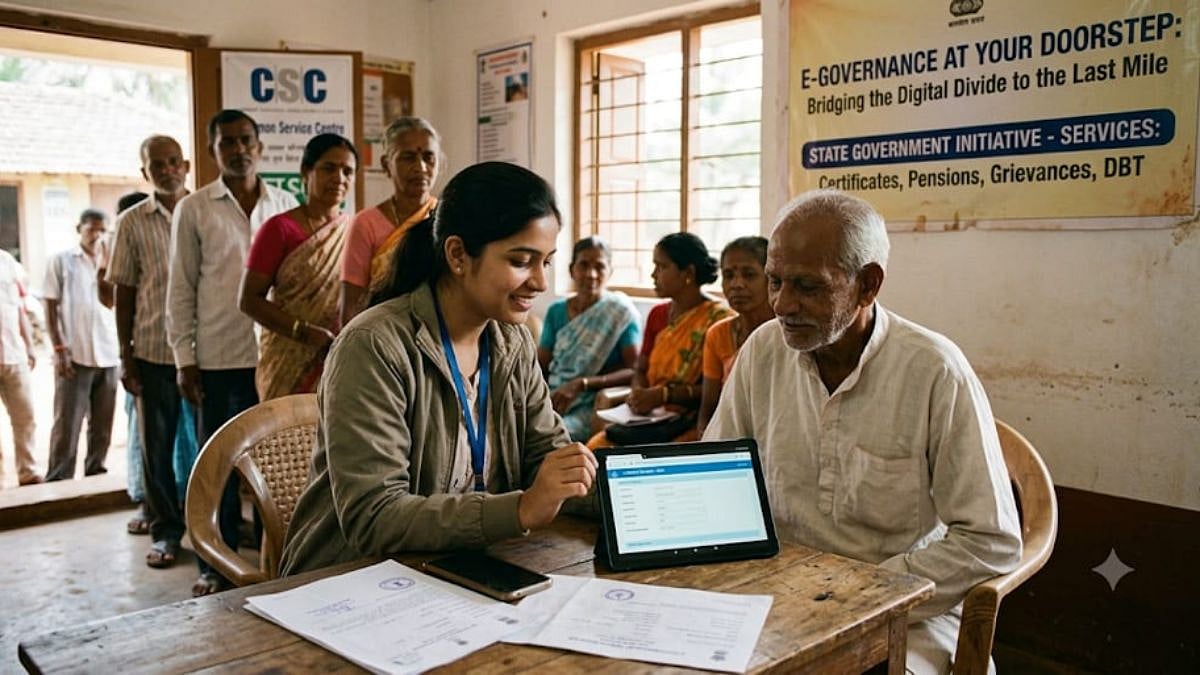
Many government services in India can now be used online.
This makes some tasks faster and reduces the need to stand in long lines.
But some people, especially older adults, people with disabilities and families without smartphones, may struggle to use websites.
States are therefore creating human support systems to help people access digital services.
Goa sends trained helpers to residents' homes through its Gramin Mitra programme.
Other states use village offices, kiosks and local workers for similar assistance.
In the future, artificial intelligence may help people use services by speaking in regional languages.
The main idea is that technology should work together with people, not leave anyone behind.

India's shift to online public services has reduced queues and bureaucratic red tape but created barriers for digitally excluded citizens.
Goa is combining digital platforms, village-level connectivity and doorstep assistance to serve its ageing population.
Goa's Gramin Mitra programme helps residents complete online applications and document processes from their homes.
Madhya Pradesh, Andhra Pradesh and Rajasthan use kiosks, local secretariats and neighbourhood service points to connect citizens with government services.
The article says artificial intelligence could support future assisted governance through regional-language voice tools and automated document checks.
- Who
- Indian state governments, local service operators, facilitators and citizens who need help using online public services.
- What
- States are combining digital government platforms with physical assistance to make e-governance accessible to people who cannot use online services independently.
- Where
- Across India, with examples from Goa, Madhya Pradesh, Andhra Pradesh, Rajasthan and Assam.
- When
- The initiatives described span from Madhya Pradesh's Gyandoot project in 2000 to current programmes and proposed future uses of artificial intelligence.
- Why
- To prevent senior citizens, people with limited internet literacy, persons with disabilities and households without smartphones from being excluded from digital public services.
Digital-First Governance
Assisted Digital Governance
How services should be delivered
Digital-First Governance
Moving services online can reduce physical queues, speed up transactions and limit bureaucratic red tape.
Assisted Digital Governance
Online systems alone can exclude people who lack digital skills, devices or the ability to navigate portals, so local human assistance is necessary.
Role of human support
Digital-First Governance
Centralised online portals can allow citizens to access government services without repeated visits to offices.
Assisted Digital Governance
Facilitators, kiosks, village secretariats and local operators provide the physical bridge needed when citizens cannot use portals independently.
Role of artificial intelligence
Digital-First Governance
AI could make government systems easier to use through voice navigation, regional-language tools and automated document checks.
Assisted Digital Governance
AI is expected to support rather than replace human facilitators, who remain important for residents facing digital barriers.
Key facts
- Goa's older population
- People aged 60 and above accounted for 17.2% of Goa's population in 2023–24, according to NFHS-6 data.
- Goa's fertility rate
- Goa's total fertility rate is reported as 1.6 children per woman.
- Goa's village network
- All 191 Village Panchayats have been connected through the government's network.
- Goa Online
- The single-window platform provides access to services including revenue records, certificates and welfare-related services.
- Gramin Mitra
- The programme sends trained facilitators to residents' homes to assist with online applications and documents.
- Madhya Pradesh's Gyandoot
- The rural internet-kiosk project was launched in 2000.
- Rajasthan's e-Mitra
- The kiosk network provides services such as bill payments, certificate applications and other government services.
Sources
Related news

Andhra Pradesh Expands AI-Powered, Paperless Digital Governance Drive
How Modi-Era Policies Reshaped India’s Digital Economy

Naidu Directs Technology-Led Services, Crop Protection and Solar Expansion

Digital Distrust Crosses Class Divides in India’s Technology Shift
Andhra Pradesh Prepares AP One App With 150 Services

Andhra Pradesh AI Grievance System Aims to Improve Citizen Services

Guns N’ Roses Announces Indian Bands for 2026 Tour