

2 hrs ago
15-Year Breeding Effort Revives World’s Heaviest Insect
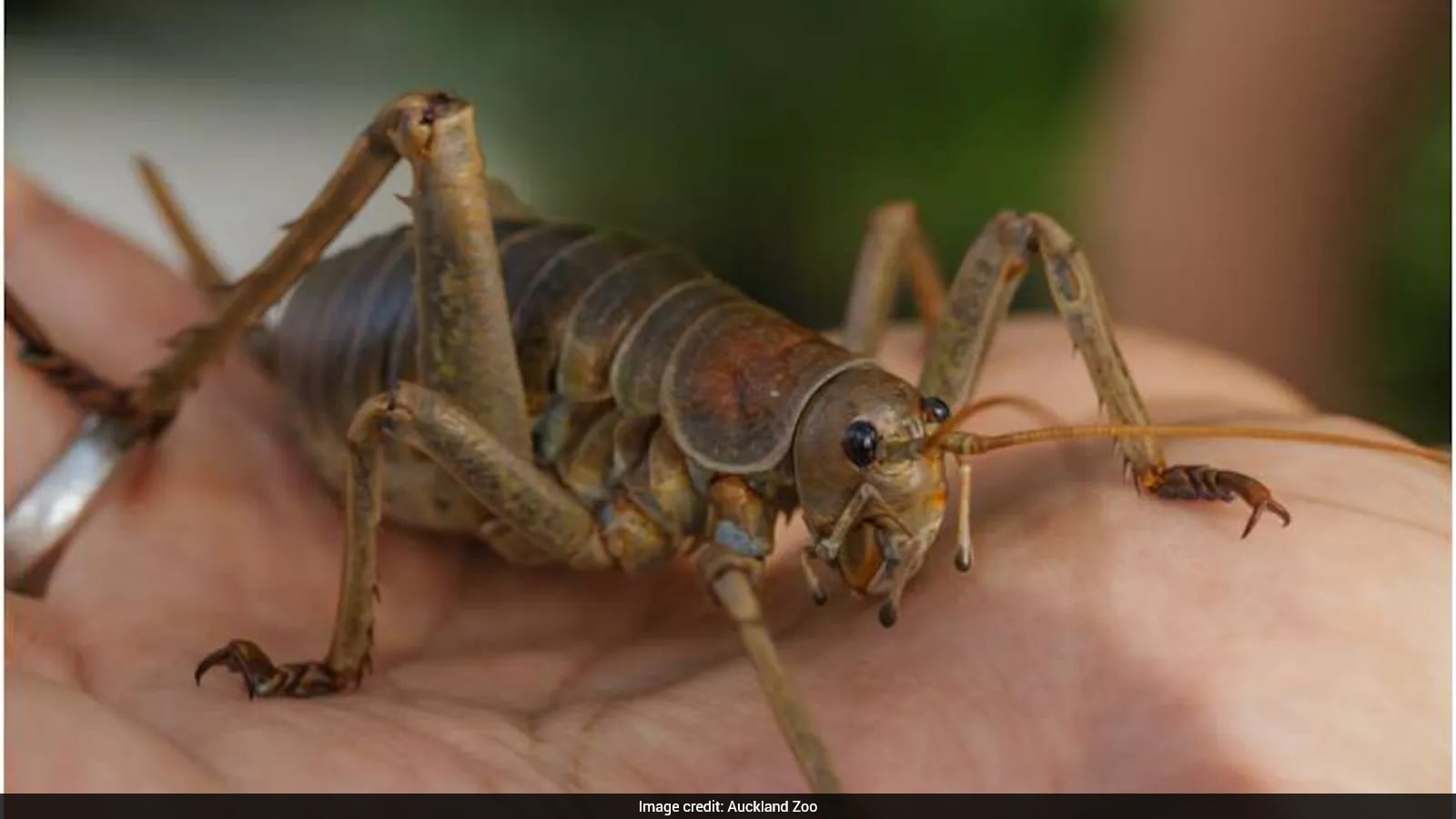
Wetapunga are very large insects that live in New Zealand.
Their numbers fell because their homes were lost and animals such as rats and cats preyed on them.
For a time, they survived in the wild only on Little Barrier Island.
In 2010, conservationists started raising wetapunga in captivity because there were too few to move safely.
They cared for the young insects and released more than 11,000 of them at 10 new wild sites.
The insects are now breeding in those places, and several generations have been born in the wild.
New Zealand’s Department of Conservation changed their status to “nationally increasing.”

Wetapunga, a giant weta native to New Zealand, was once widespread across Northland and Auckland.
Habitat loss and introduced predators contributed to a population collapse; by the 1990s, the species survived in the wild only on Little Barrier Island.
Auckland Zoo and Butterfly Creek began a captive-breeding programme in 2010, hand-rearing young insects for release.
More than 11,000 wetapunga were released across 10 new wild sites through 45 relocation efforts.
Self-sustaining populations, including fourth- and fifth-generation wild-born insects, led New Zealand’s Department of Conservation to upgrade the species’ status to “nationally increasing.”
- Who
- Wetapunga, conservation teams led by Auckland Zoo and Butterfly Creek, and New Zealand’s Department of Conservation.
- What
- A 15-year captive-breeding and release programme helped establish self-sustaining wild wetapunga populations and prompted a status upgrade.
- Where
- New Zealand, with releases at 10 new wild sites; the species had survived in the wild on Te Hauturu-o-Toi (Little Barrier Island).
- When
- The programme began in 2010; the Department of Conservation upgraded the status after the programme’s success. A report was released on 2 October.
- Why
- The programme was launched because the wild population was too small to relocate directly and the species had been endangered.
Conservation success
Continuing conservation challenge
What the recovery shows
Conservation success
The releases have established self-sustaining populations, with fourth- and fifth-generation insects born in the wild; Dr Chris Green described the future as bright.
Continuing conservation challenge
Green noted that comparable success cannot be reported for many other threatened species, and the programme began because wetapunga numbers were too low for direct relocation.
Key facts
- Species
- Wetapunga, a giant weta native to New Zealand
- Programme start
- 2010
- Programme duration
- 15 years
- Released
- More than 11,000 wetapunga
- Relocation efforts
- 45
- New wild sites
- 10
- Status change
- From “nationally endangered” to “nationally increasing”
- Research publication
- Findings published in the New Zealand Journal of Zoology
Quotes
Dr Chris Green
Honorary researcher at New Zealand’s Department of Conservation and a researcher documenting the project
“The future of wetapunga is looking bright. Eleven thousand individuals for release is extraordinary and outstanding.”
 NDTV
NDTV
“It's so exciting, because we are unable to report that for so many of our other threatened species.”
NDTV
Sources
Related news
New Zealand’s Black Robin Wins Bird of the Year 2026
New Zealand Makes Otago Set-Net Ban Permanent as Hoiho Decline
Great Indian Bustard Rewilding Set to Begin in Jaisalmer
Captive-Bred Great Indian Bustards Prepare for First Wild Release
Two Great Indian Bustards Released as Scientists Warn of Wider Threats

Gujarat Inaugurates Great Indian Bustard Soft Release Centre in Kutch
