

5 hrs ago
New Zealand Makes Otago Set-Net Ban Permanent as Hoiho Decline
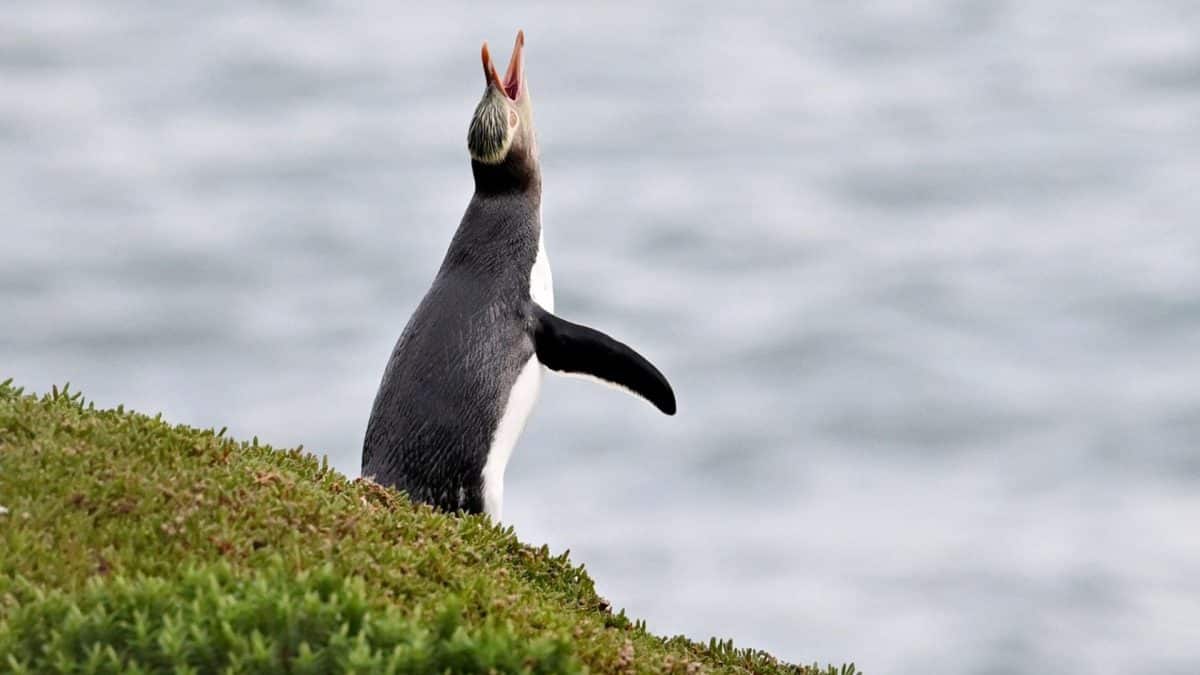
New Zealand has made a fishing-net ban permanent near the Otago Peninsula.
The ban is meant to stop yellow-eyed penguins, also called hoiho, from drowning in nets.
A new rule also allows up to four penguin deaths from fishing each year.
Conservationists say that is still too many because only 117 breeding pairs remain on mainland New Zealand.
The penguin population was much larger in 2008-09.
The birds also face attacks from introduced predators such as cats, dogs, rats and weasels.
Diseases have killed many chicks, and changing ocean conditions may make it harder to feed them.
Fishing groups wanted a smaller protected area and say stopping set-net fishing alone may not restore the penguins.
Kāi Tahu considers hoiho a treasured species.

New Zealand permanently banned set-net fishing within about 8 nautical miles of the Otago Peninsula.
A separate rule limits fishing-related yellow-eyed penguin deaths to four birds annually from 1 October.
The mainland population has fallen from 739 breeding pairs in 2008-09 to 117 today.
Conservationists say four deaths are too many and the escalation framework does not guarantee stronger action.
Penguins also face predators, disease, changing food supplies, warming seas and potential H5N1 exposure.
- Who
- New Zealand authorities, fishers, conservationists, scientists and Kāi Tahu are involved; the yellow-eyed penguin is affected.
- What
- A permanent set-net fishing ban was introduced near the Otago Peninsula, alongside a four-penguin annual fishing-death limit.
- Where
- Around the Otago Peninsula in southeastern New Zealand, extending about 8 nautical miles offshore.
- When
- The permanent closure took effect on 16 September, and the death limit begins on 1 October.
- Why
- Set nets have drowned yellow-eyed penguins, whose mainland population has fallen to 117 breeding pairs.
Conservationists and scientists
Fishing industry
Scale of the fishing limit
Conservationists and scientists
Four deaths per year are too many for a population of only 117 mainland breeding pairs, especially because some birds produce a disproportionate share of future generations.
Fishing industry
The industry has sought a smaller, targeted closure and argues that the penguins would not recover even if set-net fishing stopped completely.
Strength of the protections
Conservationists and scientists
Conservationists say the escalation framework provides little reassurance because exceeding four deaths does not automatically close the fishery and any response may last only until the fishing year ends.
Fishing industry
The fishing sector has supported a more limited approach rather than the wider permanent closure imposed around the Otago Peninsula.
Main threat to recovery
Conservationists and scientists
Researchers identify set-net deaths as a threat that policy can address directly and dispute the claim that ending set-net fishing would not help recovery.
Fishing industry
The industry maintains that removing set-net fishing alone would not restore the penguin population because the birds face several other threats.
Key facts
- Mainland breeding population
- 117 yellow-eyed penguin breeding pairs
- Earlier population
- 739 breeding pairs in the 2008-09 season
- Fishing closure
- Permanent set-net ban extending about 8 nautical miles around the Otago Peninsula
- Annual bycatch limit
- Four fishing-related yellow-eyed penguin deaths from 1 October
- Recorded set-net deaths
- Fisheries New Zealand recorded 18 mainland penguin deaths since October 2019
- Additional threats
- Predators, chick diseases, warming seas, fishing pressure and possible H5N1 exposure
Sources
Related news
New Zealand’s Black Robin Wins Bird of the Year 2026
Fruit-Protecting Nets Kill Birds and Mammals in Bengal Orchards
How Phillip Island's Little Penguins Returned From The Brink
Black Robin Wins New Zealand’s Bird of the Year 2026

New Zealand Carbon Forestry Boom Reshapes Rural Farming Communities

Zuckerberg, Chan Donation Helps Preserve 600-Year-Old Hawaiian Fishpond

Assam Police Seize Six Musk Deer Pods in Smuggling Bust

Inside Australia's Lone Pine Koala Sanctuary's Conservation Mission

Xi Announces Panda Pair for Atlanta Zoo Amid US-China Tensions
Indira Gandhi Zoological Park welcomes four Asiatic lion cubs
