

1 hr ago
Captive-Bred Great Indian Bustards Prepare for First Wild Release
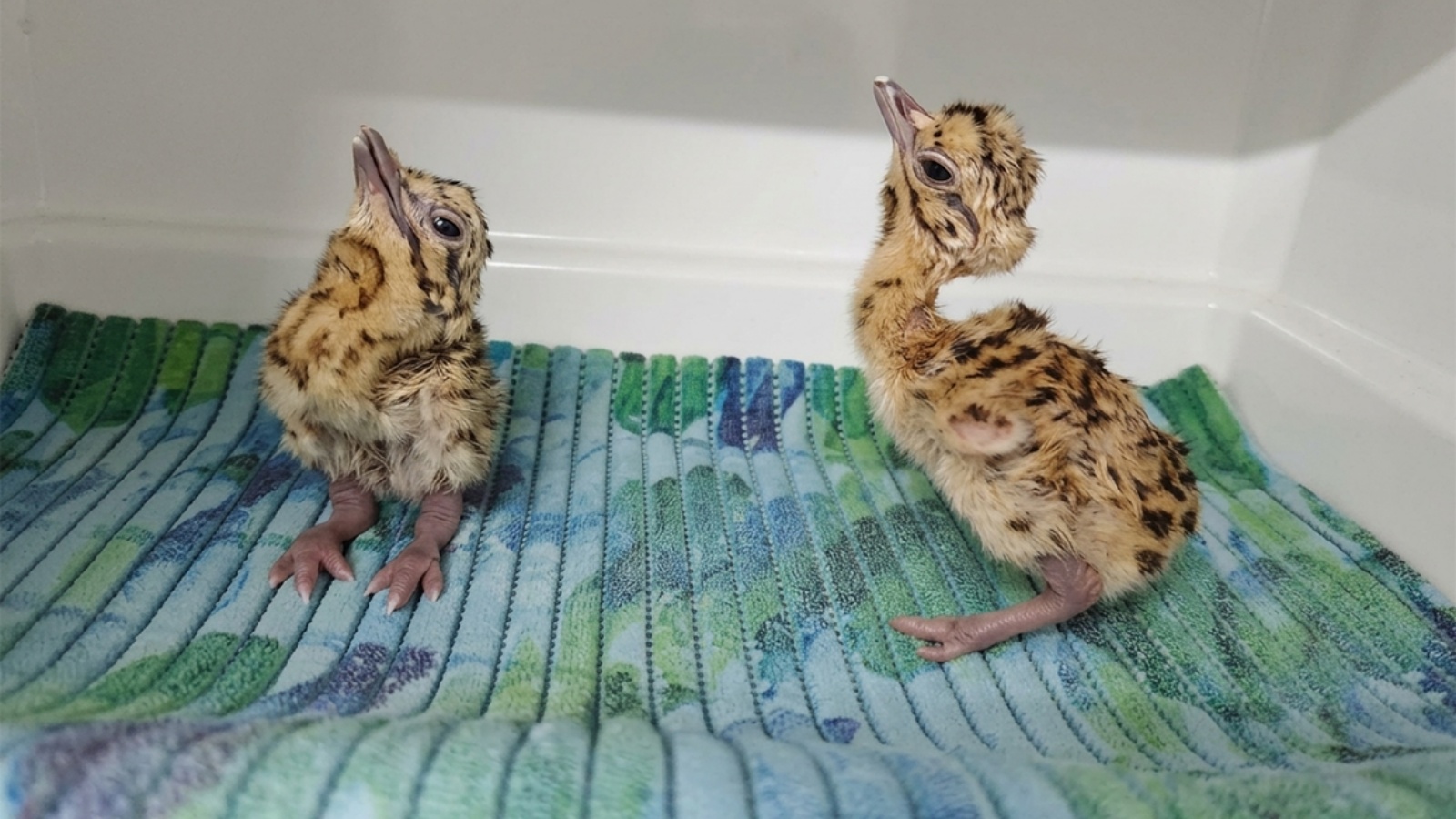
The Great Indian Bustard is a rare bird, and only about 140 are thought to live in the wild.
Experts have raised some chicks in special centres to help the species recover.
At least two young male birds are expected to be released into protected enclosures in Desert National Park.
The release is planned for October 4, after the monsoon, when insects in the grasslands can help feed them.
The chicks will wear radio tags so experts can follow their movements and behaviour.
They will still face dangers from predators and other threats.
This first release is a test, and the project team says helping the birds survive will be a long challenge.

At least two captive-bred Great Indian Bustard chicks are expected to be released in enclosures in Desert National Park, Jaisalmer, in a pilot project.
The release, expected on October 4, will begin the rewilding phase of Project GIB, which has been under way since 2013.
The two male chicks, aged four to six months, are expected to be radio-tagged to monitor their movements and behaviour.
At least 98 bustards have been bred in captivity at Wildlife Institute of India centres in Sam and Ramdevra.
The chicks will face predators and other risks; project associates estimate released captive-bred bustards have annual survival rates of 10 to 30 percent.
- Who
- At least two captive-bred male Great Indian Bustard chicks, aged four to six months.
- What
- A pilot release into enclosures as the first step in Project GIB's rewilding phase.
- Where
- Enclosures in Desert National Park, Jaisalmer, Rajasthan.
- When
- Expected on October 4; the article does not specify the year.
- Why
- To support the long-term recovery of the critically endangered Great Indian Bustard.
Key facts
- Wild population
- About 140 Great Indian Bustards; the article gives a broader historical range of 120–150.
- Pilot release
- At least two male chicks, aged four to six months.
- Release site
- Enclosures spanning 15–20 square kilometres within Desert National Park.
- Project start
- Project GIB has been under implementation since 2013.
- Captive-bred birds
- At least 98 have been bred at conservation centres in Sam and Ramdevra.
- Estimated annual survival
- 10–30 percent for a captive-bred bustard released into the wild, according to project associates.
- Main reported threats
- Habitat loss, poaching, predation, and collisions with power lines.
Quotes
K C A Arun Prasad
Chief Wildlife Warden, Rajasthan Forest Department
“Two male chicks, aged four to six months old, are likely to be released in existing enclosures within the Desert National Park. These birds will be radio-tagged to monitor their movement and behaviour.”
 indianexpress.com
“It is the beginning of a long challenge.”
indianexpress.com
Sources
Related news

Gujarat Inaugurates Great Indian Bustard Soft Release Centre in Kutch
Great Indian Bustard Conservation Focuses on Small, Local Solutions

Ramesh Warns Against Rajasthan Mine Near Bustard Habitat
Centre Defers Limestone Mine Clearance Near Great Indian Bustard Habitat

Maharashtra’s Tiger Reserves Boost Captive-Bred Vulture Survival Rates

Gujarat to Launch AI Wildlife Surveillance Centre for Lions
Eco Warrior Awards 2026 Honour India’s Conservation Champions

Himalayan Grey Langur: Mountain Primate Facing Fragmented Habitats
Himalayan Dams Face Rising Risks Beyond Individual Projects

Garbage Dumps Draw Sloth Bears Into Nilgiris Settlements