19 hrs ago
India's Forest Governance Debate: Industry, Ecology, and Livelihoods

People disagree about what natural forests should mainly do.
Some want forests to produce timber and support industries.
Others say forests must protect nature and support people who depend on them.
India tried a strongly commercial approach for many years.
The article says this caused forest damage and did not create enough lasting economic benefits or local jobs.
The National Forest Policy of 1988 gave greater importance to environmental protection and community welfare.
Forests provide food, fuel, medicine, fodder, and income to many people.
The article recommends protecting natural forests while growing industrial wood on private agroforestry land and involving communities in sustainable forest use.

India’s commercial forestry model began under British rule and expanded to support railways, shipbuilding, and industrial growth.
Many wood-based industries later declined after contributing to forest depletion, while providing limited economic growth and local employment, according to the article.
The National Forest Policy of 1988 shifted the focus from forest revenue toward environmental stability and local communities’ socioeconomic well-being.
About 400 million people in India depend on forests to varying degrees for food, income, fuel, medicine, fodder, and other needs.
The article recommends conserving and restoring natural forests while directing industrial timber demand toward private agroforestry and expanding community-based initiatives.
- Who
- The Government of India, forest-dependent communities, conservationists, industry advocates, and the Government of Andhra Pradesh are central to the discussion.
- What
- The article argues for conserving and restoring natural forests while meeting community livelihood needs and directing industrial timber production toward private agroforestry.
- Where
- India, including Andhra Pradesh and its natural forests.
- When
- The history discussed spans more than 160 years, with a major policy shift occurring in 1988; Andhra Pradesh’s newer initiatives are described as current efforts.
- Why
- The proposed approach aims to prevent ecological degradation, protect ecosystem services, and secure the livelihoods of forest-dependent communities.
Industry-oriented forestry
Conservation and community forestry
Primary purpose of forests
Industry-oriented forestry
Supporters favour commercially valuable tree plantations and production forestry to increase industrial output and substitute timber imports.
Conservation and community forestry
Conservationists argue that natural forests should primarily provide environmental security, ecosystem services, and support for local communities.
Source of industrial timber
Industry-oriented forestry
Industry-oriented models seek to use natural forests or plantations within them as sources of raw material.
Conservation and community forestry
The article argues that industrial wood demand should be directed entirely toward agroforestry on private lands, leaving natural forests protected.
Economic and social effects
Industry-oriented forestry
Advocates see forest production as a route to industrial expansion and economic growth.
Conservation and community forestry
The article says earlier commercial forestry caused ecological damage, excluded forest-dependent people, and failed to deliver significant national growth or gainful local employment.
Key facts
- Policy shift
- India’s National Forest Policy of 1988 prioritised environmental stability and local socioeconomic well-being over revenue generation.
- Forest dependence
- The Energy and Resources Institute estimated in 2015 that approximately 400 million people in India depended on forests to varying degrees.
- Commercial forestry origins
- Commercial forest management developed in British India to supply timber for railway sleepers and shipbuilding.
- Industrial expansion
- The second Five-Year Plan, covering 1956–61, promoted greater industrial use of forest materials.
- Resource survey
- A 1965 Pre-Investment Survey of Forest Resources, supported by the Food and Agriculture Organization and the United Nations Development Programme, helped encourage private wood-based industries.
- Recommended division
- The article says industrial wood demand should be met through agroforestry on private lands, while public forests should remain ecological and community-support systems.
- Andhra Pradesh initiatives
- Proposals include eco-restoration, craft wood banks, artisanal bamboo depots, and improved community-based ecotourism.
Sources
Related news
India's Forest Movements Defend Livelihoods, Memory, and Community Rights

Audit Finds India’s Green Mission Falling Far Short

Ramachandra Guha Traces India’s Environmentalism From Chipko to Climate Change

How Chipko Inspired Karnataka’s Appiko Forest Movement
Pastoralists Safeguard India’s Rangelands Despite Persistent Policy Marginalisation
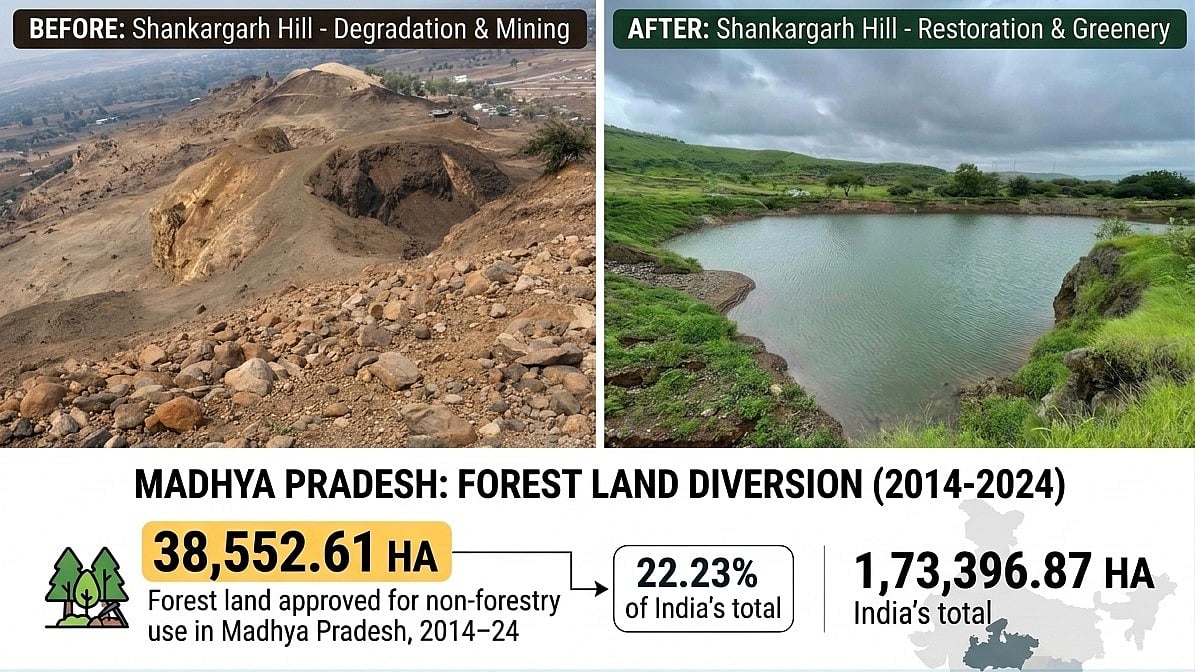
Madhya Pradesh Leads India in Forest Diversion Over Decade

How AI Could Transform India’s Agricultural Landscape

UN Warns Forest Restoration Window Is Narrowing Amid Climate Threats

India Highlights Forest Restoration Achievements at FAO Forestry Conference

El Niño Fund Receives One-Fifth of UN Request