1 hr ago
How AI Could Transform India’s Agricultural Landscape
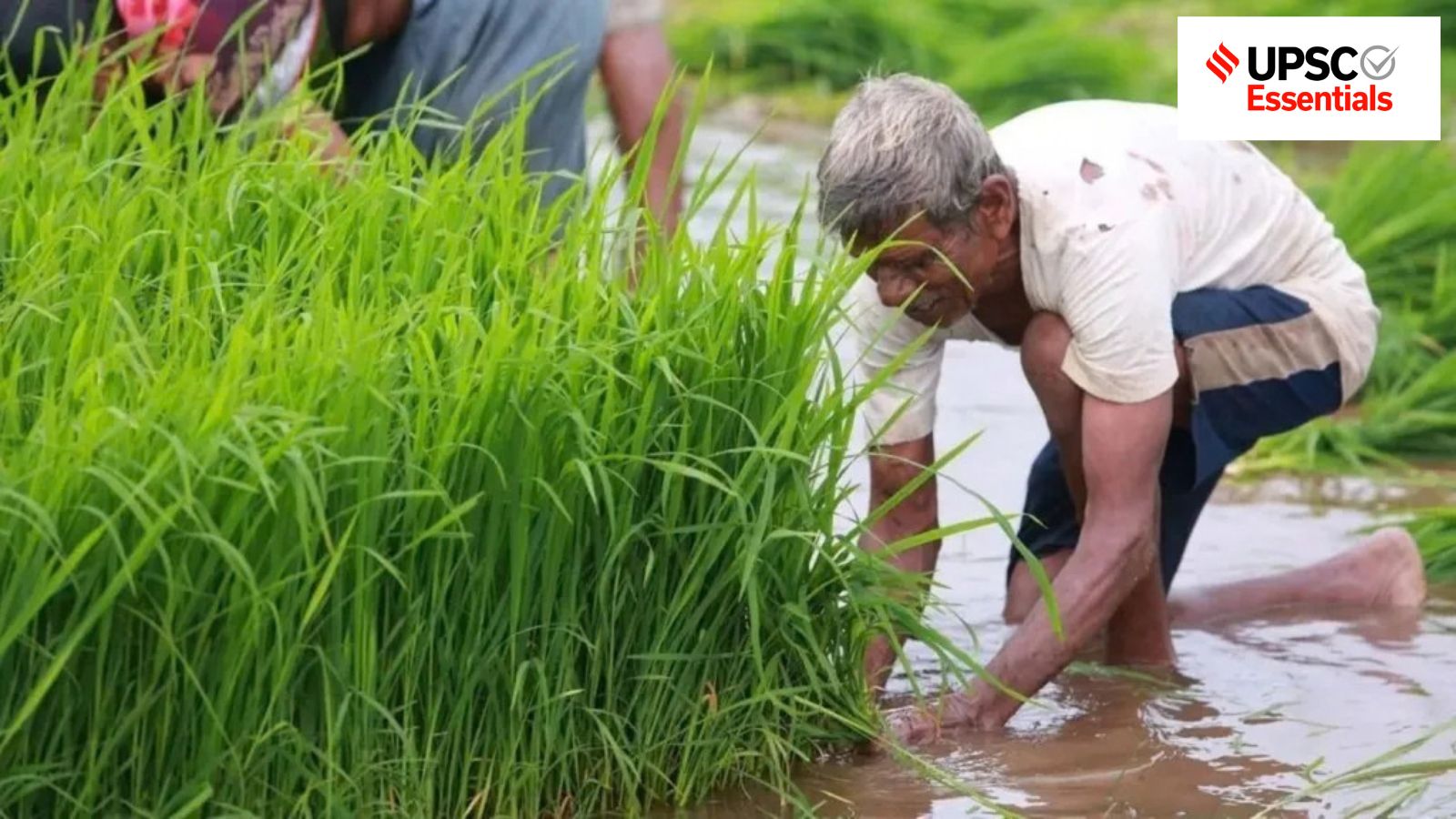
AI can help farmers make better decisions by studying weather, soil, crops and market information.
It may tell farmers when to plant or which crops could suit their land.
It can also help spot pests and diseases earlier.
Satellites, drones and sensors can monitor fields and estimate harvests.
India is building digital systems to collect and share this information.
A proposed tool called Bharat-VISTAAR would give farmers advice in different Indian languages.
However, many farmers have very small farms and limited resources, so these services must be affordable and easy to use.
The article argues that agricultural AI should work like a public service so farmers in remote villages can benefit.

India is developing AI tools to improve weather forecasting, crop management, soil analysis, yield estimation and agricultural markets.
The proposed Bharat-VISTAAR platform would connect AgriStack with the Indian Council of Agricultural Research to provide multilingual, tailored farm advice.
The Digital Agriculture Mission includes AgriStack and the Krishi Decision Support System for farmer records, crop data, soil mapping and real-time monitoring.
AI-based weather forecasting, pest surveillance and satellite analysis could help farmers make earlier and more informed decisions.
Adoption remains difficult because most Indian farmers have small holdings and may face affordability, connectivity, accessibility and data-governance challenges.
- Who
- The Indian government, agricultural institutions and Indian farmers are central to the initiatives discussed.
- What
- India is developing AI-enabled systems to improve agricultural forecasting, productivity, resilience, yield estimation and market decision-making.
- Where
- Across India, including rural and low-connectivity areas; the monsoon forecasting pilot covered 13 states.
- When
- The Digital Agriculture Mission was launched in 2024; related initiatives include Kisan e-Mitra in 2023, the National Pest Surveillance System in 2024 and a 2025 pilot of AI-based monsoon forecasts.
- Why
- The initiatives aim to address weather uncertainty, fragmented markets, declining farm sizes, soil and water pressures, and the need to improve productivity and resilience.
AI Expansion
Caution and Inclusion
Agricultural productivity
AI Expansion
AI can combine weather, soil, crop and market data to improve crop selection, resource use, yield estimates and farm productivity.
Caution and Inclusion
Benefits may be limited by affordability, accessibility, local relevance and the difficulty of adopting advanced tools on very small farms.
Climate resilience
AI Expansion
Faster, localised forecasts and early pest or disease detection could help farmers respond before weather or crop problems become severe.
Caution and Inclusion
Forecast accuracy depends on location-specific calibration and ground-station data, while farmers in rain-fed regions remain especially vulnerable to unreliable information.
Access and governance
AI Expansion
Public digital platforms could make agricultural advice available to farmers in remote areas and improve coordination across supply chains.
Caution and Inclusion
The expansion of AI must address the digital divide, data governance, affordability and farmer autonomy; the article argues that agricultural AI should be treated as a public good.
Key facts
- Proposed platform
- Bharat-VISTAAR, a multilingual AI tool intended to integrate AgriStack and the Indian Council of Agricultural Research.
- Digital Agriculture Mission
- Launched in 2024 with two components: AgriStack and the Krishi Decision Support System.
- Irrigation coverage
- The article states that 55% of India’s net sown area is irrigated, while the remainder is rain-fed.
- Weather pilot
- An AI-based local monsoon-onset forecasting model was tested during the 2025 Kharif season across 13 states.
- Farmer response
- Between 31% and 52% of farmers adjusted planting decisions after receiving forecast information by SMS.
- Yield estimation
- YES-TECH is used across 12 states for paddy, wheat and soybean under the Pradhan Mantri Fasal Bima Yojana.
- Small holdings
- More than 86% of Indian farmers have very small landholdings; average holding size fell from 1.08 hectares in 2016–17 to 0.74 hectares in 2021–22.
Sources
Related news
Google DeepMind Builds India-First AI Models for Agriculture

Free AI Helps Indian Farmers Detect Crop Diseases Early

AI Helps Indian Farmers With Crop and Cattle Care
IIT Indore Climate AI Reaches NSIC 2026 Top 11

India’s Integrated Pest Management System Touted to Fight Counterfeit Pesticides
NABARD, IMD Partner to Deliver Weather Intelligence to Farmers

BIT Mesra Replaces Hostel Fans With Anti-Suicide Rods

Indian Engineering Colleges Feature Prominently Among Unicorn Founders
Amaravati Approves Transport Plan, Assembly Spire and Infrastructure Proposals

Madhya Pradesh Plans Global Green Transit Hub With Electric Vehicles