

16 hrs ago
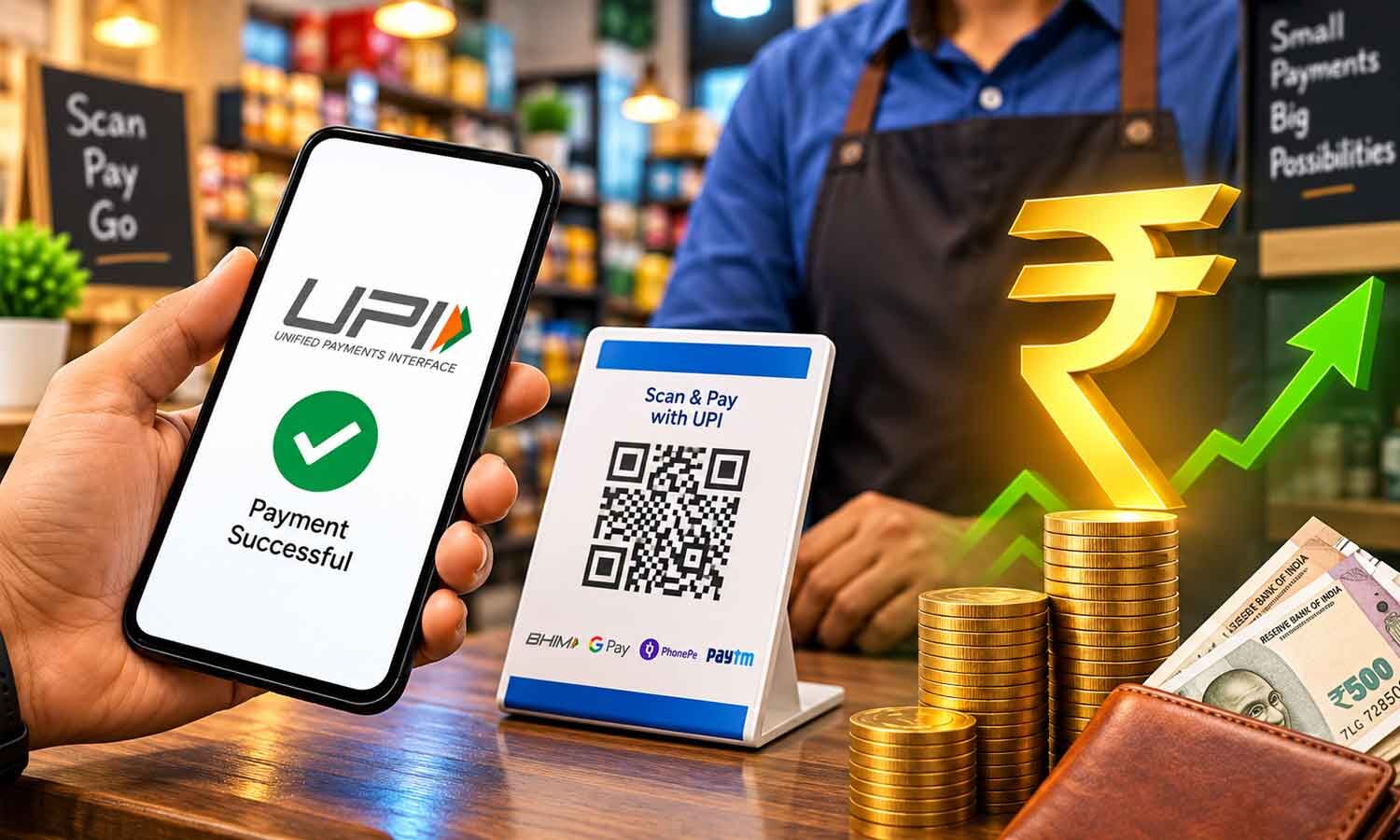
UPI MDR Fee to Start October 15, Government Says

A new fee may be charged when people pay businesses using UPI for more than ₹2,000.
The fee is planned to begin on October 15.
Government sources say the business, not the customer, will pay it.
Payments between two people will still be free.
Small merchants collecting up to ₹1 lakh each month through UPI QR codes will not pay the new fee.
The money collected will be divided among banks and other companies that help process UPI payments.
The government says the fee will help pay for infrastructure, cybersecurity and customer support.
Opposition parties disagree and have described the plan as a tax on consumers.

A proposed 0.4% MDR will apply from October 15 to person-to-merchant UPI payments above ₹2,000.
Government sources say merchants, not consumers, will pay the fee, while person-to-person transfers remain free.
MDR revenue will be shared among customers’ banks, payment gateways, UPI apps and sponsoring banks.
The fee will be capped at ₹300 for transactions of ₹75,000 or more, with exemptions for small merchants and several transaction categories.
Opposition parties have called the measure a consumer tax, while the government says it is a fee—not a tax, cess or surcharge—to support digital-payment infrastructure.
- Who
- The government, banks, payment gateways, UPI apps, merchants, the Indian Banks’ Association and Opposition parties including the Congress are involved.
- What
- A proposed merchant discount rate of 0.4% will be charged on eligible person-to-merchant UPI payments above ₹2,000.
- Where
- The measure applies to eligible UPI transactions in India.
- When
- The proposed MDR is scheduled to begin on October 15.
- Why
- Government sources say the fee is intended to create a sustainable revenue model for digital payments and cover infrastructure, cybersecurity and customer-support costs.
Opposition Criticism
Government and Banking Explanation
Is the MDR a consumer tax?
Opposition Criticism
Opposition parties, including the Congress, have described the proposed measure as a tax on consumers.
Government and Banking Explanation
Government sources say MDR is a merchant fee, not a tax, cess or surcharge, and that not a single penny will go to the government.
Who bears the cost?
Opposition Criticism
Critics have raised concerns that the fee could ultimately affect consumers or encourage a return to cash payments.
Government and Banking Explanation
Government sources say merchants will pay the fee and consumers will face no additional cost; they also reject concerns about a shift back to cash.
Purpose of the charge
Opposition Criticism
Opposition criticism focuses on the potential burden created by introducing a fee on UPI payments.
Government and Banking Explanation
The government says the MDR is needed for a sustainable digital-payments revenue model, including infrastructure, cybersecurity and customer support.
Key facts
- Standard MDR
- 0.4% on eligible person-to-merchant UPI transactions above ₹2,000.
- Effective date
- October 15.
- Transaction cap
- ₹300 for transactions of ₹75,000 or more.
- Revenue distribution
- 40% to customers’ banks, 30% to payment gateways, 20% to UPI apps and 10% to sponsoring banks.
- Exemptions
- Person-to-person transfers, transactions below ₹2,000 and small merchants collecting up to ₹1 lakh monthly through UPI QR codes.
- Special rates
- Essential services face a flat ₹5 fee above ₹2,000; capital-markets transactions face a 0.02% rate, also capped at ₹300.
- Small-merchant fund
- A dedicated fund will receive 5% of total MDR collections to promote UPI use among small merchants.
Quotes
Government sources
Unnamed government sources cited in the report
“MDR levy of 0.4 per cent on UPI transactions above ₹2,000 will not be passed on to the consumers. Banks, as well as the Indian Banks' Association, will address misconceptions related to MDR charges and their impact on users.”
 livemint.com
Sources
Related news

Government Defends UPI Merchant Fee, Says Consumers Won’t Pay
India Adds UPI Merchant Fees Above ₹2,000

UPI MDR Begins October 15, Merchants Face Charges, Customers Don’t

UPI Sets 0.4% MDR on High-Value Merchant Payments

India Plans Daily Monitoring of New UPI Merchant Fee

New UPI MDR Rules Keep Consumers Free, Charge Eligible Merchants

TMC Symbol Freeze Deepens Mamata Banerjee’s West Bengal Crisis
Karim Maredia to Receive Borlaug CAST Communication Award

Mona Lisa Theft Sparked Fame And Newspaper Frenzy

Former Judge’s Book Restored, Now in Global Archives
