

3 weeks ago
Enduring Pull of Bimal Roy's Classic 'Do Bigha Zamin'
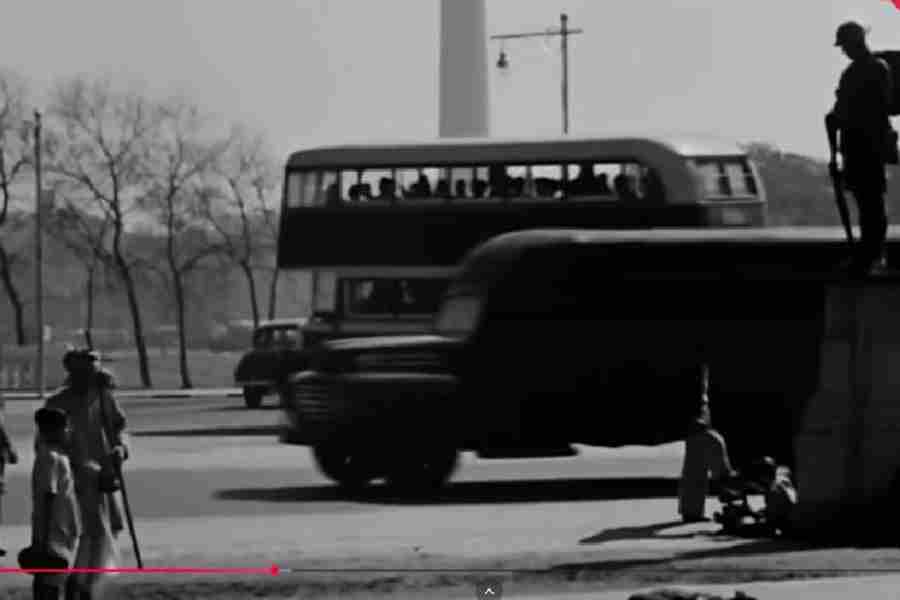
Imagine a hardworking farmer who owns just a small piece of land.
A rich landlord wants his land, and the farmer owes the landlord money.
If the farmer cannot pay back the loan, he could lose everything.
That is the story of Shambhu in the old Hindi film 'Do Bigha Zamin', made in 1953.
Shambhu leaves his village and goes to the big city of Calcutta to earn enough money to save his land.
Back then, after India became independent, many people were leaving farms for the cities.
The movie was directed by Bimal Roy and was famous for being filmed on real city streets.
Even today, grown-ups who study money and cities watch this movie to understand why people move to cities.
It shows that some old problems, like losing your land to a rich person, are still with us.

Bimal Roy's 1953 film 'Do Bigha Zamin' was the inaugural production of his own banner, Bimal Roy Productions.
It grew out of Hrishikesh Mukherjee's urging to make films like Vittorio De Sica's 'Bicycle Thieves' and Akira Kurosawa's 'Rashomon', which were screened at Bombay's first International Film Festival of India.
The screenplay was adapted from 'Rickshawala', a short story by Salil Chowdhury, and was filmed on Calcutta's streets in natural light, with night shoots at Mohan Studio in Bombay.
The film follows Shambhu, a poor farmer who migrates to Calcutta to repay a zamindar's loan and save his two bighas of land, reflecting the industrialisation and rural-to-urban migration concerns of newly independent India.
Economics professor Kaustav Das argues the film anticipates the Harris-Todaro migration model and the holdout problem in land acquisition, drawing parallels to events like the Tata land acquisition at Singur.
- Who
- Bimal Roy, who directed 'Do Bigha Zamin' for his own Bimal Roy Productions; the reflective essay is by Kaustas Das, an economics professor at the University of Leicester.
- What
- A personal essay on the classic 1953 Hindi film 'Do Bigha Zamin' and its enduring themes of land, debt, industrialisation and rural-to-urban migration.
- Where
- The film was shot on the streets of Calcutta and at Mohan Studio in Bombay; the essay was published in Telegraph India.
- When
- The film was released in 1953; the essay appears as India approaches the 79th anniversary of Independence in 2026.
- Why
- To explain why the film's portrayal of migration and land conflict remains relevant, and how it prefigured economic models still used to study these issues.
Key facts
- Film
- Do Bigha Zamin
- Director
- Bimal Roy
- Release year
- 1953
- Production
- Bimal Roy Productions (inaugural film)
- Source
- 'Rickshawala', a short story by Salil Chowdhury
- Inspiration
- 'Bicycle Thieves' by Vittorio De Sica and 'Rashomon' by Akira Kurosawa
- Protagonist
- Shambhu, a poor farmer with two bighas of land
- Filming locations
- Streets of Calcutta; Mohan Studio, Bombay
Sources
Related news
Indian Villages Return to Stories Through OTT Series
Anuparna Roy Returns to Venice With Migrant Love Story
Srijit Mukherji's 'Maharaja Tomare Selam' Chronicles Making of Ray Classic
Two Bengali films give historic Tagore date new meaning

Indian Films Set for World Premieres at 2026 Busan Festival

Auto Industry Urges Shift From Make to Create in India

Car Sales Aug'26: Tata Leads Growth, Maruti Dominates Volume

Brokerages Favor Indian Auto Stocks as Truck Sales Surge

Auto stocks plunge despite strong August sales and demand outlook

Tata Motors Rises to No. 2 in India's PV Market
