

3 weeks ago
Tata Sons Begins Succession Race After Chandrasekaran Steps Down
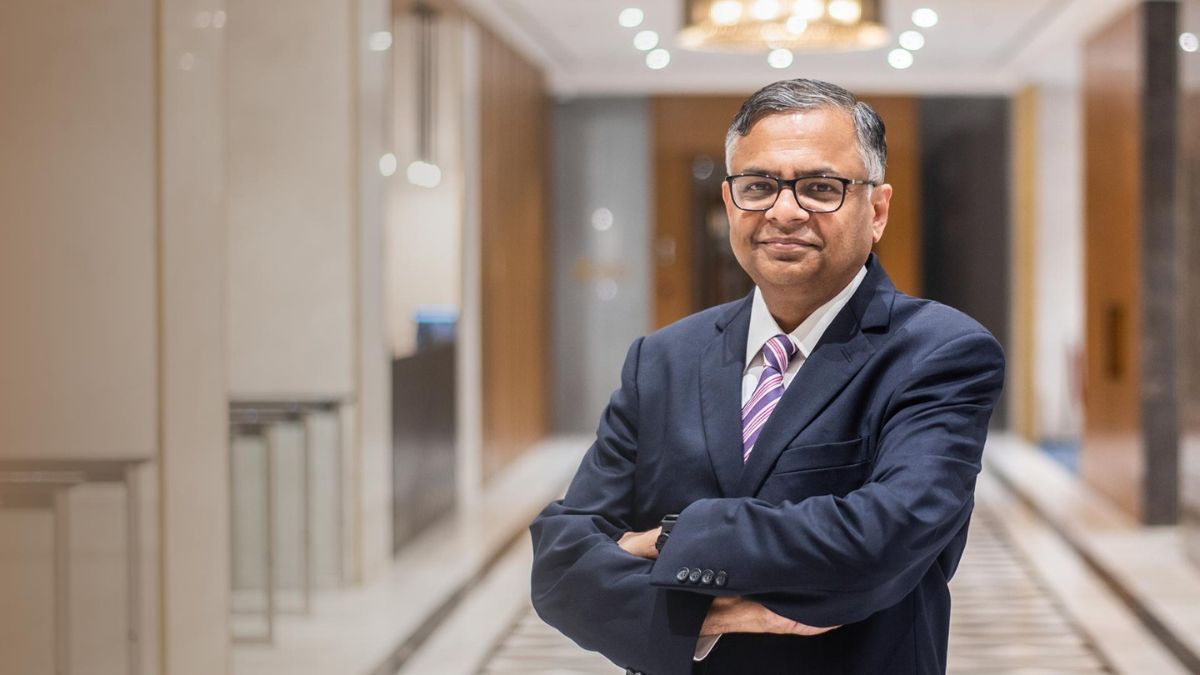
The boss of a very big Indian company group called Tata Sons is leaving his job.
His name is N Chandrasekaran, and he is one of the most important business leaders in India.
He will stay in his job until February 2027, so there is time to find a new boss.
A group of charities called Tata Trusts owns most of the company and helps pick the new boss.
They will form a small committee of five people to find the best person for the job.
A long time ago, the same kind of committee chose Mr. Chandrasekaran.
But this time, the charities do not always agree with each other.
That could make choosing the new boss harder and slower.
The new boss will lead a company that makes cars, steel, software, hotels, and even computer chips.
Some people who own parts of the company were worried, and the price of some shares went down.

N Chandrasekaran will step down as Tata Sons chairman when his term ends in February 2027, citing months of deadlock over his reappointment.
Tata Trusts, which collectively own about 66% of Tata Sons, hold a key role in choosing the next chairman.
Under Article 118 of Tata Sons' articles of association, a five-member selection committee will be formed to identify the successor.
The process differs from 2016, when Ratan Tata served as interim chairman after Cyrus Mistry's removal, because this time there is no immediate leadership vacuum.
Governance disagreements among Tata Trusts, including a case before the Maharashtra Charity Commissioner, could complicate or delay the selection; TCS shares fell up to 5.95% in Mumbai.
- Who
- N Chandrasekaran, chairman of Tata Sons, with Tata Trusts and a five-member selection committee involved in choosing his successor.
- What
- Chandrasekaran will step down as Tata Sons chairman when his term ends, triggering a leadership succession process.
- Where
- India, including proceedings before the Maharashtra Charity Commissioner and a drop in TCS shares in Mumbai.
- When
- Chandrasekaran announced his decision on Wednesday; his term ends in February 2027.
- Why
- Chandrasekaran chose not to seek reappointment after months of deadlock because one director withheld support for extending his term.
Continuity advocates
Change advocates
Chairman's reappointment
Continuity advocates
Chandrasekaran said his departure came after months of deadlock because one director withheld support for extending his term, leaving him to lead with his future uncertain amid critical strategic projects.
Change advocates
Any board member is entitled to scrutinise the chairman's performance and question investments that have yet to deliver adequate returns, such as losses at Air India and digital businesses.
Successor choice: insider or outsider
Continuity advocates
The next chairman could be an internal candidate familiar with the group's operations, following the continuity path taken with Chandrasekaran's 2017 appointment.
Change advocates
Tata may need to look outside for a leader capable of steering its next phase of growth, given strategic bets such as its multibillion-dollar semiconductor push.
Key facts
- Outgoing chairman
- N Chandrasekaran
- Term end
- February 2027
- Tata Trusts ownership
- About 66% of Tata Sons
- Selection mechanism
- Five-member committee under Article 118 of Tata Sons' articles of association
- Third-term proposal
- Recommended by the two principal Tata Trusts and the board's nomination committee, but stalled without unanimous director support
- Previous succession
- Panel including Ratan Tata chose Chandrasekaran after Cyrus Mistry's removal in 2016
- TCS share reaction
- Fell as much as 5.95% in Mumbai
- Group scope
- Software, steel, autos, aviation, power, retail, finance, semiconductors, hotels and more
Sources

Related news
N Chandrasekaran to exit Tata Sons after reappointment standoff
Tata Trusts Begin Search for Chandrasekaran's Successor at Tata Sons

Tata Trusts Form Committee to Select Next Tata Sons Chairman

Tata Sons Begins Search for Chandrasekaran’s 2027 Successor

Tata Trust Begins Search For N Chandrasekharan’s Successor

N Chandrasekaran resigns as Tata Sons chairman, ends decade tenure

Auto Industry Urges Shift From Make to Create in India

Car Sales Aug'26: Tata Leads Growth, Maruti Dominates Volume

Brokerages Favor Indian Auto Stocks as Truck Sales Surge

Auto stocks plunge despite strong August sales and demand outlook
Tata Motors Rises to No. 2 in India's PV Market
