8 hrs ago
SBI's Setty rejects concerns excess liquidity will distort bank lending

Banks in India recently received a very large amount of money after exchanging foreign-currency funds for rupees.
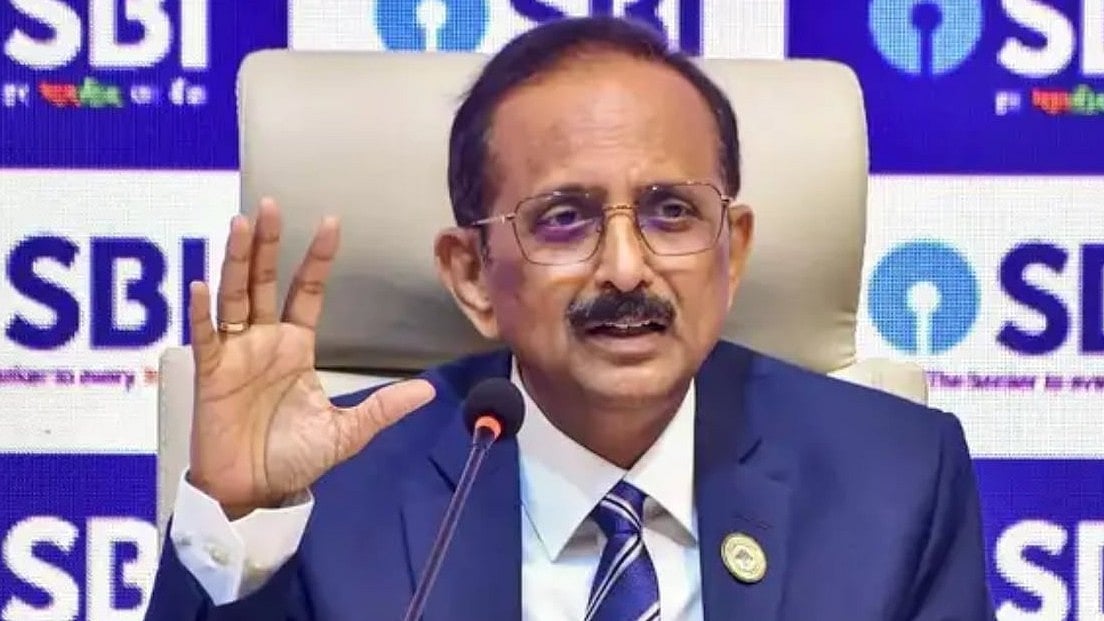
State Bank of India chairman C.S. Setty believes this extra money will be absorbed within three or four months.
He does not think it will badly change how much banks lend.
Axis Bank chief Amitabh Chaudhry is more worried that banks may lend unusually large amounts because they need to use the funds.
He said banks should not put all the extra money into loans.
Bank lending was already growing quickly, although Chaudhry said some of that growth reflects comparisons with a weaker previous period.
The extra liquidity exceeded ₹10 trillion on 9 September.
Too much liquidity could keep short-term interest rates low and create inflation or financial-market risks.

State Bank of India chairman C.S. Setty said excess liquidity should not distort credit growth.
Setty expects the surplus liquidity to be absorbed over the next three to four months.
Axis Bank chief Amitabh Chaudhry warned that FCNR(B) funds could encourage abnormal lending.
Banks raised a record $127.22 billion through FCNR(B) deposits under the RBI swap facility.
Bank credit excluding food loans rose 18% year-on-year to ₹218 trillion as of 15 August.
- Who
- State Bank of India chairman C.S. Setty and Axis Bank chief executive Amitabh Chaudhry.
- What
- They offered differing views on whether surplus banking-system liquidity could distort credit growth and encourage abnormal lending.
- Where
- Mumbai, India, at the Global Fintech Fest 2026.
- When
- Setty spoke on Thursday at the Global Fintech Fest 2026; Chaudhry issued his warning on Wednesday. The cited credit data was as of 15 August, and the liquidity data included 9 September.
- Why
- Record foreign-currency inflows and their conversion into rupees created a large surplus of liquidity in the banking system.
Concern about abnormal lending
Confidence in orderly absorption
Effect on credit growth
Concern about abnormal lending
Amitabh Chaudhry warned that banks may deploy FCNR(B) funds into abnormal lending because they need to use the liquidity.
Confidence in orderly absorption
C.S. Setty said he does not expect the surplus to distort credit growth.
Use of available funds
Concern about abnormal lending
Chaudhry said banks should not deploy all of the additional liquidity into credit.
Confidence in orderly absorption
Setty expects the excess liquidity to be absorbed over the next three to four months.
Meaning of rapid lending growth
Concern about abnormal lending
Chaudhry said the reported 18-19% credit growth partly reflects a favourable base effect and is not proof of sustained private investment.
Confidence in orderly absorption
The article reports the 18% credit-growth figure while presenting Setty's broader view that surplus liquidity will not create a distortion.
Key facts
- FCNR(B) funds raised
- $127.22 billion between 5 June and 31 August
- Total cited foreign-currency inflows
- $136.37 billion, including offshore foreign-currency borrowings and external commercial borrowings
- Credit growth
- Bank credit excluding food loans rose 18% year-on-year to ₹218 trillion as of 15 August
- Liquidity surplus on 9 September
- More than ₹10 trillion
- Liquidity surplus at end-August
- About ₹6.70 trillion, according to Bloomberg
- Setty's forecast
- The excess liquidity will likely be absorbed within three to four months
- 2013 comparison
- A similar foreign-currency deposit scheme raised $26 billion in 2013
Sources
Related news
SBI Says FCNR(B) Inflows Won’t Trigger Excessive Lending
RBI Meets Banks as Liquidity Surplus Nears ₹10 Lakh Crore
India Banking System Surplus Liquidity Nears Rs 5 Lakh Crore

Private Banks Capture Nearly Half of India’s FCNR(B) Inflows

India's Banking Liquidity Surges, Prompting RBI Absorption Measures
FCNR(B) Inflows May Lower Bank Funding Costs Amid Surplus Liquidity

Bombay High Court Warns BMC Over Mumbai Garbage Crisis
Maharashtra Commission Defends Official Prison Meeting With Abu Salem

PFRDA Nears NPS Swasthya Launch, Explores Guaranteed Returns

Maharashtra Extends Caste Certificate Deadline for Medical Admissions

Beauty Brand Acquisitions Reshape India’s Expanding Skincare Market