

2 hrs ago
Experts Examine Possible Air Pollution Links to Gynaecological Cancer
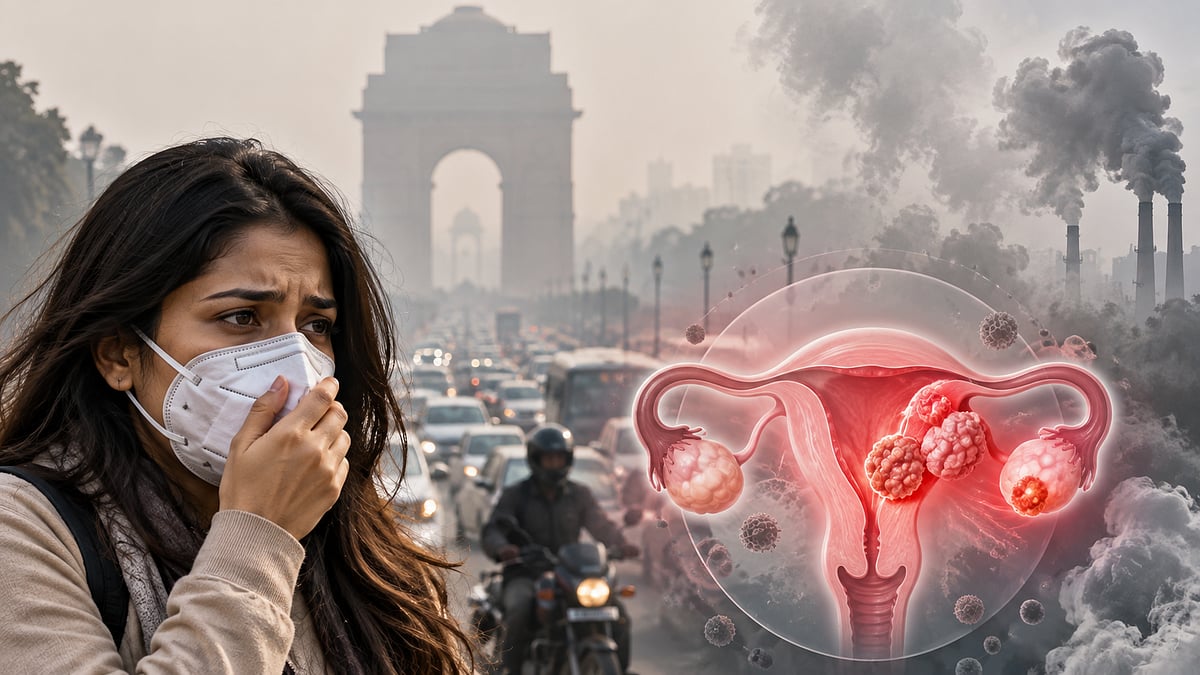
Air pollution contains tiny particles, including PM2.5.
Experts are studying whether being exposed to these particles for a long time could affect women’s reproductive health.
One Indian study found links between higher pollution exposure and changes in the timing of first periods and menopause.
A link does not prove that pollution caused those changes.
Experts also do not know whether pollution causes gynaecological cancers.
They are investigating whether inflammation and other effects in the body could play a role.
Established cancer risk factors still matter, and pollution should not be treated as the only cause.
Experts say more research in India is needed.
They also recommend medical evaluation for persistent or unusual bleeding and other ongoing symptoms.

Delhi-NCR experts say emerging research warrants investigating whether prolonged PM2.5 exposure may contribute to gynaecological cancer risk.
Experts stress that pollution has not been established as a direct cause and that findings are not uniform.
An India-wide study reported associations between PM2.5 exposure above 40 micrograms per cubic metre and reproductive-health changes.
Researchers are investigating whether inflammation, oxidative stress and cellular effects could affect hormonal and reproductive pathways.
Experts call for larger, long-term studies of Indian women and advise seeking medical care for persistent or unusual symptoms.
- Who
- Delhi-NCR medical and air-pollution experts, including Dr Rama Joshi and Dr Aditya Sarin.
- What
- Experts discussed emerging evidence on possible links between long-term air pollution exposure, reproductive health and gynaecological cancer risk.
- Where
- Delhi-NCR, India; the cited study covered women across India.
- When
- The article is dated October 9; the year is not specified in its date line.
- Why
- Experts say early findings and possible biological effects warrant further research, while causation has not been established.
Cautious interpretation
Further investigation warranted
What the evidence means
Cautious interpretation
An association does not show that pollution directly causes gynaecological cancer; findings are not uniform, and more India-specific evidence is needed.
Further investigation warranted
Experts say reported reproductive-health associations and possible inflammatory, oxidative and cellular effects provide a reason to investigate pollution as a potential contributor to cancer risk.
Key facts
- Pollutant discussed
- PM2.5, or fine particulate matter.
- Exposure threshold in cited study
- Above 40 micrograms per cubic metre.
- Menarche finding
- The study reported 24 per cent higher odds of delayed menarche.
- Menopause finding
- The study reported a 23 per cent higher hazard of early menopause.
- Study data
- National Family Health Survey data, satellite-derived PM2.5 estimates and other environmental indicators.
- Study populations
- Nearly 1.8 lakh women aged 15–24 for menarche analysis and nearly 3 lakh women aged 30–49 for menopause analysis.
- Evidence caveat
- The article says findings are evolving and inconsistent across studies; pollution has not been established as a cause of gynaecological cancer.
Quotes
Dr Aditya Sarin
Vice chairman of Medical Oncology at Sir Ganga Ram Hospital, New Delhi.
“Chronic exposure to PM2.5 can promote inflammation, oxidative stress and cellular changes, which are mechanisms relevant to cancer development. The emerging association with reproductive health makes it important to investigate whether prolonged pollution exposure may also contribute to gynaecological cancers. While causation is yet to be established, the signal is important and deserves further study, particularly in highly polluted regions such as Delhi-NCR.”
 freepressjournal.in
“PM2.5 is of interest because prolonged exposure is associated with inflammation, oxidative stress and systemic biological effects.”
freepressjournal.in
Sources
Related news
Endometrial Cancer Awareness: Know Signs, Risks, Diagnosis, Treatment

Could Years of Night-Shift Work Affect Breast Cancer Risk?

AIIMS Screening Finds Menstrual Irregularity Among Nearly One-Fifth of Schoolgirls
Delhi Needs Wider Strategy as El Niño May Trap Pollution

Endometriosis harms women's careers, but specialist care can help

Indian Women Often Hear Fertility Advice Too Late

Why More Indians Under 35 Are Considering Bariatric Surgery

India’s Families Shrink as Fertility Falls Below Replacement

Odisha Urged to Restore Double-Fortified Salt in School Meals

Supreme Court Commutes Death Sentence, Clarifies Rarest Of Rare Doctrine
