3 days ago
Subhash Chandra Insolvency Deal Intensifies Debate Over India’s IBC
India has a law called the Insolvency and Bankruptcy Code that is supposed to help creditors recover money from companies or borrowers who cannot pay.
In this case, Subhash Chandra’s repayment plan would give creditors Rs 6.5 crore even though they were owed more than Rs 22,000 crore.
That means creditors would recover only a tiny part of the money.
The Committee of Creditors approved the plan, and the National Company Law Tribunal accepted it.
Supporters of the approval can view it as a commercial decision made by the creditors.
Critics say such a large reduction makes the insolvency system unfair and weakens its purpose.
The article also says that many cases take much longer than the legal target.
It points to other cases, including Videocon Industries, as examples of large losses.
It calls for stronger tribunals, clearer valuations and more oversight of extreme settlements.

The National Company Law Tribunal approved a plan for Subhash Chandra to pay Rs 6.5 crore against Rs 22,006.57 crore in admitted claims.
The plan implies a recovery rate of 0.03 per cent and a 99.97 per cent haircut, according to the article.
The Committee of Creditors approved the arrangement with an 80.81 per cent voting share, and the tribunal accepted it as a commercial decision.
Insolvency and Bankruptcy Board of India data cited in the article show 9,166 corporate cases admitted by June 2026, with Rs 4.35 lakh crore recovered through resolutions.
The article argues that falling recoveries, lengthy proceedings, tribunal backlogs and extreme haircuts require urgent insolvency reforms.
- Who
- Subhash Chandra, his creditors, the Committee of Creditors and the National Company Law Tribunal are central to the matter; Jairam Ramesh criticized the outcome.
- What
- The National Company Law Tribunal approved a repayment plan providing Rs 6.5 crore against Rs 22,006.57 crore in admitted claims.
- Where
- The decision involved India’s National Company Law Tribunal and its insolvency framework; the article identifies the NCLT Mumbai bench in its discussion of the Videocon case.
- When
- The approval was reported as occurring on August 25, 2026; the wider data cited covers cases through June 2026.
- Why
- The Committee of Creditors approved the plan as a commercial decision, while critics say the outcome exposes serious weaknesses in creditor recovery and insolvency oversight.
Critics of the approval
Commercial-decision rationale
Creditor recovery
Critics of the approval
Critics argue that recovering 0.03 per cent of admitted claims amounts to near-total creditor dispossession and contradicts the purpose of the Insolvency and Bankruptcy Code.
Commercial-decision rationale
The Committee of Creditors, holding an 80.81 per cent voting share, approved the plan, and the National Company Law Tribunal treated it as a valid commercial decision.
Meaning of a haircut
Critics of the approval
Jairam Ramesh described the outcome as a “mundan,” arguing that it makes a mockery of the insolvency framework rather than representing an ordinary haircut.
Commercial-decision rationale
The approval reflects the creditor committee’s chosen resolution arrangement; the article does not identify a separate public defense from Subhash Chandra or the creditors.
Systemic performance
Critics of the approval
The article emphasizes declining recovery rates, long delays, more than 30,000 pending NCLT cases as of March 2025 and extreme outcomes in large cases.
Commercial-decision rationale
The article also cites system-wide figures showing 4,227 successful resolutions and Rs 4.35 lakh crore recovered, suggesting that the framework has produced recoveries despite its weaknesses.
Key facts
- Admitted claims
- Rs 22,006.57 crore
- Approved repayment
- Rs 6.5 crore
- Reported recovery rate
- 0.03 per cent
- Reported haircut
- 99.97 per cent
- LIC Housing Finance claim
- Rs 1,322.39 crore, with Rs 38.09 lakh to be recovered under the plan
- Corporate insolvency cases admitted
- 9,166 by June 2026, according to Insolvency and Bankruptcy Board of India data cited in the article
- Average resolution timeline
- 744 days, compared with the Code’s statutory 330-day limit, according to the ICRA analysis cited
Quotes

Jairam Ramesh
Congress Member of Parliament who criticized the Subhash Chandra repayment plan
“This is not just a haircut. It is actually a mundan - and makes a complete mockery of the Insolvency and Bankruptcy Code, 2016.”
 thehansindia.com
Sources
Related news

NCLT Approval Exposes Huge Subhash Chandra Creditor Recovery Gap
NCLT Clears Subhash Chandra’s ₹6.5 Crore Settlement Plan
Subhash Chandra Settlement Highlights India’s Deep Insolvency Haircuts

NCLT Approves Repayment Plan Yielding Lenders Just 0.03% Recovery

NCLT Approves Subhash Chandra’s Rs 6.5-Crore Repayment Plan
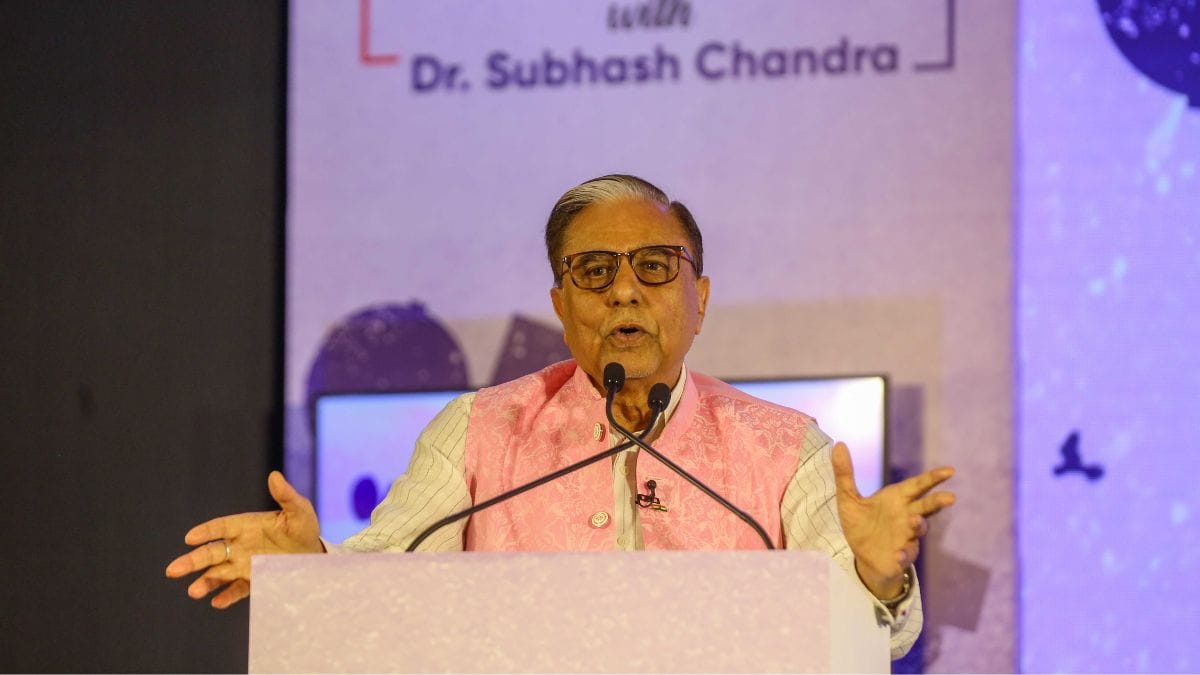
Subhash Chandra repayment case: why the massive haircut isn't scandal
IBC resolution plans jump 92% in Q1, ticket size falls

India's IBC Reforms Aim to Ease Tribunal Bottlenecks
India to launch unified digital insolvency platform

SEBI Chairman Highlights Indian Market Growth and Regulatory Challenges