

2 days ago
Subhash Chandra repayment case: why the massive haircut isn't scandal
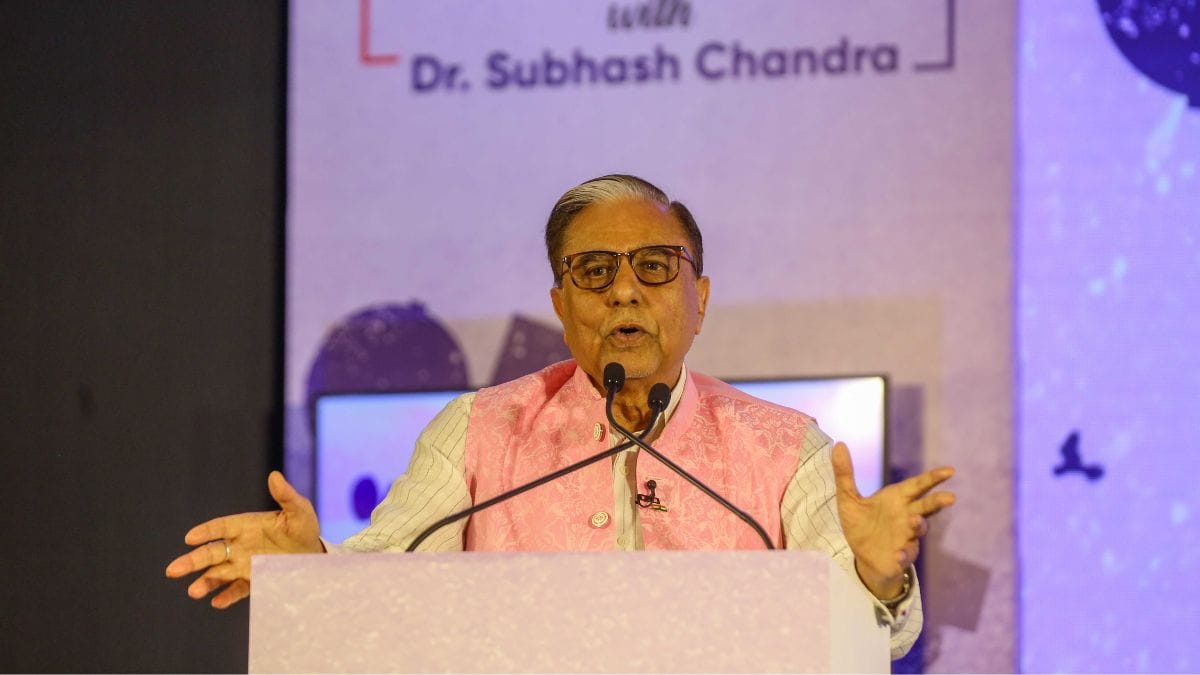
Subhash Chandra guaranteed loans taken by several Essel group companies.
A tribunal approved a plan for him to pay about Rs.
6.50 crore.
The total claims were around Rs.
22,000 crore, so the payment is very small compared with the claims.
Some people say this huge shortfall shows that the system failed or that creditors were treated unfairly.
The article says a large loss can happen when a borrower’s assets are no longer worth much.
It also says the companies that originally borrowed the money may still have separate debts and insolvency cases.
The tribunal decided that it should apply the insolvency law rather than conduct a full investigation into every allegation.
The article argues that banks’ earlier decisions to lend money and accept personal guarantees also deserve scrutiny.

The National Company Law Tribunal approved Subhash Chandra’s repayment plan of Rs. 6.50 crore.
Creditors’ admitted claims were approximately Rs. 22,006.57 crore, implying a 99.97 per cent shortfall.
The article says Chandra was a personal guarantor, while principal borrowers faced separate insolvency proceedings.
The tribunal rejected calls to treat an old net-worth certificate as proof of wrongdoing.
The article argues scrutiny should focus also on lenders’ original lending, monitoring and recovery decisions.
- Who
- Subhash Chandra, his creditors, several Essel group companies and the National Company Law Tribunal.
- What
- The tribunal approved Chandra’s repayment plan of Rs. 6.50 crore against admitted claims of approximately Rs. 22,006.57 crore.
- Where
- Before the National Company Law Tribunal in India.
- When
- The approval was reported as having occurred last week; the article also discusses a 2018 net-worth certificate.
- Why
- The plan was assessed under the Insolvency and Bankruptcy Code against available recovery options, including liquidation.
Haircut critics
Process defenders
Meaning of the haircut
Haircut critics
The repayment of Rs. 6.50 crore against claims exceeding Rs. 22,000 crore raises concerns about unfair losses, political influence and the functioning of the tribunal.
Process defenders
The percentage alone does not show how much creditors recovered or may recover from the principal borrowers’ separate insolvency proceedings.
Tribunal’s investigation
Haircut critics
The old net-worth certificate and alleged relationships among voting creditors warranted a forensic audit and broader asset-tracing inquiry.
Process defenders
The National Company Law Tribunal’s repayment-plan proceeding is not designed to become an open-ended forensic investigation; an old certificate or business proximity does not by itself prove wrongdoing or statutory disqualification.
Who bears responsibility
Haircut critics
The repayment plan’s extremely low recovery can be viewed primarily as evidence that the promoter avoided responsibility for enormous debts.
Process defenders
The lending banks also made the decisions about how much to lend, what security to accept, how to value the guarantee and how to monitor and recover the loans.
Key facts
- Approved repayment
- Rs. 6.50 crore
- Admitted claims
- Approximately Rs. 22,006.57 crore
- Recovery shortfall
- Approximately 99.97 per cent
- Guarantor status
- Subhash Chandra appeared as a personal guarantor, not the principal borrower.
- Earlier net-worth certificate
- A certificate supplied to Canara Bank in 2018 placed Chandra’s net worth at approximately Rs. 40,000 crore.
- Contested creditor votes
- Five creditors alleged to be associates collectively held approximately 61.78 per cent of the voting share.
- Applicable law
- The repayment plan was approved under the Insolvency and Bankruptcy Code.
Sources
Related news

NCLT Approval Exposes Huge Subhash Chandra Creditor Recovery Gap

Sources Clarify Subhash Chandra’s NCLT Claims, Reject ₹22,000 Crore Write-Off

NCLT Stays Subhash Chandra Repayment Plan, Orders Fresh Hearing

NCLT Approves Subhash Chandra’s Rs 6.5-Crore Repayment Plan
NCLT Clears Subhash Chandra’s ₹6.5 Crore Settlement Plan
NCLAT to Hear Creditors’ Challenge to Chandra Repayment Plan
Subhash Chandra Challenges Five-Member NCLT Bench in Insolvency Case
Subhash Chandra Challenges Five-Member Bench in Insolvency Case

Subhash Chandra Challenges NCLT Bench as NCLAT Appeal Waits
NCLT halts Subhash Chandra asset sale amid lender challenge
