1 hr ago
Supreme Court Blocks Trump Mail Ballot Restrictions Before Midterms

The Supreme Court stopped new mail-voting rules from taking effect before the midterm elections.
This means states can keep using the mail-ballot systems they already have.
The Trump administration wanted all states to use the same envelope design.
It also wanted states to upload lists of eligible voters to an online system.
The Postal Service could have refused to deliver ballots from states that did not follow the rules.
Election officials said there was not enough time to change everything because voting had already started.
A whistleblower warned that computer and barcode problems could cause many ballots not to be sent.
Two justices disagreed with the decision, while another said the rules might be allowed later.

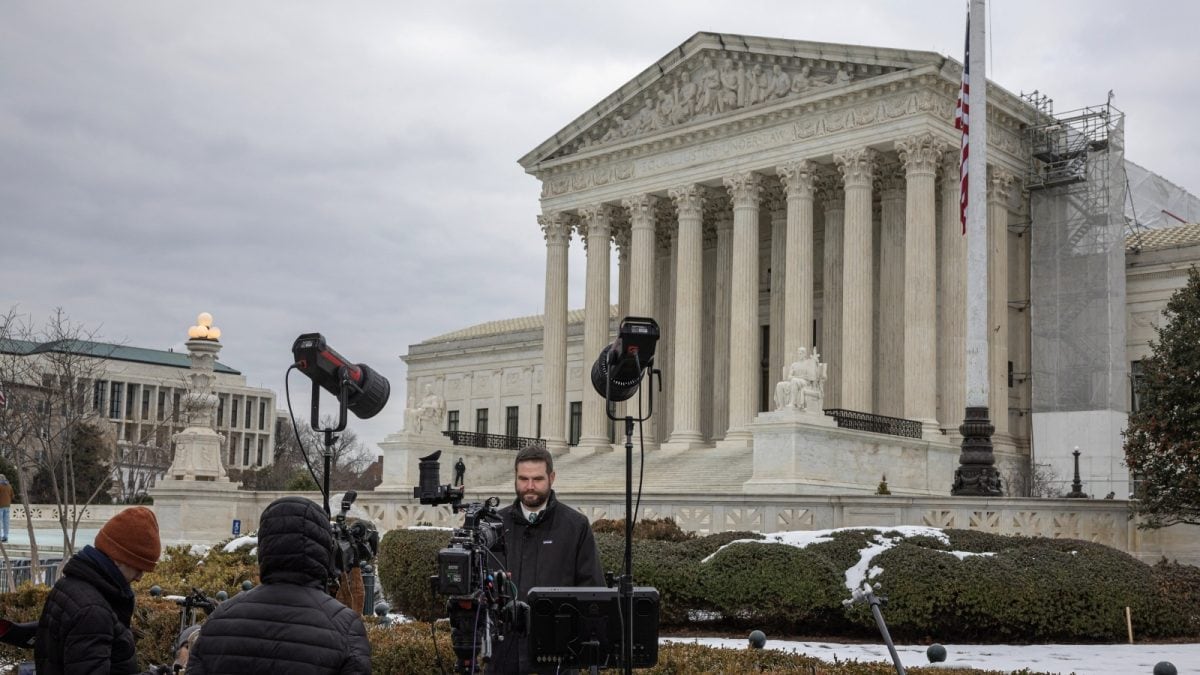
The Supreme Court rejected President Donald Trump’s mail-ballot restrictions for the upcoming midterm elections.
States may continue using their existing procedures to send mail ballots while voting is already underway.
Justices Samuel Alito and Clarence Thomas dissented, while Justice Brett Kavanaugh indicated the restrictions could be considered later.
The proposed rules required uniform envelopes and online voter-list submissions, with possible delivery refusals for noncompliant states.
States and voting-rights groups argued the plan exceeded presidential authority and risked disrupting millions of ballots.
- Who
- The Trump administration, state election officials, Democratic state officials, voting-rights groups, and the Supreme Court were involved.
- What
- The Supreme Court rejected federal restrictions on how states handle mail ballots before the midterm elections.
- Where
- The dispute concerned mail-ballot systems across the United States and was decided by the Supreme Court.
- When
- The decision was issued on Monday while midterm voting was already underway; the article was published September 15, 2026.
- Why
- The administration sought uniform mail-ballot procedures, while challengers argued the rules exceeded presidential authority and could disrupt voting.
Challengers and Voting Officials
Trump Administration
Presidential authority
Challengers and Voting Officials
Democratic state officials and voting-rights groups argued that the president lacks constitutional authority to establish these election rules.
Trump Administration
The administration argued that federal control of the Postal Service allows it to set requirements for handling mail ballots.
Election timing
Challengers and Voting Officials
Election officials said a complete overhaul was impossible just weeks before the midterms, with some states already mailing ballots.
Trump Administration
The administration argued that states could comply with the new requirements before the elections.
Operational risks
Challengers and Voting Officials
A whistleblower report warned that an improperly built portal and barcode errors could prevent millions of ballots from being sent.
Trump Administration
The administration sought to proceed with the system and maintained that compliance was possible.
Key facts
- Decision
- The Supreme Court rejected the restrictions for the midterm elections, at least for now.
- Existing procedures
- States may continue sending mail ballots under the systems they have used for years.
- Proposed requirements
- States would have needed uniform envelopes and online submissions of eligible-voter lists.
- Postal enforcement
- The Postal Service could have refused to deliver ballots from states that did not comply.
- Dissenters
- Justices Samuel Alito and Clarence Thomas dissented from the brief order.
- Justice Kavanaugh
- Brett Kavanaugh agreed the restrictions should not begin before the midterms but indicated he might support them later.
- Mail voting
- Nearly one-third of the country votes by mail.
Sources
Related news
Supreme Court Clears Hurdle for Trump's Mail Voting Restrictions
Supreme Court Gives Trump Temporary Win on Mail-Ballot Restrictions
Judge Extends Block on Trump Mail Voting Restrictions

Judge Blocks Trump Mail-Voting Plan Ahead of Midterm Elections
Appeals Court Rejects Trump Mail-Voting Restrictions as Supreme Court Weighs Rule
Trump Asks Supreme Court To Lift Mail-In Voting Block
Trump Replaces White House Rose Garden Roses With Statues
Supreme Court Reviews Transgender Athlete Bans
Supreme Court Blocks Trump's National Guard Deployment in Chicago
Trump Wants Alito, Thomas to Stay on Supreme Court