1 week ago
Supreme Court Clears Hurdle for Trump's Mail Voting Restrictions
The Supreme Court allowed the government to keep working toward some changes to mail voting.
The justices did not decide whether President Trump’s order is legal.
They said the states that filed one lawsuit had challenged it too soon.
Another court order still stops the Postal Service from enforcing important parts of the plan.
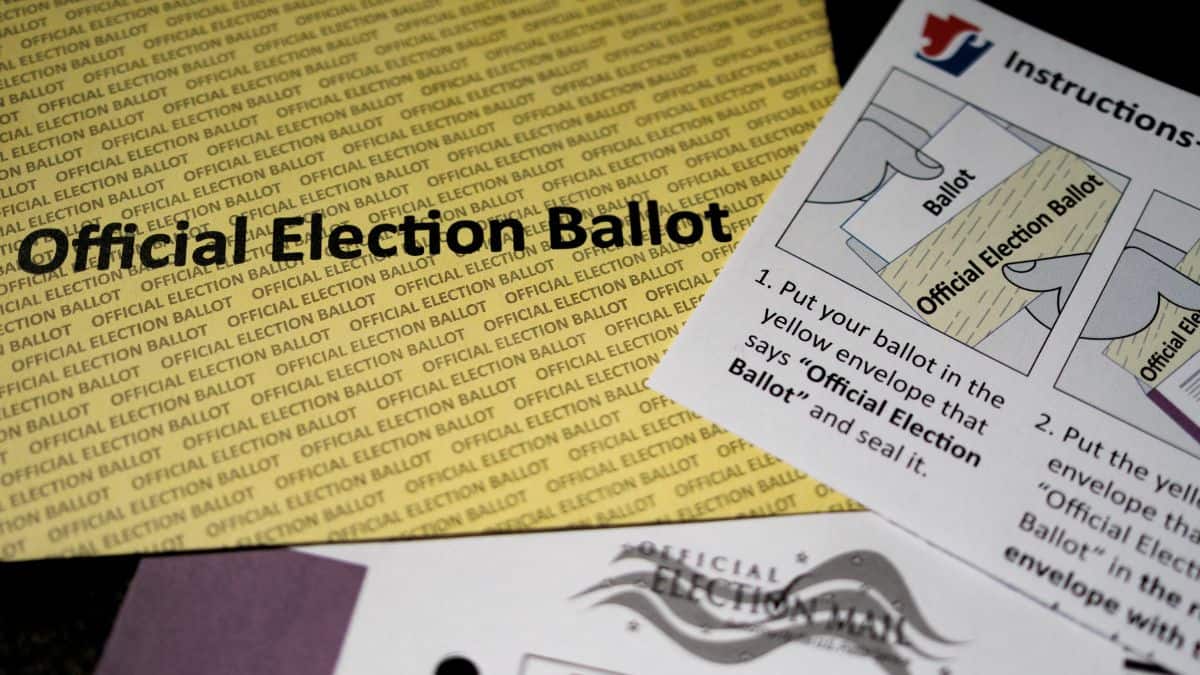
The plan would create lists of people considered eligible to vote and use them when sending ballots.
A new rule could also change ballot envelopes and require electronic voter information.
Supporters say the changes would help protect elections.
Opponents say they could confuse election workers and make it harder for eligible people to vote before the midterms.

The Supreme Court ruled that 23 states and Washington, D.C., challenged Trump’s mail-voting order too early, without deciding whether it is lawful.
A separate nationwide injunction still blocks the U.S. Postal Service from enforcing key requirements tied to the order.
Trump’s March executive order directs agencies to compile voter-eligibility lists and requires USPS to deliver ballots only to voters on approved lists.
A new USPS rule would require voter lists, electronic identification systems, and specific envelope formatting and barcodes.
Democratic officials, voting-rights groups, and election experts warn of disruption and disenfranchisement, while the administration describes the changes as election-integrity safeguards.
- Who
- The Trump administration, the Supreme Court, 23 mostly Democratic-governed states, Washington, D.C., Republican-leaning states, voting-rights groups, and election officials are involved.
- What
- The Supreme Court removed one procedural barrier to Trump’s mail-voting order while leaving a separate injunction blocking key USPS requirements.
- Where
- The dispute concerns mail voting across the United States and involves federal courts in Massachusetts and Washington, D.C.
- When
- The Supreme Court acted Monday; Trump signed the order in March. North Carolina planned to send military and overseas ballots on September 4 ahead of the November 2026 midterms.
- Why
- The administration says the order would promote election integrity and prevent ineligible voting; opponents say it exceeds presidential authority and could disrupt elections or disenfranchise voters.
Trump administration and Republican-leaning states
Democratic states and voting-rights opponents
Purpose of the restrictions
Trump administration and Republican-leaning states
The administration presents voter-eligibility lists and delivery restrictions as safeguards against ineligible voting, including voting by non-U.S. citizens.
Democratic states and voting-rights opponents
Opponents say noncitizen voting is exceedingly rare and argue the changes could make it harder for eligible voters to cast ballots.
Presidential authority
Trump administration and Republican-leaning states
Federal attorneys argue the states challenged the order before agencies took concrete implementation steps, while Republican-leaning states say states would have input on voter lists.
Democratic states and voting-rights opponents
The states and Judge Talwani argue that the Constitution gives states, and in federal elections Congress, authority over election administration rather than the president acting alone.
Timing and election effects
Trump administration and Republican-leaning states
The administration argues that blocking the order prevents it from finalizing policies intended to promote election integrity before the November federal elections.
Democratic states and voting-rights opponents
Democratic officials, voting-rights groups, and election experts warn that changing mail-voting procedures close to the elections could cause confusion, administrative chaos, partisan abuse, and disenfranchisement.
Key facts
- Supreme Court ruling
- The court found that the states lacked legal standing because federal agencies had not yet taken concrete steps affecting them.
- What the ruling did not decide
- The justices did not determine whether Trump’s executive order is constitutional or otherwise lawful.
- Executive order
- Signed in March, the order directs agencies to compile voter-eligibility lists and tells USPS to deliver ballots only to voters on approved lists.
- Remaining injunction
- A separate order issued by Massachusetts Judge Indira Talwani blocks USPS nationwide from enforcing the administration’s tighter mail-voting requirements.
- Proposed USPS requirements
- The final rule would require states to provide lists of voters receiving mailed ballots, use electronic identification systems, and provide specific envelope formatting and unique barcodes.
- Election timing
- North Carolina’s military and overseas ballots were scheduled to be sent on September 4, with other states following within weeks.
- Mail voting and fraud
- About 29% to 30% of 2024 presidential-election ballots were cast by mail; a 2025 Brookings Institution study found about four fraud cases per 10 million mail ballots.
Quotes
Supreme Court majority
The justices who issued the unsigned majority order
“There isn't a single state that does their elections in a way that this postal rule lays out. There has been this assumption that this is not going to happen because it could not happen the way it's laid out, because no one does it this way.”
 telegraphindia.com
“This decision is a painful setback, but it will not be the final word. The right to vote is sacred, and no administration should be allowed to put that right in jeopardy by making it harder for eligible voters to cast their ballots.”
 firstpost.com
Jesse Salinas
Registrar of Yolo County, California, and president of the state's association of election officers
“The capacity to do that, I just don't see it”
telegraphindia.com
Derek Muller
Notre Dame University law professor
“This is just the first inning of a very fast nine-inning game”
 NDTV
NDTV
Sources
Related news
Supreme Court Gives Trump Temporary Win on Mail-Ballot Restrictions

Judge Blocks Trump Mail-Voting Plan Ahead of Midterm Elections

Supreme Court Clears Path for Trump Mail-In Voting Restrictions

Judge Lifts Block on Trump Mail Restrictions Before Midterms

USPS Mail-Ballot System Raises Concerns Ahead of 2026 Midterms
US Court Blocks Trump's Voter Citizenship List

Judge Blocks Trump Admin's Move to End Migrant Legal Status