3 weeks ago
Make in India Transforms India Into Technology Manufacturing Powerhouse
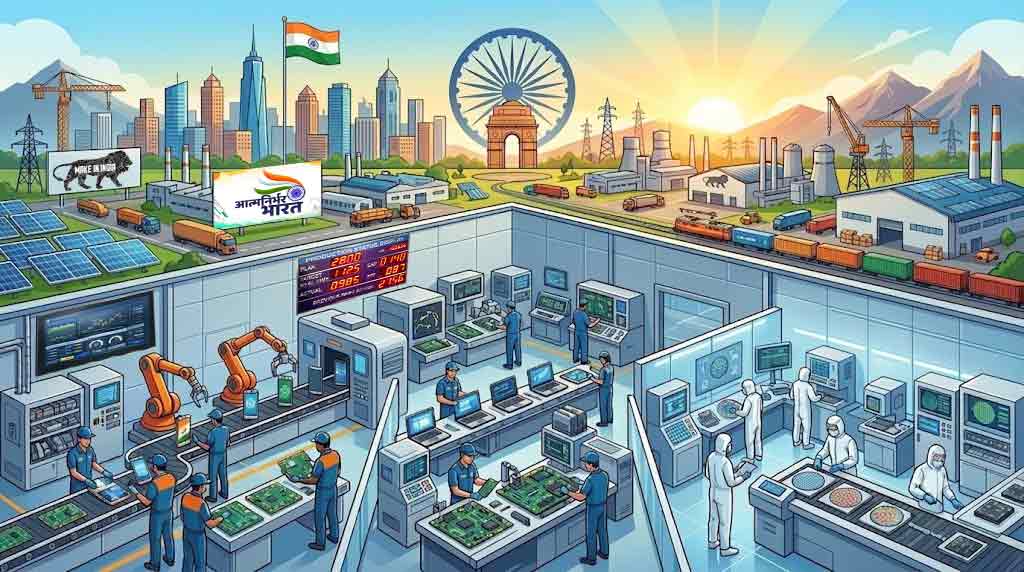
Imagine a country that used to buy almost all of its mobile phones from other countries.
A long time ago, India decided it wanted to make things on its own.
In 2014, the leader of India, Narendra Modi, started a plan called 'Make in India.'
The plan helps companies build factories and make things inside India.
The government also gave rewards to companies that made and sold more products in India.
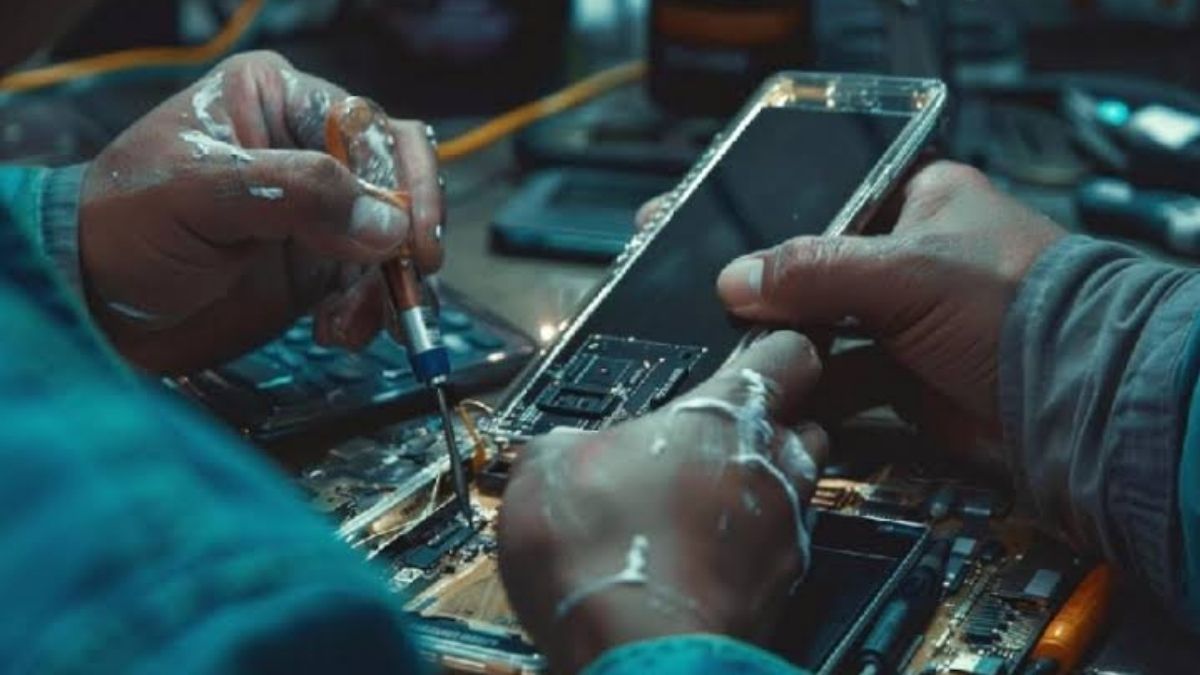
Now, almost every phone used in India is made in India — about 99 out of every 100 phones.
Making phones and other electronics has created lots of new jobs, and many workers in these factories are women.
India also wants to make computer chips, the tiny 'brains' inside phones and computers.
It is building special chip factories so it does not have to rely on other countries.

Prime Minister Narendra Modi launched the Make in India initiative on 25 September 2014 in New Delhi, aiming to turn India from a mere market into a competitive producer, designer and innovator.
Mobile phone production grew about 33 times from roughly ₹18,000 crore in 2014-15 to ₹6.27 lakh crore in 2025-26, and 99.2% of phones used in India are now manufactured domestically.
India became the world's second-largest mobile phone manufacturer by volume, and in FY 2025-26 mobile phones overtook traditional leaders to become India's single largest export item.
Production Linked Incentive (PLI) schemes across 14 sectors drew actual investments exceeding ₹2.40 lakh crore, generated more than 14.15 lakh jobs, and enabled exports of over ₹15.2 lakh crore as of 31 March 2026.
The India Semiconductor Mission, the newly approved Semicon 2.0 (₹1,27,500 crore outlay) and the Mobile Phone Manufacturing Scheme (₹62,500 crore) are advancing chip fabs, component manufacturing and higher domestic value addition.
- Who
- Prime Minister Narendra Modi's government, global companies such as Foxconn, Apple, Samsung and Tata Electronics, and domestic players like Dixon Technologies.
- What
- India's transformation into a technology manufacturing powerhouse, with mobile phones now its largest export and a semiconductor industry under construction.
- Where
- India — including New Delhi, the Gujarat cities of Sanand and Dholera, and manufacturing hubs in Tamil Nadu and Karnataka.
- When
- From the launch of Make in India on 25 September 2014 through March 2026; Semicon 2.0 was approved by the Union Cabinet on 15 July 2026.
- Why
- To raise manufacturing's share of the economy, create large-scale employment, end import dependence and integrate India into global value chains under the Atmanirbhar Bharat vision.
Critics and opposition view
Government view
Mobile phone manufacturing
Critics and opposition view
Rahul Gandhi repeatedly claimed India was importing most of its phones and later argued that phones 'made in India' are actually only assembled, questioning the depth of manufacturing.
Government view
99.2% of phones used in India are now made domestically and exports have surged 165 times; the article notes Gandhi eventually stopped raising the topic as the strategy backfired.
Domestic value addition
Critics and opposition view
Value addition remains modest at 18–23%, with components such as displays, camera modules, PCBs and chips still largely imported.
Government view
The Electronics Component Manufacturing Scheme, the semiconductor missions and Semicon 2.0 are specifically designed to localise components and push domestic value addition higher.
Key facts
- Initiative launched
- Make in India, 25 September 2014, at Vigyan Bhawan, New Delhi
- Mobile phone production
- Up about 33 times from ~₹18,000 crore (2014-15) to ₹6.27 lakh crore (2025-26)
- Mobile phone exports
- Up 165 times from ~₹1,500 crore to ~₹2.60 lakh crore
- Domestic manufacturing share
- 99.2% of mobile phones used in India are manufactured domestically
- PLI schemes (14 sectors)
- Outlay ~₹1.97 lakh crore; investments ₹2.40+ lakh crore; over 14.15 lakh jobs; exports over ₹15.2 lakh crore (as of 31 March 2026)
- India Semiconductor Mission
- Launched December 2021 with ~₹76,000 crore outlay; 12 projects with ~₹1.64 lakh crore commitments approved under ISM 1.0
- Semicon 2.0
- Approved 15 July 2026, outlay ₹1,27,500 crore
- Mobile Phone Manufacturing Scheme
- ₹62,500 crore for five years (FY 2026-27 to 2030-31)
Quotes

Narendra Modi
Prime Minister of India, launched Make in India initiative
“"First Develop India"”
 opindia.com
Sources
Related news
India Targets 35–40% Domestic Value Addition in Mobile Phones
India Builds Semiconductor Ecosystem From Chips to Fabs
Govt clears 31 electronics component projects worth Rs 7,877 crore
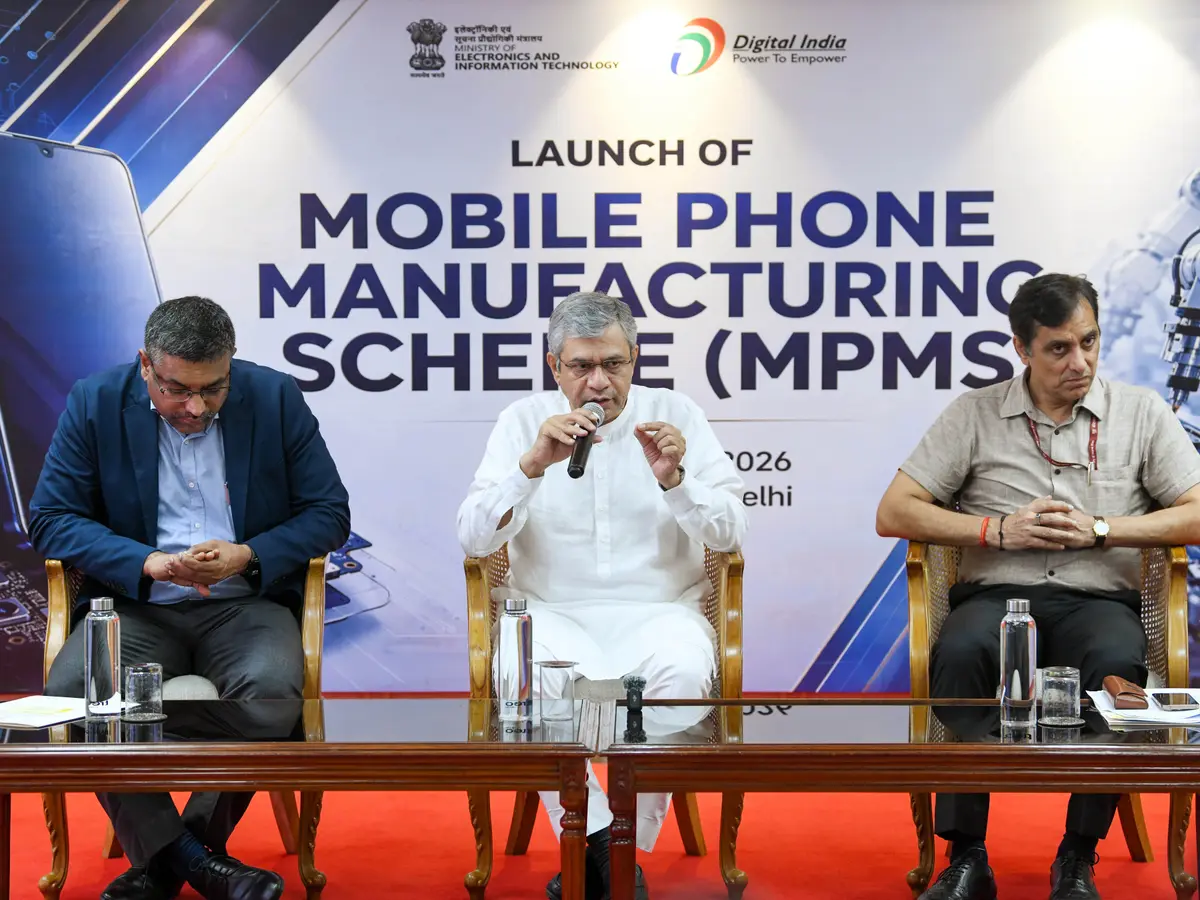
India’s Rs 62,500-Crore Mobile Scheme Targets Brands and Scale
Emkay sees 40% growth for India's electronics manufacturing firms
India's New Smartphone Scheme Faces Consumer Product Test
TCL sues Samsung over alleged false Mini LED advertising
Apple's First Foldable iPhone Ultra May Challenge Samsung

Apple iPhone Ultra Rumors Point Toward First Foldable
Vivo X500 Pro Max Reveals Massive Camera Island Design