2 weeks ago
Can Development Come at the Cost of Safety in India?
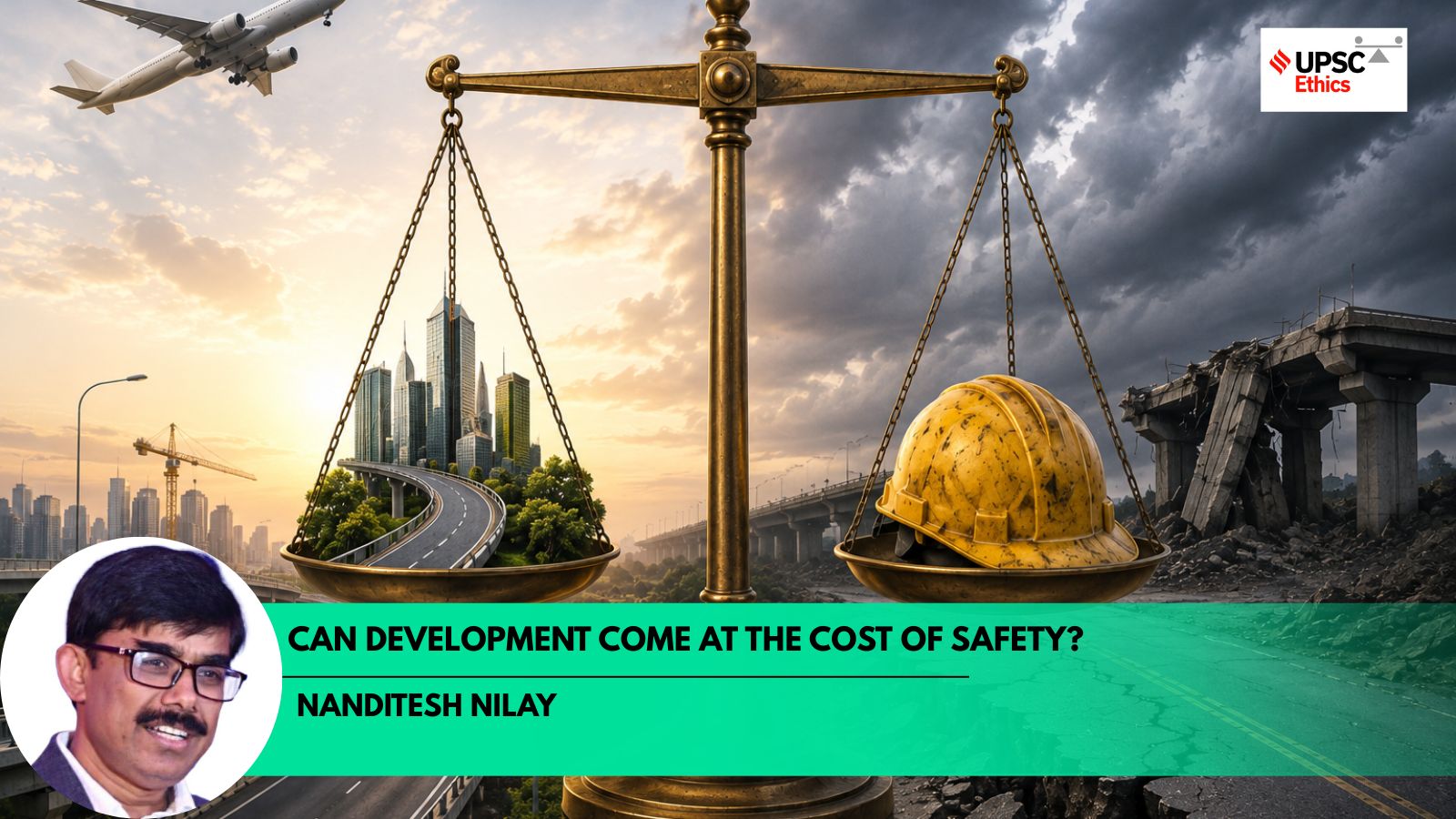
In India, many people have been complaining that roads and highways are not safe.
Sometimes bridges and roads break, which can hurt people and slow down the country's progress.
One tunnel project even had a landslide after heavy rain.
Because of this, an expert wrote an article asking a big question: should we build fast, or build safe?
He said people's lives matter more than money or meeting deadlines.
A wise philosopher named Kant believed we should never treat people like tools.
That means safety is not just a rule to follow — it is a promise we make to each other.
We should check and fix problems before they become dangerous, not just after someone gets hurt.
Everyone, from leaders to ordinary people, should help make travel safe for all.

An Indian Express ethics column argues that human life can never become the price of development and that safety is an ethical obligation, not just compliance.
The piece was prompted by a steep rise in public complaints about the quality of National Highways and the crumbling of roads and bridges in India.
The article cites a heavy rain-triggered landslide at the Missing Link tunnel project that disrupted connectivity and prompted restoration work.
It draws on Immanuel Kant's moral philosophy that human beings must always be treated as ends in themselves, never merely as means.
It calls for a shift from accountability after disasters to preventive governance, independent audits, and a safety culture rooted in civic responsibility.
- Who
- The ethicist-author of The Indian Express's UPSC Ethics Simplified series, addressing civil servants, institutions and citizens of India.
- What
- An ethical examination of whether development, efficiency, profitability and targets can come at the cost of public safety, using India's highways, bridges and air travel as examples.
- Where
- India, with specific reference to National Highways, the Missing Link tunnel project, and the expansion of air travel to smaller cities.
- When
- No specific date is given in the article; it reflects recent ongoing concerns about infrastructure safety in India.
- Why
- A steep rise in complaints about highway quality, crumbling infrastructure and infrastructure failures has raised the question of whether safety is being sidelined by development goals.
Safety First
Development First
Deadlines vs independent audits
Safety First
Projects should be delayed by independent quality audits rather than expose citizens to risk to meet a deadline.
Development First
Institutions face immense pressure to meet targets and keep the development journey moving at pace.
Profitability vs human life
Safety First
A company should cancel consecutive flights or absorb extra costs to enforce safety rather than compromise on any safety standard.
Development First
The era of profit generation, revenue targets and efficiency creates constant pressure to prioritise output over precaution.
Prevention vs reaction
Safety First
Institutions should follow the precautionary principle, anticipating risks and preventing avoidable harm before disaster strikes.
Development First
In practice, talk of reform often surfaces only after a disaster has occurred, and safety has not yet become integral to social behaviour.
Key facts
- Context
- Steep rise in public complaints about the quality of National Highways in India
- Incident cited
- Heavy rain-triggered landslide at the Missing Link tunnel project disrupted connectivity and prompted restoration work
- Central question
- When development, efficiency, profitability or targets conflict with human safety, what should an ethical institution choose?
- Philosophical framework
- Immanuel Kant: human beings must be treated as ends in themselves, never merely as means
- Safety theory
- Hale and Hovden's 'third age' of safety emphasises safety culture and human behaviour beyond technical measures
- Core distinction
- Compliance (following rules under supervision) versus safety culture (internalised value of safety)
- Publication
- The Indian Express, UPSC Essentials series (UPSC Ethics Simplified)
- Target audience
- Civil Services Examination aspirants and practising civil servants
Sources
Related news

UPSC Mains 2026 Checklist: 15 Ethics Topics Aspirants Shouldn't Miss
Tukaram Mundhe’s Example Sparks Debate Over Institutional Ethics

India's Next Infrastructure Priority: Quality, Safety and Lifecycle Performance

Maharashtra Governor Warns Technology Without Ethics Can Be Destructive

Bhopal Collector Priyank Mishra Stresses Civic Sense, Road Safety