3 weeks ago
Nairobi Bulldozes Kibera Settlement for Housing Project, Raising Beneficiary Questions
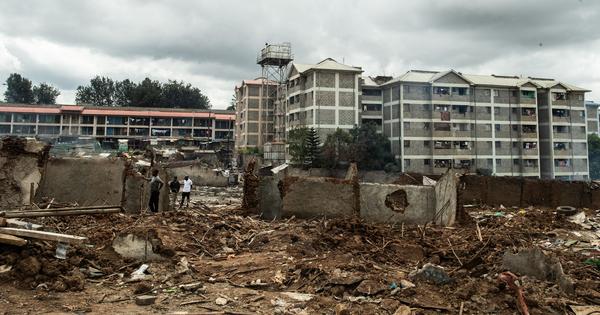
In the city of Nairobi, in Kenya, there is a big neighbourhood called Kibera where many families live in small homes.
The government wants to tear down some of those homes and build new apartment buildings instead.
President William Ruto, Kenya's leader, started a big plan to build affordable homes across the country.
The plan aims to build 200,000 new homes every year.
To help pay for it, workers give 1.5 percent of their pay each month, and their employers give the same amount.
Some people think the new homes are a good idea because they are more modern and safer.
But many people living in Kibera are worried about losing their homes.
Some families were told they had to move within 13 days and were given money that many say is not enough.
They fear the new apartments will cost too much to rent, and the people who lived there before may not be able to stay.
The big question is who will really get to live in the new homes.

Nairobi is demolishing parts of the Kibera informal settlement to build new apartment blocks as part of Kenya's affordable housing programme.
President William Ruto's programme targets 200,000 housing units annually, but about 8,367 units had been completed by March 2026.
The programme is funded partly by a compulsory levy of 1.5% of gross salaries matched by employers, and 1.5% of gross income for those outside formal employment.
In April 2026, more than 10,000 residents of Kibera's Soweto Zones C and D were reportedly given 13 days to vacate, with KSh60,000 (about US$460) in relocation assistance.
Critics and researchers warn that higher rents, maintenance costs and unclear allocation rules could displace original residents, while supporters call the redevelopment long-overdue investment.
- Who
- President William Ruto's government and the State Department for Housing and Urban Development, alongside Kibera residents, critics and researchers.
- What
- The redevelopment of the Kibera informal settlement through demolition, new apartment construction and resident relocation under Kenya's affordable housing programme.
- Where
- Kibera, an informal settlement in Nairobi, Kenya.
- When
- Ongoing since Ruto took office in September 2022; 8,367 units completed by March 2026; more than 10,000 residents given 13 days to vacate in April 2026.
- Why
- To deliver modern housing through Kenya's affordable housing programme, which targets 200,000 housing units annually.
Government and supporters
Critics and affected residents
Compulsory housing levy
Government and supporters
The levy is a long-overdue investment in urban infrastructure and housing that funds the affordable housing programme.
Critics and affected residents
The compulsory levy burdens employees and informal workers, and raises concerns about fairness and how the money is used.
Affordability and allocation
Government and supporters
The programme is delivering modern apartment blocks and new roads, bringing improved housing to a symbol of urban poverty.
Critics and affected residents
Critics question whether the homes will be affordable to lower-income households and whether allocation will be transparent, with past allocation processes challenged in court.
Evictions and relocation
Government and supporters
Residents receive relocation assistance and registration cards as part of an orderly redevelopment process.
Critics and affected residents
Residents say KSh60,000 is insufficient to cover rent deposits, school transfers and restarting small businesses, and warn that higher costs could push original residents out.
Key facts
- Programme target
- 200,000 housing units annually
- Units completed by March 2026
- 8,367 since September 2022
- Housing levy
- 1.5% of gross salary from employees, matched by 1.5% employer contribution; 1.5% of gross income for those outside formal employment
- Eviction notice
- April 2026: over 10,000 residents of Soweto Zones C and D given 13 days to vacate
- Relocation assistance
- KSh60,000 (about US$460)
- Kibera population estimate
- Around 170,000 to 200,000, depending on boundaries
- Earlier allocation
- 822 units in Soweto East Zone A in 2016 under the Kenya Slum Upgrading Programme (2004)
- Resident registration
- Enumeration and Makao Bora cards issued by the State Department for Housing and Urban Development
Sources
Related news

Dharavi Redevelopment Authorities Serve 85 More Eviction Notices

How older neighbourhoods across India are embracing redevelopment

Dharavi Redevelopment Project Denies Illegal Evictions, Says Due Process Followed
UK Unveils First £10 Billion Wave of Low-Cost Housing

Dharavi Redevelopment: 890 Tenements Vacated, 379 Structures Demolished

Andhra Pradesh Approves Dharavi-Style Slum Redevelopment with Velampeta as Pilot

Tributes Follow Deaths of Kiran and Shilpa Nathwani

Kenyan Editor Found Safe Hours After Armed Abduction

Indian Duo Completes WRC3 Podium Hat-Trick In Paraguay
Kenya Airport Workers' Strike Leaves Hundreds of Passengers Stranded

Ethiopian Runners Win Hyderabad Marathon; Gopi, Nirmaben Lead Indians