

Business · Economy · 1 day ago
Economist urges eurozone cooperation as borrowing costs rise

Economist Anton Brender says borrowing costs are rising around the world, putting pressure on France and other European countries.
He blames, in part, US policies under President Donald Trump, which he says have increased government borrowing and unsettled trade and alliances.
He also points to the blockage of the Strait of Hormuz and higher fuel prices, which have led central banks to raise interest rates to contain inflation.
France is especially exposed because its government has struggled to control the budget deficit, and past promises to restore balance have not been kept.
French borrowing rates are now the highest in the eurozone, while rates in Belgium, Italy and Spain are also moving further above Germany’s.
Uncertainty over France’s coming presidential and parliamentary elections adds to market concern, and Brender says the budget situation is unlikely to change before summer 2027.
He urges eurozone countries and the European Central Bank to cooperate against market speculation, warning that repeating the mistakes of the 2010s would be costly.

Global borrowing costs are rising, putting additional pressure on France’s government debt.
Economist Anton Brender says US policies and borrowing, alongside borrowing by major technology companies, are contributing to the rise.
He says the blockage of the Strait of Hormuz and central bank efforts to contain inflation are adding to the pressure.
France is especially exposed because of its budget deficit, uncertainty over upcoming elections and a record of missing budget targets, Brender argues.
He says French borrowing rates are the highest in the eurozone, while rates in Belgium, Italy and Spain are also moving further from Germany’s.
- Who
- France and other governments facing higher borrowing costs; economist Anton Brender comments on the pressures.
- What
- Global interest rates are rising, increasing France’s borrowing costs.
- When
- The article was published on October 10, 2026; it describes pressure that has been building.
- Where
- France and global bond markets, including the eurozone.
- Why
- Brender cites US policies and borrowing, technology companies’ borrowing, the Strait of Hormuz blockage, inflation concerns and France’s budget and political uncertainty.
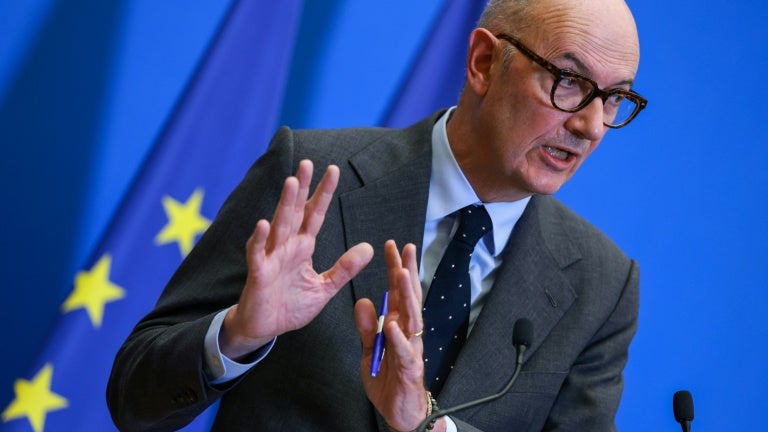
Anton Brender
Some eurozone countries
Response to France's rising borrowing costs
Anton Brender
Brender says eurozone countries should cooperate with France and the European Central Bank to counter speculation.
Some eurozone countries
Some eurozone countries, he says, are pleased that markets are punishing France for its fiscal indiscipline.
France is not Greece, and repeating the mistakes of the 2010s would be costly for everyone
The United States and Israel launched a military operation against Iran, which the article links to the blockage of the Strait of Hormuz.
France’s government has lost control of its budget balance, Brender says.
Le Monde published Brender’s commentary on rising borrowing costs and France’s fiscal position.
- French borrowing rates
- Highest in the eurozone, according to Brender
- Budget balance
- France’s government has lost control of it for two years, Brender says
- Upcoming elections
- Presidential and legislative elections
- Budget targets
- French governments have not met their rebalancing commitments in 30 years, Brender says
- Other eurozone countries
- Belgium, Italy and Spain are also seeing borrowing rates move further from Germany’s
Sources
Related news

France’s Bond Crisis Raises Concern for the Euro Zone Ahead of April Election

French debt and political deadlock raise fears of a wider European crisis

Citroen unveils electric 2CV concept, with a showroom version planned by 2028

Macron backs European preference for cars amid competition from China
Dunkirk’s Port Center explains the work and history of its busy port

French inspectors warn of risks in microentrepreneur status
France to release 10 million oil barrels, with pump price cuts expected in November
French borrowing costs reach their highest level since 2002
BMW-Mini and Porsche among major brands absent from Paris auto show

French retirees are better protected than German retirees, but at a higher cost

Diesel prices near €3 per litre at some French stations
