

Science & Tech · Science & Environment · 6 hrs ago
Amazon wildfire ozone reduces surviving trees’ carbon uptake
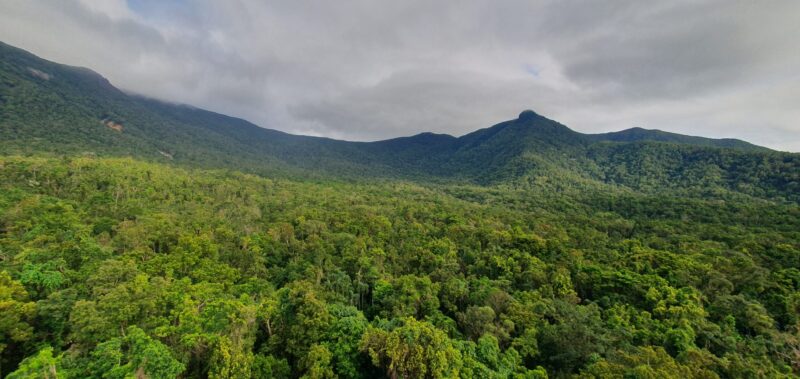
Amazon wildfires harm the rainforest even after the flames have passed.
Researchers found that pollutants from fires help form ground-level ozone, which damages the leaves of trees that survive.
The damage makes photosynthesis less efficient, so those trees absorb less carbon dioxide from the air.
The researchers estimate this lost carbon uptake is equivalent to about 24% of the carbon released directly by fires.
They examined observations from 1997 to 2024 and used a global vegetation model to study the effect.
The impact can become more severe during intense drought, adding to the pressure on the Amazon’s role in absorbing carbon.
The study was published in Communications Earth & Environment on October 7, 2026.

Ozone produced by Amazon wildfires damages leaves on trees that survive the flames and reduces their ability to absorb carbon dioxide.
Researchers estimate that this additional reduction in carbon uptake is equivalent to around 24% of the carbon released directly by the fires.
The study found that ozone-related effects can become more severe during harsh climatic conditions.
Researchers from the University of Exeter, ETH Zurich and James Cook University published the peer-reviewed study in Communications Earth & Environment.
The team analyzed observations from 1997 to 2024 and used a global vegetation model.
- Who
- Researchers from the University of Exeter, ETH Zurich and James Cook University.
- What
- A study found that wildfire-related ozone damages surviving trees and reduces their carbon uptake.
- When
- The study was published on October 7, 2026. Researchers analyzed observations from 1997 to 2024.
- Where
- The Amazon rainforest.
- Why
- Wildfires produce pollutants that contribute to ground-level ozone, which damages leaves and reduces photosynthesis.
This story does not have two clearly opposing sides.
Forest fires don’t just release CO2 when they burn. They also contribute to the rise in ground-level ozone, a pollutant that damages the leaves of surviving trees and reduces their ability to keep absorbing carbon afterwards.
We found this hidden effect is equivalent to around a quarter of the carbon released by the fires themselves — a significant loss to the Amazon’s carbon budget that hasn’t previously been considered.
Researchers analyzed observations covering this period to examine wildfires, ozone damage and the Amazon’s carbon uptake.
The peer-reviewed study was published in Communications Earth & Environment.
EarthSky published its report on the study.
- Estimated additional carbon-uptake reduction
- Around 24% of carbon released directly by wildfires
- Study period
- 1997–2024
- Publication date
- October 7, 2026
- Journal
- Communications Earth & Environment
- Researchers’ institutions
- University of Exeter, ETH Zurich and James Cook University
Sources
Related news

Debate over Monte Verde reopens questions about the first Americans

Africa’s solar installations set a record as official data misses much of the growth

Elephant remains reveal a wetland and woodland habitat in ancient Israel

Northeast monsoon likely to begin over southern India within days

Hyderabad workshop discusses how to make science easier to understand
São Paulo’s century-old underground power network limits weather exposure

Quantum computer demonstrates repeated checks and resets to control errors

MIT team develops flexible sheet that can track surface movement

Srisailam Dam Project earns place in World Book of Records
Farm scientists urge paddy crop holiday as El Niño threatens water supplies
New sugarcane variety sells out in five minutes in Uttar Pradesh
