

Science & Tech · Science & Environment · 4 hrs ago
Ships test onboard carbon capture and alternative fuels to cut emissions

Shipping produces nearly 3% of global carbon dioxide emissions, and heavy fuel oil and marine diesel remain its main fuels.
The International Maritime Organization aims to cut the sector’s emissions by 20% to 30% by 2030 and make ships as close to carbon-free as possible by 2050.
Because ships often operate for 25 to 30 years, companies must choose cleaner technology well before then.
The tanker Clipper Eris has been fitted with equipment that captures carbon dioxide from its exhaust, and the Samskip Kvitbjorn is due to complete a similar upgrade in 2027.
Project partners say the Clipper Eris system can remove up to 70% of greenhouse gases from its exhaust, but onboard capture does not make a ship climate-neutral.
An expert describes the technology as a possible bridge for existing ships, while companies also test alternatives such as renewable methanol and ammonia.
Renewable methanol is in short supply, so some operators use methanol made from fossil fuels.

Ships are being fitted with onboard systems that capture carbon dioxide from their exhaust, while companies test alternative fuels and propulsion.
The Clipper Eris was equipped with a carbon-capture system in 2024/25, and the Samskip Kvitbjorn is due to complete its retrofit in 2027.
Partners in the Clipper Eris project say its system can remove up to 70 percent of greenhouse gases from exhaust.
An expert describes onboard carbon capture as a possible bridge for existing fleets, not a complete solution.
The International Maritime Organization aims to cut shipping emissions by 20 to 30 percent by 2030 and have ships operate as close to CO₂-free as possible from 2050.
- Who
- Shipping companies, including Solvang and Samskip, are testing ways to reduce ship emissions.
- What
- Ships are testing onboard carbon capture and alternative fuels, including methanol and ammonia.
- When
- The Clipper Eris was fitted with carbon capture in 2024/25; the Samskip Kvitbjorn retrofit is due to finish in 2027.
- Where
- The systems are being installed on ships, including the Clipper Eris and Samskip Kvitbjorn. The Clipper Eris was fitted at a shipyard in Singapore.
- Why
- To reduce shipping emissions and meet climate goals.
This story does not have two clearly opposing sides.
Man muss sich darüber klar werden, dass die CO₂‑Abscheidung an Bord von Schiffen nicht die ,silver bullet‘ ist.
Aber sie ist eine von vielen Lösungen, um bei der CO₂‑Reduktion voranzukommen
The Clipper Eris was equipped with an onboard carbon-capture system by the Seatrium shipyard in Singapore.
The Samskip Kvitbjorn’s carbon-capture retrofit is due to be completed.
The International Maritime Organization aims to reduce emissions by 20 to 30 percent.
The International Maritime Organization aims for ships to operate as close to CO₂-free as possible.
- Ships with carbon capture
- Clipper Eris and Samskip Kvitbjorn
- Clipper Eris retrofit
- 2024/25
- Samskip Kvitbjorn retrofit completion target
- 2027
- Clipper Eris system capacity
- Up to 70 percent of greenhouse gases removed from exhaust, according to project partners
- IMO emissions target
- 20 to 30 percent reduction by 2030
Sources
Related news

Smelly wetland plant cleared from a river

First Nation-led project replants kelp forests in British Columbia

A 1960 population study predicted a Doomsday date in November 2026

Forest ecologist Zuzana Burivalova wins 2026 environmental award
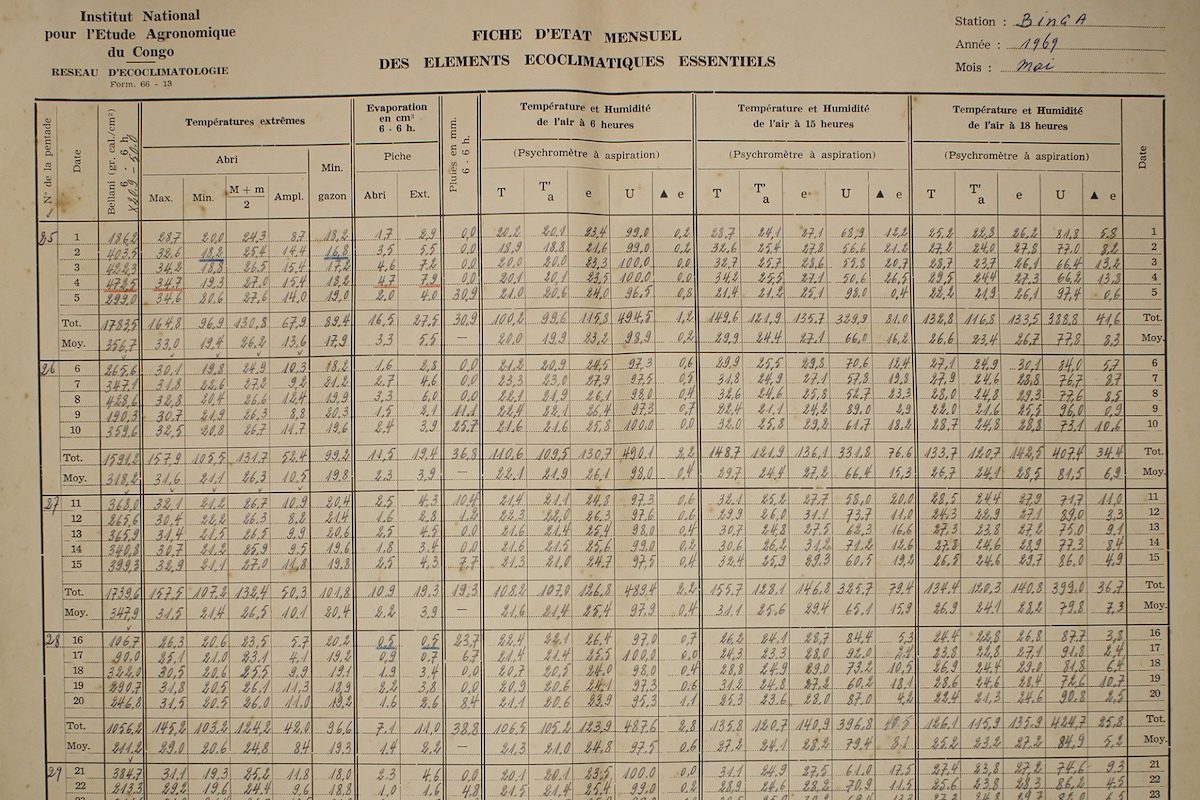
Digitized Congo Basin Records Reveal Warming and More Extreme Weather

Cover crops and perennial plants could help farms withstand El Niño extremes

Endangered Pacific pocket mice establish a third reintroduced population

Oil slicks repeatedly entered marine protected areas, analysis finds

Rain is possible in Aparecida as storms threaten parts of Brazil

Study links powerful waves in Kara Gate Strait to tides

Vienna team demonstrates a self-stabilizing thorium nuclear clock
